
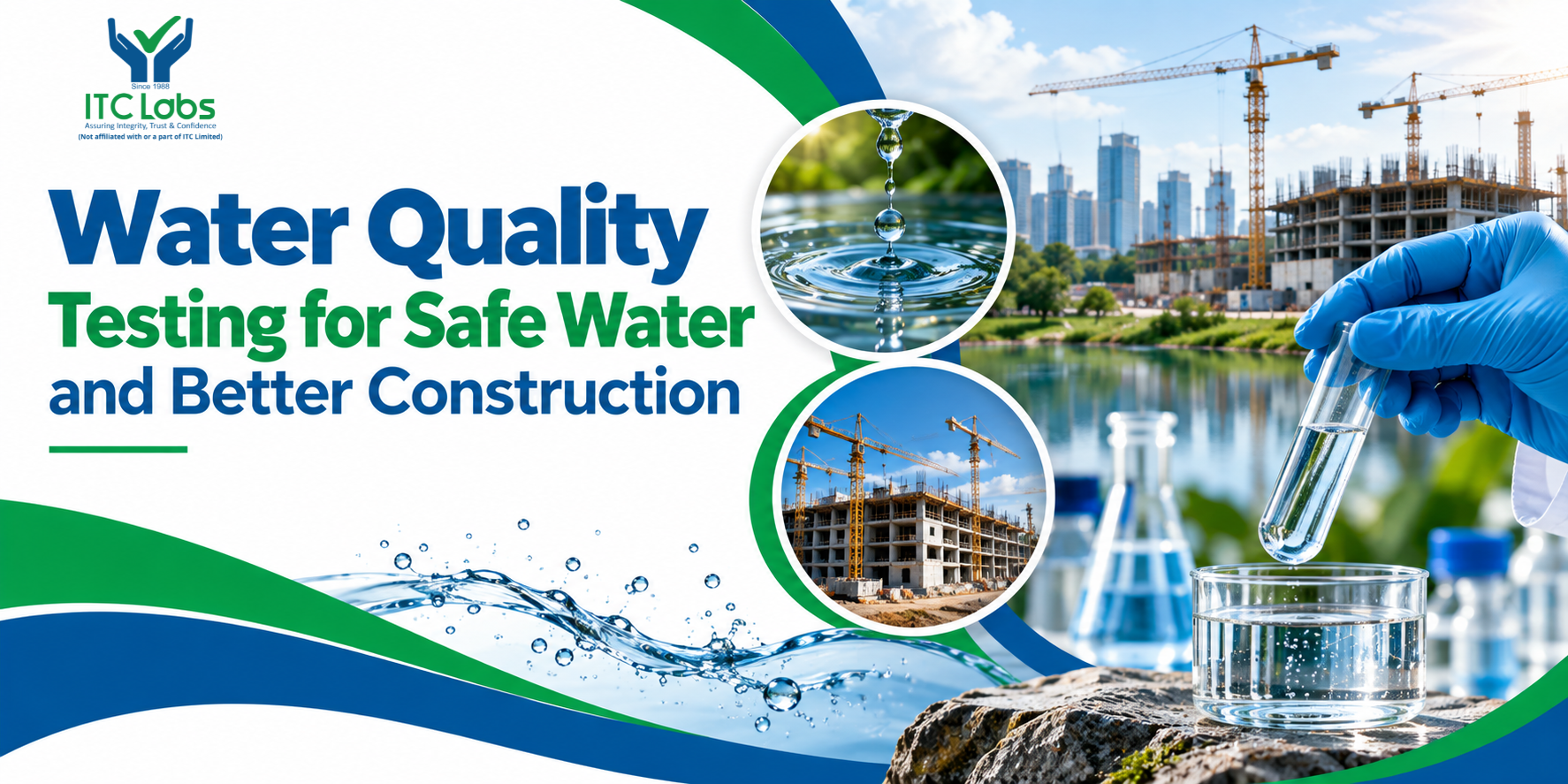
Water is essential for life, infrastructure, and recreation. However, the quality of water can vary significantly depending on its source, treatment process, storage conditions, and intended use. Water that appears clean and clear may still contain harmful microorganisms, dissolved chemicals, heavy metals, or other contaminants that can affect human health, construction quality, and swimming pool safety.
This is why professional water quality testing services are essential for households, businesses, construction companies, healthcare facilities, and swimming pool operators. Regular testing helps identify potential contamination, verify whether water meets applicable quality standards, and determine whether corrective measures are necessary.
Whether you need to verify the safety of drinking water, assess water for construction activities, or maintain the chemical balance of a swimming pool, choosing a reliable water testing service can help you make informed decisions.
In this article, we explore the importance of water quality testing, the parameters commonly evaluated for different applications, and how to select a reliable testing laboratory.
Understanding Water Quality Testing and Its Importance
Water quality testing is the scientific process of examining water samples to determine their physical, chemical, and microbiological characteristics. These tests help establish whether water is suitable for a particular purpose, including drinking, construction, medical applications, or recreational activities.
A professional water testing lab uses specialised instruments, established testing methods, and trained analysts to evaluate water samples. Depending on the intended application, testing may cover parameters such as pH, turbidity, total dissolved solids (TDS), hardness, chlorine, heavy metals, and microbiological contamination.
The specific tests required depend on the water source, its intended use, applicable regulations, and the risks associated with potential contaminants.
Regular testing is important because water quality can change over time. Seasonal variations, industrial activities, agricultural runoff, ageing pipelines, inadequate treatment, and improper storage can all influence water quality.
By choosing professional water testing services, individuals and organisations can identify potential problems early and take appropriate corrective action.
Why Drinking Water Quality Testing Is Essential
Safe drinking water is fundamental to public health. However, water from municipal supplies, borewells, groundwater sources, and domestic purification systems may contain contaminants that cannot be detected through appearance, smell, or taste alone.
Professional drinking water testing helps determine whether water meets the relevant drinking water quality requirements.
Identifying Harmful Contaminants
Water may contain bacteria, viruses, parasites, heavy metals, pesticides, nitrates, or other unwanted substances. Their presence depends on the source and surrounding environmental conditions.
Microbiological testing can help identify indicators of faecal contamination, such as E. coli. Chemical analysis may detect substances such as arsenic, lead, fluoride, nitrate, and other parameters where relevant.
Testing helps identify potential risks and determine whether treatment or further investigation is required.
Evaluating Physical and Chemical Properties
Several parameters provide important information about drinking water quality:
- pH: Indicates whether water is acidic, neutral, or alkaline.
- Turbidity: Measures the cloudiness of water caused by suspended particles.
- Total Dissolved Solids (TDS): Measures the concentration of dissolved substances.
- Hardness: Indicates the presence of dissolved calcium and magnesium.
- Residual chlorine: Helps assess disinfection effectiveness in appropriately chlorinated water systems.
- Microbiological parameters: Help assess contamination risks associated with microorganisms.
These parameters must be interpreted together rather than individually. For example, low TDS does not automatically mean water is safe to drink, and clear water may still contain harmful contaminants.
Checking RO-Purified Water
Reverse osmosis (RO) systems are widely used in homes, offices, and commercial establishments. However, their performance depends on the incoming water quality, membrane condition, maintenance practices, and system design.
Testing both the source water and treated water can help assess the effectiveness of the purification process. Depending on the application, additional chemical and microbiological tests may be necessary.
The best water testing services provide results that help users understand water quality and identify whether further treatment or maintenance is needed.
Why Water Quality Testing Matters in Construction
Water plays a critical role in construction activities, particularly in concrete mixing, mortar preparation, curing, and other building processes. Using unsuitable water can affect construction materials and potentially compromise the durability and performance of structures.
Water used for construction should therefore be evaluated against the applicable project specifications and relevant standards.
Assessing Suitability for Concrete and Mortar
Water containing excessive amounts of certain salts, chlorides, sulphates, organic substances, or other impurities may adversely affect cement hydration, setting time, reinforcement corrosion risk, or the long-term durability of concrete.
The actual impact depends on the type and concentration of contaminants, the materials used, and the construction application.
A construction water testing programme can include pH, chloride, sulphate, total dissolved solids, organic impurities, and other parameters required by the relevant specifications.
Preventing Structural and Durability Problems
Using unsuitable water may contribute to problems such as reinforcement corrosion, reduced durability, or inconsistent material performance. These risks are especially important in reinforced concrete structures and projects exposed to aggressive environmental conditions.
Testing water before it is used can help construction professionals identify unsuitable sources and determine whether corrective action is required.
Supporting Compliance With Project Specifications
Construction projects may use water from municipal supplies, borewells, tankers, or other sources. The quality of these sources can differ significantly.
A professional water testing laboratory can evaluate samples against the applicable requirements, helping builders, engineers, contractors, and project owners document water suitability.
Water quality testing should be considered during project planning and repeated when the source changes or there is reason to suspect deterioration in quality.
Why Swimming Pool Water Testing Is Necessary
Swimming pools require consistent monitoring because water quality can change with swimmer activity, environmental exposure, rainfall, temperature, and chemical treatment.
Poorly maintained pool water may cause skin and eye irritation, create unpleasant odours, damage pool equipment, or increase the risk of recreational water illnesses.
Regular testing helps pool operators maintain appropriate water conditions and support swimmer safety.
Maintaining the Correct pH Level
Pool pH influences swimmer comfort, disinfection performance, and the condition of pool surfaces and equipment.
When pH moves outside the recommended range, chlorine may become less effective as a disinfectant, depending on the conditions. Incorrect pH may also contribute to eye irritation, corrosion, or scale formation.
Routine testing helps operators identify imbalances and make suitable adjustments.
Monitoring Chlorine and Disinfection
Chlorine is commonly used to control microorganisms in swimming pools. However, its effectiveness depends on factors such as pH, chlorine concentration, water conditions, and the pool’s disinfection system.
Testing free chlorine and, where appropriate, combined chlorine helps operators monitor disinfection performance and identify when treatment adjustments may be necessary.
Pool operators should follow applicable public health guidance and local requirements for disinfectant levels.
Preventing Algae and Water Quality Problems
Inadequate disinfection, poor circulation, insufficient filtration, and imbalanced water chemistry can contribute to algae growth and cloudy water.
Testing parameters such as pH, disinfectant residual, alkalinity, hardness, and other relevant indicators can help maintain suitable pool conditions.
A reliable testing programme also helps identify potential problems before they become more difficult or expensive to manage.
Looking for Reliable Water Quality Testing Services?
Ensure safe drinking water, construction quality, and pool hygiene with ITC Labs’ reliable water testing services covering 63+ parameters.
Key Water Quality Parameters Tested by Professional Laboratories
The exact parameters required depend on the intended use of water. A professional testing laboratory can recommend an appropriate testing package based on the source, application, and relevant standards.
Common parameters include:
| Parameter | Why It Matters |
| pH | Evaluates acidity or alkalinity and helps assess suitability for the intended use. |
| Turbidity | Indicates water cloudiness and may provide information about filtration performance. |
| Total Dissolved Solids (TDS) | Measures dissolved substances and helps characterise water composition. |
| Hardness | Helps assess scaling potential and water suitability for various applications. |
| Chloride and sulphate | Important for drinking water assessment and construction applications, depending on the relevant standards. |
| Residual chlorine | Helps assess disinfection in chlorinated water systems. |
| Heavy metals | Helps identify potentially harmful metals, such as arsenic and lead, when included in the test scope. |
| Microbiological parameters | Help assess contamination risks associated with bacteria and other microorganisms. |
A laboratory may offer testing across dozens of parameters, but a higher number of tests does not automatically mean that every parameter is necessary for every sample. The appropriate test panel should reflect the intended use and applicable requirements.
How to Choose the Right Water Testing Laboratory
Selecting a reliable laboratory is important because water quality decisions depend on the accuracy, relevance, and interpretation of test results.
Here are some factors to consider when selecting a water testing provider.
Check Accreditation and Testing Scope
Look for an accredited testing lab with appropriate accreditation for the required tests. In India, laboratories accredited by the National Accreditation Board for Testing and Calibration Laboratories (NABL) may be suitable, provided the specific tests and methods fall within their current accredited scope.
Searching online for NABL accredited labs in India can help you identify potential providers. However, always verify the laboratory’s current accreditation status and relevant scope rather than relying solely on marketing claims.
If you require a government-recognised or government-approved facility, confirm the exact approval or recognition relevant to your purpose. Accreditation and government approval are not interchangeable.
Evaluate Testing Capabilities
Choose a laboratory that can perform the tests required for your application. A drinking water sample may need microbiological and chemical testing, while construction water may require parameters relevant to concrete and mortar.
An experienced analytical testing lab should have suitable instruments, trained personnel, validated methods, and appropriate quality control procedures.
Understand Sampling and Reporting Procedures
Reliable results depend on proper sample collection, preservation, transportation, and analysis. Microbiological samples, for example, may require sterile containers and specific handling conditions.
Ask the laboratory for sampling instructions and check whether its report clearly identifies the sample, testing methods, parameters, units, and applicable limits where relevant.
Review Quality Assurance Practices
A professional quality assurance testing laboratory should follow documented procedures to help maintain consistency and traceability.
Quality practices may include calibrated equipment, reference materials, appropriate blanks and controls, replicate measurements, staff competency checks, and technical review of results.
These measures help reduce errors and support confidence in the final report.
Consider Convenience and Turnaround Time
When searching for a Water Testing Lab near me, consider the laboratory’s location, sample submission arrangements, collection options, and reporting timelines.
If your search is for a Govt approved Water Testing lab near me, verify the specific approval required for your project or regulatory purpose before submitting samples.
The best provider is not necessarily the closest or cheapest one. It is the laboratory that can reliably perform the required tests and provide appropriate documentation.
The Role of Analytical Testing and Quality Assurance
Water testing involves more than measuring individual parameters. Laboratories must follow appropriate analytical methods and quality control procedures to ensure that results are technically reliable.
Professional analytical testing services may include physical, chemical, and microbiological examination, depending on the laboratory’s capabilities and the sample type.
An experienced analytical testing lab uses suitable equipment and testing procedures to measure the parameters required for the intended application. Results are then assessed against relevant standards, specifications, or guidelines.
Quality assurance testing supports the reliability of this process by checking that laboratory procedures are consistently followed. Internal reviews, equipment calibration, quality control samples, and documentation help identify potential sources of error.
Choosing a laboratory that provides comprehensive analytical testing and documented quality assurance is particularly important when results are used for public health decisions, construction approvals, industrial operations, or regulatory compliance.
Why ITC Labs Is a Consideration for Water Quality Testing
ITC Labs provides water testing services for a range of applications, including drinking water, RO dialysis water, construction water, and swimming pool water.
According to the information provided by ITC Labs, its testing capabilities cover more than 63 parameters. This broad testing scope can help customers identify the parameters relevant to their particular water source and intended application.
The laboratory’s stated strengths include:
- Extensive testing capabilities: Testing across more than 63 parameters, depending on the required testing scope.
- Experienced scientific team: Qualified scientists and analysts work on water testing requirements.
- Modern laboratory equipment: Specialised instruments and testing equipment support laboratory analysis.
- Quality assurance procedures: Multiple reviews and quality checks are used to support the accuracy of results.
- Standards-based testing: Tests are conducted according to applicable national and international standards, as relevant to the specific test.
- Digital reporting processes: The eLABSS Laboratory Information Management System (LIMS) supports transparent and timely handling of laboratory information and results.
- Experience with institutional projects: ITC Labs reports having undertaken large-scale potable water testing and projects involving government and semi-government bodies.
When choosing any laboratory, customers should confirm the specific tests offered, applicable accreditation or recognition, reporting timelines, sample collection requirements, and whether the required methods fall within the laboratory’s accredited scope.
These checks help ensure that the selected provider matches the technical and regulatory requirements of the project.
Conclusion
Water quality testing is an essential part of protecting public health, maintaining construction quality, and ensuring safer swimming pool environments. From identifying harmful contaminants in drinking water to checking the suitability of construction water and monitoring swimming pool disinfection, regular testing helps people make informed decisions and address potential problems early.
Choosing a dependable laboratory is equally important. Customers should consider testing capabilities, technical expertise, applicable standards, quality assurance practices, and the relevance of any accreditation or approval.
ITC Labs is worth considering for your water testing requirements. With testing capabilities covering more than 63 parameters, a qualified scientific team, specialised laboratory equipment, multiple quality review procedures, and the eLABSS LIMS system, ITC Labs offers testing solutions for drinking water, RO dialysis water, construction water, and swimming pool water. Its stated experience with large-scale institutional projects further reflects its involvement in diverse water testing applications.
Whether you need testing for a home, construction project, commercial facility, or swimming pool, consult ITC Labs to identify the appropriate parameters and testing requirements for your sample. Selecting the right water testing service is an important step towards better water quality management, informed decision-making, and compliance with applicable standards.
Frequently Asked Questions (FAQs)
1. Why is water quality testing important?
Water quality testing helps identify physical, chemical, and microbiological contaminants that may affect drinking water safety, construction material performance, or swimming pool conditions. It also helps determine whether water meets the relevant standards for its intended use.
2. How often should drinking water be tested?
Testing frequency depends on the water source, local requirements, contamination risks, and changes in water quality. Private borewells and other independent sources may require periodic testing, while testing should also be considered after flooding, repairs, suspected contamination, or changes in taste, smell, or appearance.
3. Which parameters are tested in construction water?
Construction water may be tested for pH, chloride, sulphate, dissolved solids, organic impurities, and other parameters specified by the relevant construction standards or project requirements. The exact testing panel depends on the intended application.
4. Where can I find the best water testing lab in India?
To identify the best water testing lab in India, compare the laboratory’s technical capabilities, relevant accreditation, testing scope, quality assurance practices, reporting process, and experience with your type of sample. Confirm that the required tests are included in its current accreditation scope if accredited results are necessary.
5. What should I look for when choosing water quality testing services?
Look for suitable testing methods, trained personnel, reliable sampling procedures, documented quality controls, clear reports, and relevant accreditation or regulatory recognition. Also check the laboratory’s ability to test the specific water type and meet your reporting requirements.