
According to the World Health Organisation (WHO), malnutrition is a significant public health challenge. Detailed studies urged the Indian government to implement large-scale food fortification programs to tackle the issue.
Food fortification is a method introduced to enrich food products with essential nutrients to improve their quality and nutritional value. It is a scientifically proven, cost-effective public health intervention with great health benefits. With the need for fortification in food items increasing, a new demand for fortification testing also arose.
We at ITC Labs are extremely proud to have both our Panchkula lab and Chennai lab approved by the Food Safety and Standards Authority of India (FSSAI) for the testing of Fortified Rice Kernels (FRK), Fortified Rice and Vitamin and Mineral Premixes. With this new recognition, we offer end-to-end analytical services to test fortified foods are safety, nutritional effectiveness, and compliance with all regulatory standards.
Food Fortification Programs in India
As per the recommendations by the WHO, the Government of India, has initiated large-scale food fortification programs to tackle malnutrition and micronutrient deficiencies. These initiatives are governed by FSSAI regulations and supported by schemes like the Integrated Child Development Services (ICDS), Mid-day Meal Scheme, and Poshan Abhiyaan. The major fortified food items include:
- Salt Fortification: (Double Fortified Salt - DFS) Sea salt is enriched with iodine and iron to prevent iodine deficiency and anaemia.
- Milk and Oil Fortification: Cattle milk and oil are added with vitamins A and D to enhance bone health and immunity.
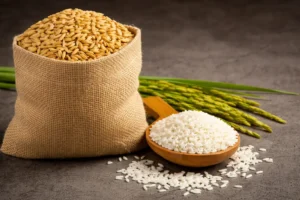
- Rice Fortification: Fortified rice kernels (FRK) are blended with milled rice, providing iron, folic acid, and vitamin B12.
- Wheat Flour Fortification: Iron, folic acid, and vitamin B12 are added in powder form to the flour.
Rigorous Testing Process
With three decades of experience in food testing, we provide rigorous testing solutions across the fortification value chain, covering raw materials, premixes, and final products. Our team of experienced scientists and analysts understands the importance of nutritious food for everyone. With the ultra-modern machines and all-encompassing lab arena, we carry forward complex tests with utmost precision and dedication.
The following is the test carried out in our labs for fortified food:
- Quantitative Analysis of Fortificants: Iron (ferrous sulphate, ferrous fumarate), folic acid, vitamins A, D, B12, iodine, zinc, etc
- Premix Testing: Evaluation for consistency and potency of vitamin and mineral premixes.
- Fortified Rice Kernel (FRK) Testing: Includes micronutrient analysis, blending ratio validation, and dispersion studies.
- FRK Blending Validation: Ensuring uniform nutrient distribution in milled rice.
- Stability Studies: Monitoring nutrient degradation under real-time and accelerated shelf-life conditions.
- Packaging Compatibility: Migration studies and integrity assessments for fortified oils and premixes.
- Elemental Analysis: Checking for contaminants like lead, cadmium, arsenic, and mercury.
Significance of Fortified Food Testing
As mentioned earlier, food fortification helps to improve public health by reducing micronutrient deficiencies and enhancing the nutritional profile of staple foods. Anaemia caused by iron deficiency in women & children was a major health threat that our country was struggling with. Rickets and night blindness were also caused by the deficiency of vitamin A & D.
With the introduction of fortified food in the diet, the cases of these health threats dropped tremendously. Apart from that, consumption of fortified food also contributes to boosted immunity and cognitive development.
Given the fact that fortified food can improve overall health at an exceptionally low cost, the requirement has also increased; yet fortification is not a coherent process. Fortificants are added to food through methods such as industrial fortification, bio-fortification, or synthetic biology. For instance, microencapsulated FRKs are made like rice kernels and are later mixed with rice in the recommended ratio.
In case of iodised salt, potassium iodate is added at 15–30 ppm; iron is maintained between 850–1100 ppm in food as per FSSAI regulations. As vitamin A & D are fat-soluble nutrients, they are stabilised in oil/milk using fat-soluble carriers. The addition process is tightly regulated and requires precision blending and stability control to ensure nutrient delivery and efficacy.

Why Choose ITC Labs?
We are India's leading analytical testing laboratory with 37 years of testing and quality assurance excellence. Our team consists of highly qualified scientists, microbiologists, analysts and technicians to carry out momentous analysis accurately. At our labs, we use the most modern imported equipment such as HPLC, UV-Vis, LC-MS/MS, and ICP-MS for precision and excellence. We follow a 4-step quality assurance formula to ensure that no sample reaching our lab leaves wrongly analysed.
With the FSSAI approval for fortified rice, FRKs, and premixes testing, we widened our boundaries of testing. Apart from that, we are an NABL-accredited (ISO/IEC 17025:2017) for chemical and biological testing.
Our services are extended to custom protocols and method validation for diverse product matrices. Having carried out government-sponsored schemes (ICDS, MDM, PDS), we have proven expertise in addressing challenges like nutrient degradation and uneven distribution.
Partner with ITC Labs
Whether you are a manufacturer, government agency, or CSR program stakeholder, ITC Labs is your trusted partner for comprehensive and compliant fortification testing. Our advanced testing infrastructure and technical expertise help your products meet national standards and truly deliver on nutritional promises
Contact us today for reliable and efficient fortification testing services across the entire value chain.
FAQ
Yes. Fortified foods are safe when tested under regulated conditions. ITC Labs ensures all fortificants fall within permissible limits and retain their intended benefits.
Common fortificants include iron, folic acid, vitamins A, D, and B12, iodine, and zinc.
We conduct micronutrient quantification, dispersion testing, premix analysis, and stability studies to ensure compliance and nutritional integrity.
Yes. We serve public distribution systems, procurement agencies, and CSR programs involved in national food safety and fortification schemes.
Need a Quote for Our Services?
Tell us your requirements, and we’ll get back to you with a custom solution.
Industry Insights
Top 7 Fortification Testing Labs for Accurate Nutrient Analysis
December 29, 2025
No Comments
Read More »
The Importance of Fortification Testing in Food Quality Control
December 16, 2025
No Comments
Read More »