
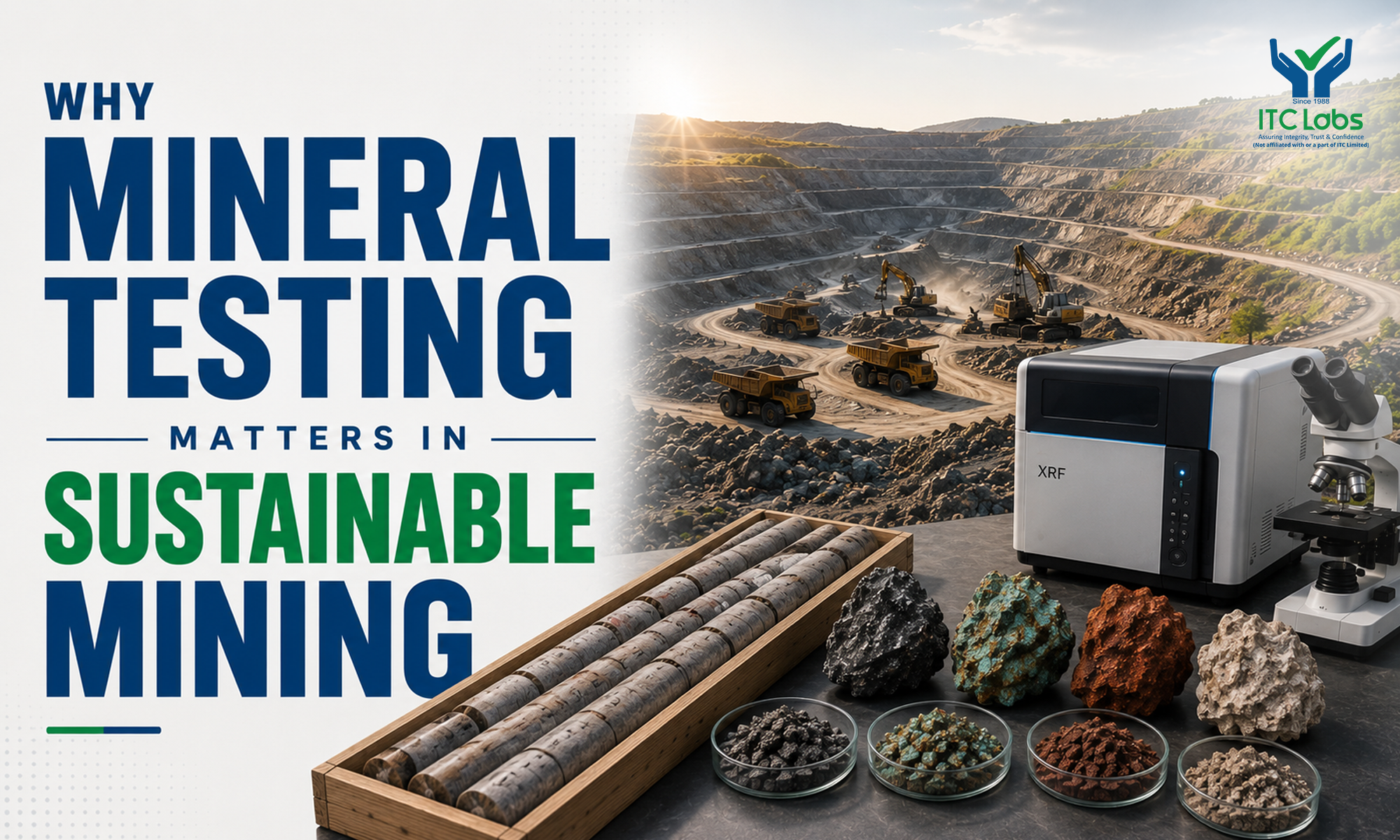
The mining industry plays a vital role in supplying the raw materials needed for infrastructure, manufacturing, renewable energy technologies, and economic development. However, as environmental concerns and regulatory requirements continue to grow, mining companies are under increasing pressure to adopt sustainable practices. One of the most important yet often overlooked aspects of sustainable mining is mineral testing.
Accurate mineral testing helps mining companies make informed decisions, optimize resource utilization, reduce environmental impact, and ensure compliance with industry regulations. By providing reliable data on the composition, quality, and characteristics of mineral resources, mineral testing supports responsible mining practices throughout the entire mining lifecycle.
Understanding Mineral Testing
Mineral testing refers to a range of laboratory analyses conducted to determine the physical, chemical, and metallurgical properties of ores, minerals, and mining-related materials. These tests help identify the composition and concentration of valuable minerals while detecting impurities and potentially harmful substances.
A comprehensive mineral testing program typically includes:
- Chemical analysis
- Elemental analysis
- Ore characterization
- Moisture determination
- Trace metal analysis
- Mineralogical studies
- Environmental impact assessment
The data generated through mineral testing enables mining companies to make better operational, environmental, and financial decisions.
The Role of Mineral Testing in Sustainable Mining
1. Optimizing Resource Utilization
One of the key principles of sustainable mining is maximizing resource efficiency. Accurate mineral testing allows mining companies to determine ore grades and identify economically viable deposits before extraction begins.
When the mineral composition of an ore body is properly understood, mining operations can:
- Reduce waste generation
- Improve recovery rates
- Increase operational efficiency
- Extend mine life
Without proper mineral testing, companies risk extracting low-quality materials, leading to unnecessary environmental disturbance and increased operational costs.
2. Supporting Environmental Protection
Mining activities can significantly impact surrounding ecosystems if not managed responsibly. Sustainable mining requires continuous monitoring of environmental parameters, and mineral testing plays a critical role in this process.
Laboratory analysis helps identify:
- Heavy metals in ores and waste materials
- Acid-generating minerals
- Potential contaminants in water sources
- Hazardous elements that may affect soil quality
By detecting these risks early, mining companies can implement mitigation measures that minimize environmental damage and support long-term sustainability goals.
Improving Mine Planning and Exploration
Successful mining projects begin with accurate geological and geochemical data. During exploration, mineral testing helps determine whether a deposit contains commercially valuable minerals and provides insights into the distribution of those resources.
The benefits include:
- More accurate reserve estimation
- Better mine planning
- Reduced exploration risks
- Improved investment decisions
Reliable testing data allows mining companies to allocate resources more effectively while reducing unnecessary drilling and excavation activities.
Ensuring Regulatory Compliance
Governments and regulatory authorities worldwide have established strict environmental and quality standards for mining operations. Compliance with these regulations is essential for maintaining licenses, avoiding penalties, and preserving a company’s reputation.
Regular mineral testing helps organizations meet requirements related to:
- Environmental monitoring
- Waste management
- Occupational health and safety
- Export quality standards
- Resource reporting regulations
Accurate laboratory results provide documented evidence that mining activities are being conducted responsibly and in accordance with applicable regulations.
Enhancing Mineral Processing Efficiency
The efficiency of mineral processing plants depends heavily on understanding the characteristics of incoming ore. Through detailed mineral testing, operators can identify factors that influence processing performance.
These insights help optimize:
- Crushing and grinding operations
- Flotation efficiency
- Metal recovery rates
- Reagent consumption
- Energy utilization
As a result, mining companies can reduce operational costs while minimizing energy consumption and environmental impact.
Reducing Waste and Tailings Generation
Mine waste and tailings management remain significant sustainability challenges for the mining industry. Poor characterization of ore materials can lead to excessive waste generation and inefficient processing.
Comprehensive mineral testing enables mining companies to:
- Separate valuable minerals more effectively
- Reduce processing losses
- Improve tailings management strategies
- Identify opportunities for resource recovery
This contributes directly to sustainable mining by reducing the volume of waste requiring long-term storage and management.
Supporting the Growing Demand for Critical Minerals
The global transition toward renewable energy and electric vehicles has increased demand for critical minerals such as lithium, cobalt, nickel, and rare earth elements. Sustainable sourcing of these materials requires advanced mineral testing to ensure quality, consistency, and responsible extraction.
Laboratory testing helps mining companies:
- Verify mineral quality
- Assess resource potential
- Support responsible supply chains
- Meet international market requirements
As the demand for critical minerals continues to rise, reliable testing will become even more important for sustainable resource development.
Building Stakeholder Confidence
Investors, regulators, customers, and local communities increasingly expect mining companies to demonstrate transparency and accountability. Accurate mineral testing provides scientifically validated data that supports responsible decision-making and reporting.
By maintaining robust testing programs, mining companies can:
- Improve stakeholder trust
- Strengthen ESG performance
- Enhance operational transparency
- Demonstrate commitment to sustainability
This ultimately contributes to the long-term success and social acceptance of mining projects.
Conclusion
Sustainable mining is no longer just a corporate responsibility, it has become a business necessity. From resource optimization and environmental protection to regulatory compliance and operational efficiency, mineral testing serves as the foundation of responsible mining practices. Accurate testing helps mining companies make informed decisions, minimize environmental impacts, and maximize resource recovery throughout the mining lifecycle.
For organizations seeking reliable and comprehensive mineral testing solutions, ITC Labs offers advanced analytical testing services designed to support sustainable mining operations. With modern laboratory infrastructure, experienced professionals, and a commitment to quality, ITC Labs helps mining companies achieve regulatory compliance, improve operational performance, and advance their sustainability goals through precise and dependable mineral analysis.
Frequently Asked Questions
1. What is mineral testing in mining?
Mineral testing involves laboratory analysis of ores and minerals to determine their chemical, physical, and metallurgical properties, helping mining companies make informed operational and environmental decisions.
2. Why is mineral testing important for sustainable mining?
Mineral testing helps optimize resource utilization, reduce waste, improve environmental protection, ensure compliance, and support efficient mineral extraction and processing practices.
3. What types of analyses are included in mineral testing?
Mineral testing typically includes chemical analysis, elemental analysis, ore characterization, trace metal testing, moisture analysis, and mineralogical studies.
4. How does mineral testing help reduce environmental impact?
Mineral testing identifies contaminants, heavy metals, and acid-generating materials, enabling mining companies to implement preventive measures and reduce environmental risks.
5. Can mineral testing improve mining profitability?
Yes. Accurate mineral testing improves ore recovery, optimizes processing efficiency, reduces waste generation, and supports better resource management, leading to increased profitability.
6. Why is mineral testing important during exploration?
During exploration, mineral testing helps assess deposit quality, estimate reserves, identify valuable minerals, and reduce investment risks before mining begins.
7.How often should mining companies conduct mineral testing?
Testing frequency depends on project requirements, but regular mineral testing is recommended throughout exploration, extraction, processing, and environmental monitoring activities.
8. Why choose ITC Labs for mineral testing services?
ITC Labs provides accurate, reliable, and comprehensive mineral testing services using advanced analytical techniques, helping mining companies maintain quality, compliance, and sustainability standards.