
Drug safety is one of the most important pillars of public health, and at the center of this entire system stands the Pharmaceutical Analysis Laboratory. This highly specialized facility is responsible for ensuring that every drug—whether a tablet, injection, syrup, or ointment—is safe, effective, stable, and compliant before it reaches the hands of patients. In the very first step toward drug safety, a pharmaceutical analysis lab detects impurities, verifies drug potency, and performs strict testing so manufacturers can confidently release products to the market. With rising regulatory scrutiny, the growing need for pharmaceutical testing and research services, and increasing global demand for high-quality medicines, these laboratories have become indispensable for the healthcare system.
In this detailed and research-driven blog, we’ll explore exactly why these labs matter, how they protect patients, what tests they perform, and why working with a trusted accredited testing lab is critical for drug safety.
What Is a Pharmaceutical Analysis Laboratory?
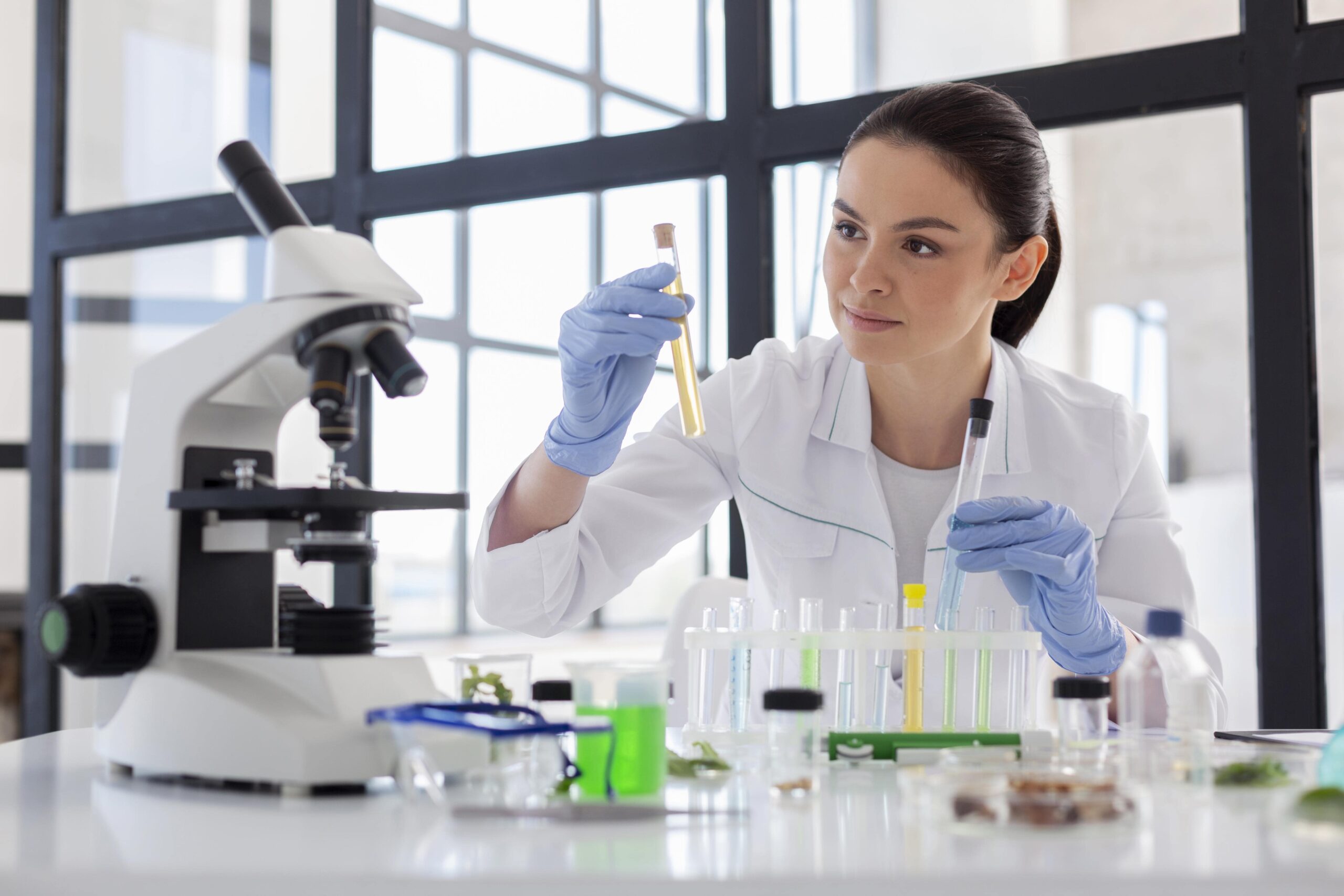
A Pharmaceutical Analysis Laboratory is a controlled, highly equipped scientific environment where drug substances, excipients, and finished pharmaceutical products undergo comprehensive chemical, physical, and microbiological testing. These labs support both manufacturing units and an R&D laboratory, ensuring that every stage of drug development meets regulatory and safety standards.
A pharmaceutical analysis lab conducts dozens of critical processes such as:
- Drug identity confirmation
- Purity and impurity profiling
- Assay (potency testing)
- Dissolution and disintegration studies
- Stability testing
- Microbiological analysis
- Packaging material evaluation
Without these tests, a drug’s safety and efficacy cannot be guaranteed.
Why It Matters
Medicines may look simple on the outside, but they are chemically complex and sensitive. Temperature, light, moisture, or contamination can easily affect their stability or safety. A pharmaceutical analysis lab ensures that drugs remain safe and effective throughout their entire shelf life.
Drug Safety: Why Testing Matters Before a Product Reaches Patients
Drug safety isn’t just a scientific responsibility—it’s a moral, ethical, and legal commitment. A single oversight in drug formulation or contamination can put thousands of lives at risk.
Common safety issues prevented by pharmaceutical testing include:
- Toxic impurities (e.g., NDMA in hypertension drugs)
- Heavy metals contamination (such as lead or arsenic)
- Microbial contamination (yeast, mold, E. coli, etc.)
- Incorrect dosage strength
- Chemical degradation due to poor formulation
- Substandard raw materials
For example, in recent years, several cough syrups from different regions were recalled globally due to contamination with harmful chemicals like diethylene glycol. These tragedies underline how essential an analytical testing laboratory is in preventing severe health hazards.
Why Quality Control and Quality Assurance Are Foundational in Pharma
Every pharmaceutical product must pass through two major safeguards: Quality Control (QC) and Quality Assurance (QA).
Quality Control (QC): Testing Every Batch
QC involves laboratory-based testing of samples from every batch of raw materials, in-process materials, and finished drug products. This ensures the product meets predefined specifications.
QC includes:
- Assay and potency testing
- Impurity profiling
- Dissolution testing
- Microbial limit test
- Water testing (WFI & purified water)
- Stability analysis
QC confirms whether each batch of drugs is safe, pure, and effective.
Quality Assurance (QA): Ensuring the Entire System Is Reliable
A quality assurance laboratory ensures that every process—not just the product—is correct and compliant.
QA focuses on:
- Documentation
- SOP compliance
- Internal and external audits
- Batch record review
- Equipment qualification
- Risk management
Together, QC and QA create a powerful system of quality control and assurance, which is necessary for obtaining regulatory approvals.
Role of an Accredited Testing Lab in Drug Approval
Manufacturers are required to work with an accredited testing lab to obtain certification for their medicines. Accredited labs follow international standards such as:
- ISO/IEC 17025
- WHO GMP
- GLP (Good Laboratory Practice)
- NABL (in India)
Why Accreditation Matters:
- Ensures precision and reproducibility
- Ensures data traceability
- Ensures globally accepted results
- Builds trust with regulators
- Supports exports and import approvals
No drug can be approved without scientifically validated results from trusted, accredited laboratories.
Key Tests Performed in an Analytical Testing Laboratory
A modern analytical testing lab uses sophisticated instruments to detect even the tiniest impurity or deviation in drug quality.
HPLC (High-Performance Liquid Chromatography)
Used to identify and quantify chemical components, impurities, and degradation products.
GC-MS/MS (Gas Chromatography—Mass Spectrometry)
Detects volatile impurities and residual solvents.
LC-MS/MS (Liquid Chromatography—Mass Spectrometry)
Used for highly sensitive impurity profiling and environmental monitoring.
ICP-MS (Inductively Coupled Plasma Mass Spectrometry)
Used for ultra-trace heavy metals analysis.
UV-Vis Spectrophotometry
Measures drug concentration and absorbance.
These techniques form the backbone of analytical research & development, helping scientists understand drug behavior.
How Pharmaceutical Analysis Labs Support R&D Laboratories
An R&D laboratory focuses on new drug development. However, even the most promising formulation cannot move ahead without analytical support.
Pharmaceutical analysis labs help R&D with:
- Pre-formulation studies
- Compatibility studies
- Forced degradation studies
- Dissolution method development
- Stability-indicating method development
- Validation of analytical methods
This collaboration ensures that only safe, stable, scientifically validated products proceed to final production.
Importance of Quality Inspection Services in Drug Manufacturing
Drug manufacturing involves hundreds of steps. Quality inspection services ensure that every step meets compliance standards.
Inspections cover:
- Raw material quality
- Packaging material quality
- In-process quality checks
- Finished product inspections
- Water system validations
These services reduce manufacturing risks and eliminate the possibility of unsafe products reaching the market.
Complete Scope of Drugs and Pharmaceutical Testing Services
A comprehensive Drugs and Pharmaceutical Testing Services setup includes:
- Assay & content uniformity
- Microbial testing
- Sterility testing
- Dissolution & disintegration
- Impurity & residual solvent testing
- Endotoxin testing
- Hardness, friability & weight variation
- Stability studies (accelerated + real-time)
- Heavy metal testing using ICP-MS
Manufacturers searching for Drugs and Pharmaceutical Testing Services Near Me should always ensure that their chosen lab provides this full spectrum under one roof.
Real-World Examples That Highlight the Need for Strong Pharmaceutical Analysis
Case Example 1: Impurity Contamination in Blood Pressure Medicines
In several countries, medications containing valsartan were recalled due to the presence of cancer-causing impurities (NDMA/NDEA). Proper impurity profiling could have prevented mass recalls.
Case Example 2: Contaminated Syrups Linked to Toxicity
Poorly tested syrups caused toxicity in many regions due to chemical contamination. This would have been detected early using advanced equipment like GC-MS/MS.
Case Example 3: Incorrect Potency Leading to Overdose Risks
Several antipsychotic batches were recalled because of dosage inconsistencies. Assay testing and uniformity testing are designed specifically to avoid such risks.
These real scenarios prove that drug safety depends entirely on strong laboratory testing protocols.
Why a Pharmaceutical Analysis Laboratory Is the Backbone of Public Health
Without scientific validation, no drug—even a simple vitamin—can be considered safe. A pharmaceutical analysis laboratory ensures:
- Drug consistency across batches
- Regulatory compliance
- Long-term stability
- Patient safety
- Global market access
In short, it acts as a shield between consumers and potential pharmaceutical hazards.
Why Choose ITC Labs for Drugs & Pharmaceutical Testing?
At ITC Labs, we are committed to delivering world-class pharmaceutical testing and research services backed by the latest technology and a highly experienced scientific team.
State-of-the-Art Technology
Our laboratory is equipped with advanced analytical instruments, including:
- HPLC
- GC-MS/MS
- ICP-MS
- LC-MS/MS
These systems enable us to detect impurities with exceptional precision and adhere to global regulatory requirements.
Complete Testing Solutions
We offer end-to-end Drugs and Pharmaceutical Testing Services, such as:
- Assay and potency
- Impurity profiling
- Stability studies
- Microbiological testing (redirect to microbiology page)
- Heavy metals and residual solvent analysis
This makes ITC Labs one of the most reliable partners for pharmaceutical manufacturers.
Expert Scientists & Analysts
Our team consists of trained professionals who understand the complexities of pharmaceuticals. Every test is performed following validated procedures, ensuring accuracy and reproducibility.
Trusted, Accredited, and Reliable
As a preferred pharmaceutical analysis lab, ITC Labs focuses on quality, compliance, and innovation. Whether you are looking for an accredited Drug Testing Laboratory, a listing in the Certified Drug Testing Laboratory List, or dependable testing services “near me,” ITC Labs provides trusted solutions every time.
Frequently Asked Questions (FAQ)
1. Why is a Pharmaceutical Analysis Laboratory essential for drug safety?
Because it ensures that every drug is tested for purity, quality, potency, and safety before entering the market.
2. What tests does an analytical testing lab perform?
It performs assay, impurity profiling, dissolution, microbiological testing, stability studies, and heavy metal analysis.
3. How do I choose the right drug testing laboratory?
Check for accreditation, advanced equipment, scientific expertise, and regulatory compliance.
4. Why is impurity profiling important?
Impurities can lead to toxicity, reduced efficacy, or long-term health hazards. Profiling ensures safe medications.
5. What is the role of analytical R&D in pharmaceuticals?
Analytical R&D develops validated methods, identifies degradation pathways, and ensures drug stability and safety.