
The pharmaceutical industry operates in one of the most regulated environments in the world. Every drug, from its initial development to its market launch and post-market surveillance, must meet stringent quality, safety, and efficacy standards. Regulatory authorities expect manufacturers to provide accurate scientific data at every stage of a product’s lifecycle. This is where pharmaceutical testing solutions offered by independent laboratories become indispensable.n
A reliable pharmaceutical testing laboratory plays a crucial role in helping pharmaceutical companies generate compliant data, maintain product quality, and simplify regulatory submissions. Whether you’re developing a new formulation or managing an established product portfolio, outsourcing pharmaceutical testing services to an accredited laboratory can significantly reduce compliance risks while improving operational efficiency.
Why Third-Party Pharmaceutical Laboratories Matter
Pharmaceutical manufacturers often partner with external laboratories to access advanced analytical capabilities, regulatory expertise, and internationally accepted testing standards. Instead of investing heavily in in-house infrastructure, companies can rely on specialized laboratories equipped with modern instrumentation and experienced scientists.
A trusted analytical testing laboratory performs independent evaluations that strengthen the credibility of test reports submitted to regulatory agencies. These laboratories maintain validated testing procedures and follow globally accepted guidelines, ensuring reliable and reproducible results.
Third-party laboratories also help pharmaceutical companies:
- Meet national and international regulatory requirements
- Reduce testing turnaround times
- Access specialized analytical technologies
- Ensure unbiased quality assessments
- Maintain consistent documentation for audits
Supporting Product Registration with Scientific Accuracy
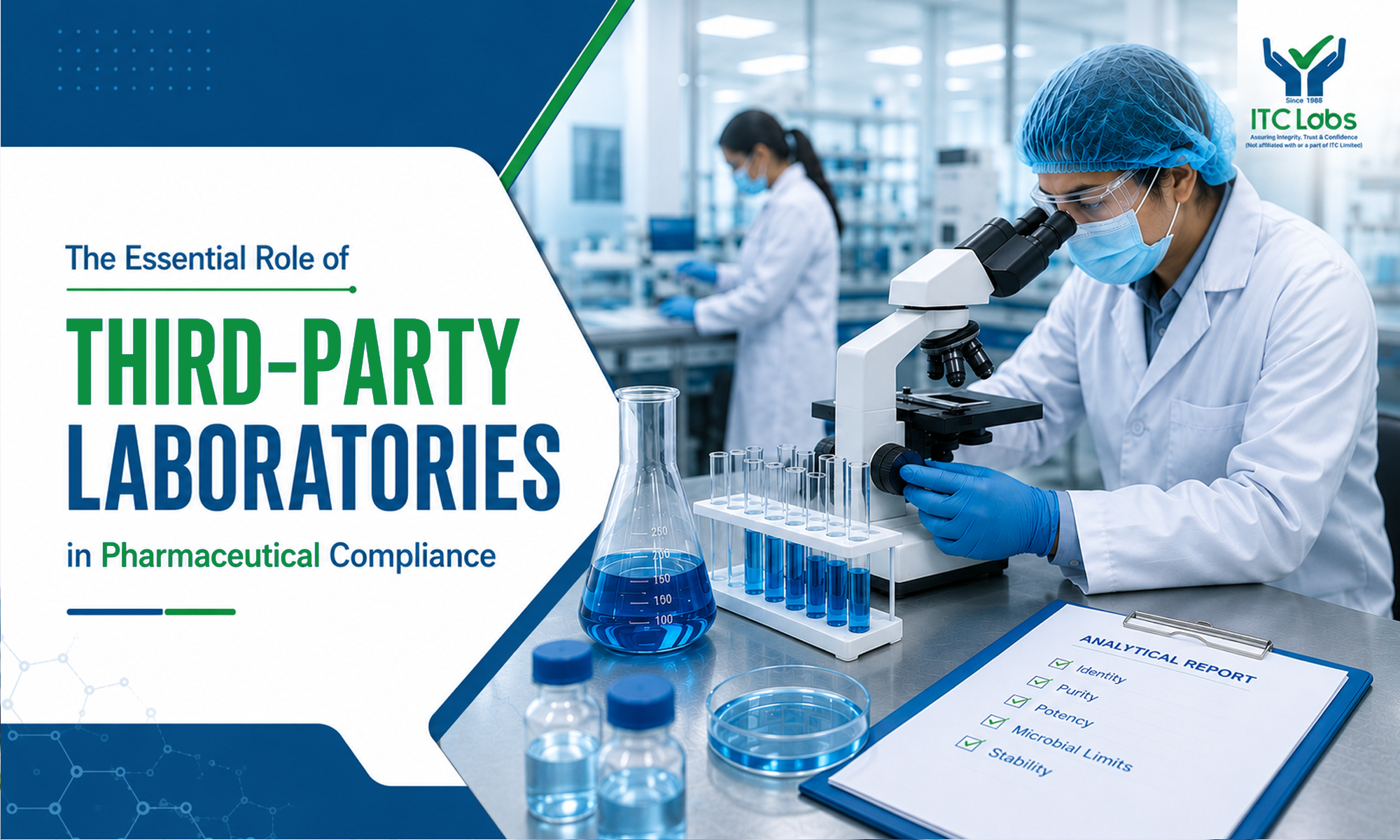
Before any pharmaceutical product reaches the market, it must undergo extensive evaluation. Regulatory authorities require comprehensive data covering identity, purity, potency, stability, microbial quality, impurities, and safety.
Professional pharmaceutical product testing services generate the analytical reports required for product registration. These reports become part of the regulatory dossier submitted to authorities for approval.
A comprehensive registration package may include:
- Raw material testing
- Finished product analysis
- Stability studies
- Method validation
- Impurity profiling
- Dissolution testing
- Microbiological testing
- Packaging compatibility studies
Experienced laboratories offering pharma analytical testing services ensure every study complies with applicable pharmacopoeias and regulatory guidelines, reducing the chances of deficiencies during regulatory review.
Ensuring Quality Throughout the Product Lifecycle
Regulatory compliance doesn’t end after product approval. Manufacturers must continuously demonstrate that every production batch maintains the required quality standards.
This is where ongoing Quality assurance testing becomes essential. Third-party laboratories support lifecycle compliance by performing routine quality assessments throughout manufacturing and distribution.
Typical lifecycle testing includes:
- Batch release testing
- Stability monitoring
- Shelf-life verification
- Out-of-specification investigations
- Change control evaluations
- Complaint sample analysis
- Retesting of retained samples
These activities ensure products consistently meet regulatory expectations throughout their commercial life.
The Importance of Pharmaceutical Drug Analysis
Every pharmaceutical formulation contains active ingredients and excipients that must remain stable and effective throughout the product’s shelf life. Accurate pharmaceutical drug analysis helps identify degradation products, impurities, and formulation inconsistencies before they become regulatory concerns.
Advanced analytical techniques such as HPLC, GC, ICP-MS, UV spectroscopy, FTIR, LC-MS/MS, and dissolution testing provide detailed insights into product quality and performance.
Comprehensive drugs and pharmaceutical testing services help manufacturers detect potential issues early, minimizing product recalls and protecting patient safety.
Why Accreditation Matters
Regulatory authorities place significant importance on laboratory competence. Choosing an Accredited testing laboratory ensures that analytical work is performed according to internationally recognized quality management systems.
Similarly, an Accredited testing lab follows validated procedures, maintains calibrated instruments, and employs trained professionals capable of generating dependable results.
For Indian pharmaceutical companies, working with NABL-accredited labs in India provides additional confidence because NABL accreditation demonstrates technical competence in line with international standards.
Many manufacturers searching online for NABL-certified labs near me are specifically looking for laboratories that offer both regulatory acceptance and technical excellence.
Advantages of Outsourcing Pharmaceutical Testing
Outsourcing testing to specialized laboratories has become increasingly common across the pharmaceutical industry. Independent laboratories provide flexibility while helping organizations control operational costs.
Key advantages include:
Faster Regulatory Submissions
Experienced laboratories understand documentation requirements, allowing pharmaceutical companies to prepare complete and accurate regulatory dossiers more efficiently.
Cost Savings
Building an in-house laboratory requires substantial investment in sophisticated equipment, maintenance, validation, and skilled personnel. Outsourcing eliminates many of these costs.
Access to Specialized Expertise
Leading providers of pharmaceutical testing and research services employ multidisciplinary teams with expertise across analytical chemistry, microbiology, stability studies, and regulatory science.
Advanced Infrastructure
A modern Analytical testing Lab uses sophisticated instruments capable of detecting trace-level impurities and ensuring precise analytical results that satisfy regulatory expectations.
Regulatory Compliance
Professional pharmaceutical testing services follow Good Laboratory Practices (GLP), validated analytical methods, and pharmacopoeial standards, helping manufacturers remain inspection-ready.
Selecting the Right Pharmaceutical Testing Partner
Not every laboratory offers the same level of technical capability. When choosing a testing partner, pharmaceutical companies should consider:
- Accreditation and certifications
- Regulatory experience
- Instrumentation capabilities
- Turnaround time
- Data integrity practices
- Documentation quality
- Technical support
- Experience with diverse dosage forms
Although many companies begin their search with terms like pharmaceutical testing labs near me, proximity should never outweigh quality, accreditation, and regulatory expertise.
The ideal pharmaceutical testing laboratory combines scientific excellence with responsive customer support, allowing manufacturers to confidently navigate changing regulatory requirements.
Conclusion
Regulatory expectations continue to evolve, making reliable laboratory partnerships more valuable than ever. Independent laboratories provide the scientific evidence required for successful product registration while supporting ongoing lifecycle compliance through continuous quality monitoring, stability testing, validation studies, and comprehensive analytical services.
When manufacturers require dependable pharmaceutical testing solutions, selecting a trusted partner becomes a strategic decision rather than simply an operational necessity.
ITC Labs offers comprehensive pharmaceutical testing services, pharma analytical testing services, and pharmaceutical product testing services through an advanced analytical testing laboratory equipped with modern instrumentation and experienced scientists. As an Accredited testing laboratory, ITC Labs supports pharmaceutical manufacturers with accurate pharmaceutical drug analysis, Quality assurance testing, regulatory documentation, and end-to-end pharmaceutical testing and research services. Whether you are preparing a new product for registration or ensuring long-term regulatory compliance, ITC Labs delivers reliable, high-quality testing solutions that help bring safe and compliant pharmaceutical products to market with confidence.
Frequently Asked Questions
1. What are pharmaceutical testing services?
Pharmaceutical testing services evaluate the safety, quality, purity, potency, and stability of medicines to ensure regulatory compliance and patient safety.
2. Why is a pharmaceutical testing laboratory important?
A pharmaceutical testing laboratory generates reliable analytical data required for product registration, quality assurance, and ongoing regulatory compliance.
3. What do pharma analytical testing services include?
Pharma analytical testing services include method validation, impurity profiling, stability testing, dissolution testing, and pharmaceutical drug analysis.
4. How do pharmaceutical testing solutions support product registration?
Pharmaceutical testing solutions provide accurate scientific data required for regulatory submissions, approvals, and successful product registration.
5. Why choose an accredited testing laboratory?
An accredited testing laboratory follows recognized quality standards, ensuring accurate, reliable, and regulatory-compliant test results.
6. What is pharmaceutical drug analysis?
Pharmaceutical drug analysis identifies active ingredients, impurities, degradation products, and formulation quality using advanced analytical techniques.
7. Why should I choose NABL-accredited labs in India?
NABL-accredited labs in India demonstrate technical competence, ensuring trustworthy pharmaceutical testing services accepted by regulatory authorities.
8. What quality assurance testing is performed for pharmaceuticals?
Quality assurance testing includes batch release, stability studies, microbial testing, impurity analysis, and finished product evaluation to maintain product quality.