
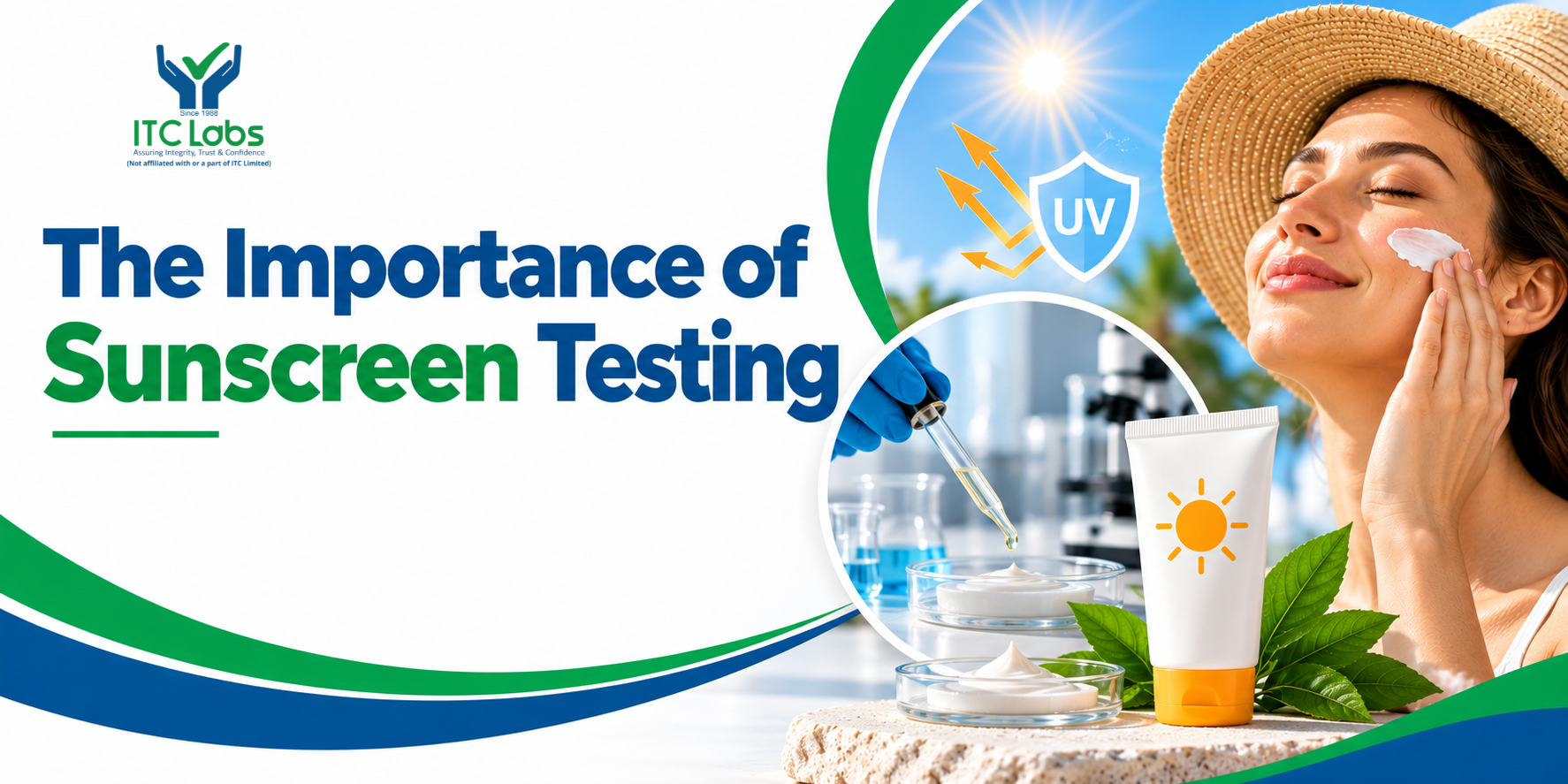
When winter arrives, many people reduce their skincare routine and often assume that sunscreen is only necessary during the hot summer months. However, ultraviolet (UV) radiation remains present throughout the year, making sunscreen an important part of daily skincare even during colder weather. While choosing a sunscreen with an appropriate SPF may seem simple, consumers and cosmetic brands also need to consider an equally important question: Has the sunscreen been properly tested for safety, quality, stability, and performance?
This is where a professional cosmetic testing lab plays an important role. Proper testing helps cosmetic manufacturers verify that their sunscreen products meet applicable quality and safety requirements before they reach consumers.
For cosmetic manufacturers, importers, formulators, and brands, Sunscreen testing is an essential part of product development and quality assurance. From evaluating SPF claims to assessing product stability and safety, professional laboratories provide scientific data that can help brands make reliable product claims and maintain consumer confidence.
Why Is Sunscreen Important in Winter?
Cold weather does not eliminate UV exposure. UVA rays can reach the skin throughout the year and may contribute to premature skin ageing and other forms of skin damage. Depending on the environment, outdoor activities, altitude, and geographical location, UV exposure can remain significant even when temperatures are low.
Snow and other reflective surfaces can also increase exposure by reflecting UV radiation toward the skin. People who spend time outdoors during winter therefore continue to benefit from appropriate sun protection.
However, selecting a sunscreen should involve more than simply looking at the SPF number on the packaging. Consumers should consider whether the product has been manufactured according to appropriate quality standards and whether its safety and performance claims have been properly evaluated.
This is why laboratory testing is important.
What Is Sunscreen Testing?
Sunscreen testing involves scientific evaluation of a sunscreen formulation to determine whether it meets specified quality, safety, stability, and performance requirements.
Depending on the product and applicable requirements, testing may evaluate characteristics such as:
- SPF performance
- UVA protection
- Product stability
- Physical and chemical characteristics
- Microbiological quality
- Preservation effectiveness
- Skin safety and compatibility
- Packaging and product interaction
- Consistency between batches
- Compliance with applicable standards and regulations
The exact testing requirements can vary according to the formulation, intended market, product claims, and applicable regulatory framework.
A professional laboratory uses validated or appropriate analytical and testing methods to generate reliable data that can support product development and quality assurance.
How Does a Sunscreen Testing Procedure Work?
A typical Sunscreen testing procedure begins with receiving and documenting the product sample. The laboratory may then evaluate the sunscreen according to the specific testing requirements agreed upon with the manufacturer or brand.
The process can include several stages.
1. Sample Collection and Documentation
The laboratory receives representative samples of the sunscreen. Details such as product name, batch information, formulation information, and requested tests may be documented to maintain traceability.
2. Physical and Chemical Evaluation
The product may be assessed for relevant physical and chemical characteristics. Depending on the formulation, laboratories may examine parameters such as appearance, colour, odour, pH, viscosity, and other applicable properties.
3. SPF Evaluation
One of the most important aspects of sunscreen evaluation is determining whether the product’s claimed SPF performance is supported by appropriate testing.
SPF testing laboratories in India can provide specialized testing services to help manufacturers evaluate sunscreen performance according to applicable methodologies and requirements.
4. Stability Assessment
Sunscreen formulations need to remain stable during their intended shelf life. Stability studies can help determine how factors such as temperature, light, humidity, and time may affect the product.
A stable formulation is important because changes in the product may affect its appearance, physical properties, chemical characteristics, or overall performance.
5. Microbiological Testing
Cosmetic products containing water or other ingredients that can support microbial growth may require microbiological evaluation. Testing can help identify unwanted microbial contamination and support appropriate product quality and safety controls.
6. Reporting
After testing is completed, the laboratory prepares a report containing the relevant results. These reports can help cosmetic companies with quality control, product development, regulatory documentation, and product improvement.
Because testing requirements vary by product, manufacturers should work with laboratories that understand the specific characteristics and intended claims of their sunscreen.
Why Choose Expert Sunscreen Testing Labs?
Working with expert sunscreen testing labs gives cosmetic manufacturers access to specialized laboratory capabilities, trained professionals, appropriate testing methodologies, and structured reporting.
Sunscreen is a technically complex category because its performance depends on formulation, active ingredients, concentrations, product characteristics, and manufacturing consistency.
A laboratory experienced in cosmetic testing can help manufacturers identify potential quality issues before products are introduced to the market.
Professional testing can also help brands:
- Support product safety and quality objectives
- Verify relevant product characteristics
- Evaluate sunscreen performance
- Improve formulation consistency
- Identify potential quality issues
- Maintain batch-to-batch consistency
- Support regulatory and technical documentation
- Build consumer confidence
For brands developing new sunscreen products, laboratory testing should ideally be considered during product development rather than only after the final formulation has been launched.
Need Reliable Sunscreen Testing Services?
Ensure your sunscreen products meet quality, safety, stability, and performance requirements with professional cosmetic testing services. Get expert support for SPF evaluation, stability studies, microbiological testing, and quality assurance.
What Does a Sunscreen Safety Checker Do?
The term sunscreen safety checker can refer to a tool, professional assessment, or laboratory testing process used to evaluate different aspects of sunscreen safety and quality.
However, consumers should understand that simply checking an ingredient list or product label cannot replace laboratory testing.
A professional laboratory can perform scientific assessments that go beyond what is visible on packaging. Testing can provide objective information about specific product characteristics and performance.
For manufacturers, this distinction is particularly important. Marketing claims should be supported by appropriate evidence and testing rather than assumptions based solely on formulation ingredients.
Why Sunscreen Testing Matters for Cosmetic Brands
The cosmetics market has become increasingly competitive. Consumers are more aware of product ingredients, SPF claims, skin compatibility, and product safety than ever before.
A sunscreen manufacturer therefore needs more than attractive packaging and a strong marketing strategy. Product quality needs to be supported by scientific evaluation.
Testing can help manufacturers identify issues such as:
- Inconsistent formulation
- Changes during storage
- Microbial contamination
- Inadequate product stability
- Variation between production batches
- Performance that may not support a particular claim
A reliable testing program can help reduce these risks and support better product development decisions.
It can also help brands demonstrate their commitment to quality.
Finding Sunscreen Testing Near Me
Manufacturers frequently search online for Sunscreen testing near me when looking for a laboratory that can evaluate their products. Similarly, searches such as cosmetic testing lab near me can help businesses identify testing providers in their region.
However, proximity should not be the only consideration when selecting a laboratory.
Before choosing a laboratory, cosmetic businesses should consider:
- Laboratory experience
- Range of testing services
- Relevant testing capabilities
- Qualified technical professionals
- Quality management systems
- Reporting practices
- Turnaround time
- Regulatory understanding
- Ability to handle the specific product category
A laboratory that offers comprehensive Cosmetics Products Testing Services can be particularly useful for brands that manufacture multiple types of cosmetic products.
Cosmetics Testing Laboratories in India
India has a growing cosmetics and personal-care industry, with manufacturers producing products for both domestic and international markets. As the industry expands, reliable laboratory testing becomes increasingly important.
Cosmetics testing laboratories in India support manufacturers by providing analytical, microbiological, physical, chemical, and other relevant testing services for cosmetic products.
For sunscreen manufacturers, choosing a laboratory with suitable testing capabilities can help support product quality and compliance requirements.
Testing laboratories can also work with brands during different stages of the product lifecycle, including research and development, formulation improvement, quality control, batch testing, stability studies, and regulatory documentation.
Why Professional Cosmetic Testing Is Better Than Relying on Labels Alone
A sunscreen label may provide useful information about SPF, ingredients, directions for use, and other product characteristics. However, a label alone does not provide the complete scientific picture of product quality.
Laboratory testing provides objective data that can be used to evaluate specific product characteristics.
This is particularly important when a brand makes performance-related claims. Claims such as high SPF, broad-spectrum protection, water resistance, or long-lasting protection may require appropriate evidence depending on the market and applicable requirements.
For this reason, cosmetic manufacturers should integrate laboratory testing into their quality assurance and product-development processes.
Choosing a cosmetic testing laboratory
When selecting a cosmetic testing lab, businesses should look beyond the price of an individual test.
A good testing partner should understand the cosmetics industry and be able to provide clear communication, reliable results, and appropriate technical support.
Manufacturers should also ask whether the laboratory can support multiple testing requirements. For example, a company launching a sunscreen may require SPF-related evaluation, microbiological testing, stability assessment, and other quality tests.
Working with one experienced laboratory for multiple requirements can simplify communication and documentation.
Conclusion: Choose the Right Partner for Sunscreen Testing
Sunscreen should not be considered only a summer skincare product. Winter UV exposure makes sun protection relevant throughout the year, while proper laboratory testing helps ensure that sunscreen products meet appropriate quality, safety, stability, and performance expectations.
For cosmetic manufacturers, Sunscreen testing is an important part of responsible product development. From SPF evaluation and stability assessment to microbiological and quality testing, professional laboratory services can provide the scientific information brands need to develop reliable products and support their claims.
If you are looking for a dependable testing partner, ITC Labs can be a valuable choice for cosmetic testing requirements.
With over 37 years of expertise in analytical testing and quality assurance, ITC Labs supports businesses in the cosmetics industry with accurate, reliable, and timely testing services. Its experienced professionals and testing facilities are dedicated to helping clients evaluate their products and maintain high-quality standards.
ITC Labs focuses on client satisfaction through comprehensive reporting and personalized support, helping businesses navigate complex regulatory landscapes and meet the expectations of today’s global consumers.
With its extensive testing capabilities, industry expertise, and commitment to excellence, ITC Labs can support cosmetic businesses looking to strengthen product quality, safety, and compliance.
For brands developing or evaluating sunscreen and other cosmetic products, partnering with an experienced cosmetic testing lab is an important step toward building consumer trust and protecting brand reputation.
FAQs About Sunscreen Testing
1. Is sunscreen necessary during winter?
Yes. UV radiation is present throughout the year, so appropriate sun protection can remain important during winter, particularly for people spending significant time outdoors.
2. Why is sunscreen testing important?
Sunscreen testing helps manufacturers evaluate product quality, safety, stability, and performance. It can also provide supporting data for relevant product claims and quality-control processes.
3. What is included in a Sunscreen testing procedure?
Depending on the product and requirements, testing may include physical and chemical evaluation, SPF-related testing, stability assessment, microbiological testing, and other applicable quality assessments.
4. How can I find sunscreen testing near me?
Businesses can search for Sunscreen testing near me or cosmetic testing lab near me, but should evaluate laboratories based on their expertise, testing capabilities, quality practices, reporting, and relevant experience – not location alone.
5. Are there sunscreen testing laboratories in India?
Yes. There are specialized SPF testing laboratories in India and laboratories offering broader cosmetic testing services. Manufacturers should select a facility based on the specific testing requirements of their product and intended market.
Choose professional testing. Support quality. Build consumer confidence.