
Let’s be honest, when the word “benzene” starts showing up in headlines tied to everyday consumer products, it gets people’s attention. And over the past several months, that’s exactly what happened. Across the pharmaceutical, cosmetic, and personal care sectors, benzene detections in certain products have triggered a wave of questions: How did it get there? Who’s responsible? And more importantly, what does this mean for product safety going forward?
The short answer is that it’s complicated. Finding benzene in a product doesn’t always signal a catastrophic failure, but it does signal something worth taking seriously.
Benzene Doesn’t Just “Show Up” Without Reason
Here’s the thing about benzene: nobody puts it there on purpose. It’s a volatile organic compound (VOC) with well-documented health concerns, and regulators worldwide have set tight limits on how much exposure is considered acceptable.
So where does it come from? That’s where it gets tricky. Benzene can sneak in through contaminated raw materials, linger as a leftover from manufacturing processes, form when packaging interacts unexpectedly with a formulation, or develop as an ingredient breaks down over time under heat, light, or humidity. In other words, a product can be perfectly clean on Day 1 and look very different by Month 18.
That’s an uncomfortable reality for manufacturers, but it’s also the reality of modern product development.
Testing Has to Go Further Than It Used To
For a long time, quality control meant testing your active ingredients and making sure everything looked good at the point of manufacture. That still matters, but it’s no longer enough.
Today’s consumers and regulators expect manufacturers to understand the full chemical story of a product. Not just what’s in it, but what could develop in it. Not just at production, but throughout its entire shelf life.
This is exactly where impurity testing steps in.
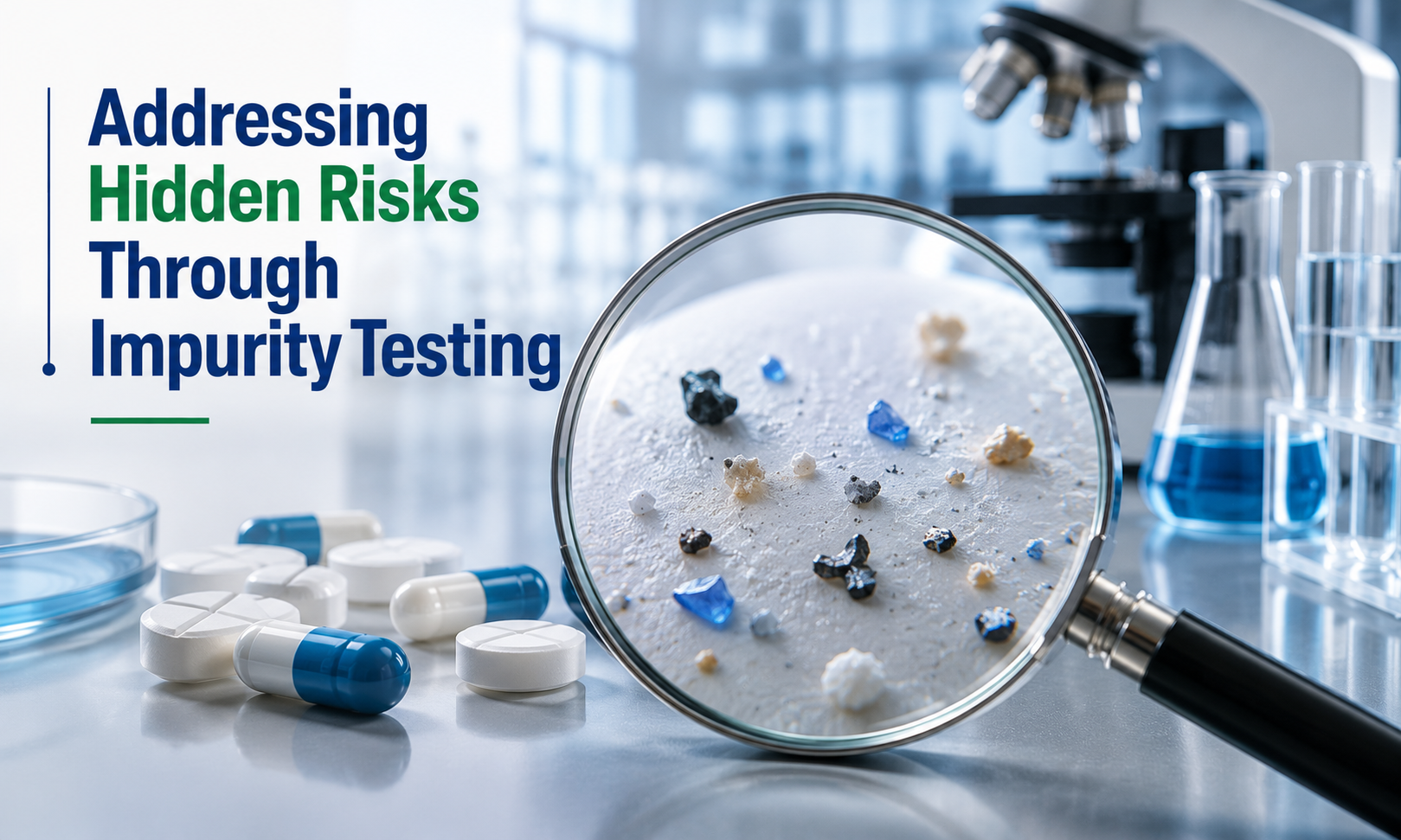
Impurity testing is the process of detecting, identifying, and measuring substances in a product that aren’t supposed to be there. Some of these substances exist at barely measurable concentrations. But even at low levels, they can influence safety profiles, trigger regulatory flags, or quietly erode consumer trust.
Getting ahead of these issues rather than reacting to them is what separates strong quality programs from weak ones.
Where Impurities Actually Come From
Understanding the problem starts with knowing where to look. Impurities don’t always have an obvious origin, and that’s part of what makes them challenging.
Raw materials are a common entry point. Even materials sourced from reputable suppliers can carry trace contaminants that slip through if screening isn’t thorough. From there, the manufacturing process itself can introduce unwanted compounds through solvents, catalysts, or chemical reactions that create byproducts no one planned for.
Then there’s what happens after manufacturing. Ingredients degrade. Formulations change character when exposed to oxygen, light, or moisture over time. Packaging that seemed inert may interact with a product in ways that weren’t anticipated. Storage warehouses, shipping containers, temperature swings — all of these environmental factors can leave their mark on a product long before it reaches a consumer’s hands.
Why Risk-Based Testing Is Gaining Ground
The benzene situation has reinforced something many quality professionals already suspected: standard spec-based testing has its blind spots. A product can pass every quality check at release and still develop problems over its lifecycle.
That’s why more manufacturers are moving toward risk-based testing strategies, an approach that asks, “Where are the vulnerabilities in this formulation?” rather than simply, “Does this batch meet spec?”
Products with reactive ingredients, volatile compounds, or particularly complex formulations tend to need more intensive monitoring. Risk-based programs help teams prioritize where to focus their attention and catch emerging issues before they become recalls or regulatory actions.
The Technology Behind the Detection
Identifying impurities at trace levels requires serious analytical capability. The tools commonly used in these programs include Gas Chromatography-Mass Spectrometry (GC-MS), High-Performance Liquid Chromatography (HPLC), Headspace Analysis, and Inductively Coupled Plasma Mass Spectrometry (ICP-MS). Each of these techniques plays a specific role depending on what type of impurity is being investigated and at what concentration.
This isn’t simple work. But the accuracy and sensitivity these methods provide make them invaluable for any manufacturer serious about product safety.
What Good Impurity Testing Actually Buys You
Beyond compliance which matters, but isn’t the whole story comprehensive impurity testing gives manufacturers something genuinely valuable: clarity.
It builds a real picture of how a product behaves under real-world conditions. It surfaces risks early, when they’re still manageable. It reduces the likelihood of a recall that not only costs money but damages the relationship with consumers that took years to build.
More than any of that, it reflects a mindset shift from reactive to proactive. From “we’ll deal with it if it comes up” to “we’re going to find it before it becomes a problem.”
Conclusion
The benzene concerns that made headlines recently weren’t just a story about one compound in one category. They were a signal about where quality assurance needs to go and how manufacturers who take impurity management seriously will be better positioned, both with regulators and with the people buying their products.
At ITC Labs, we help manufacturers build that foundation. Through advanced analytical testing and lifecycle-focused impurity monitoring, we support the kind of quality programs that don’t just check boxes they actually protect people.
Frequently Asked Questions
1. What is impurity testing?
Impurity testing identifies and measures unwanted substances in a product to ensure safety, quality, regulatory compliance, and consistent performance throughout its lifecycle.
2. What causes benzene contamination in products?
Benzene may originate from contaminated raw materials, manufacturing processes, packaging interactions, or ingredient degradation caused by heat, light, or storage conditions.
3. Why is benzene a concern in consumer products?
Benzene is a potentially harmful compound. Its presence can raise safety concerns, trigger regulatory scrutiny, and impact consumer confidence.
4. How is benzene detected during testing?
Benzene is commonly detected using advanced analytical techniques such as Gas Chromatography-Mass Spectrometry (GC-MS) and Headspace Analysis.
5. What are the common sources of product impurities?
Common sources include raw materials, residual solvents, manufacturing byproducts, degradation products, packaging interactions, and environmental exposure.
6. What is risk-based impurity testing?
Risk-based impurity testing identifies formulation vulnerabilities and focuses testing efforts on areas most likely to develop quality or safety issues.
7. Can impurities form during a product’s shelf life?
Yes. Ingredients may degrade or react with environmental factors over time, leading to the formation of new impurities during storage.
8. Why is comprehensive impurity testing important?
Comprehensive impurity testing helps detect contaminants early, supports regulatory compliance, reduces recall risks, and protects consumer safety.