
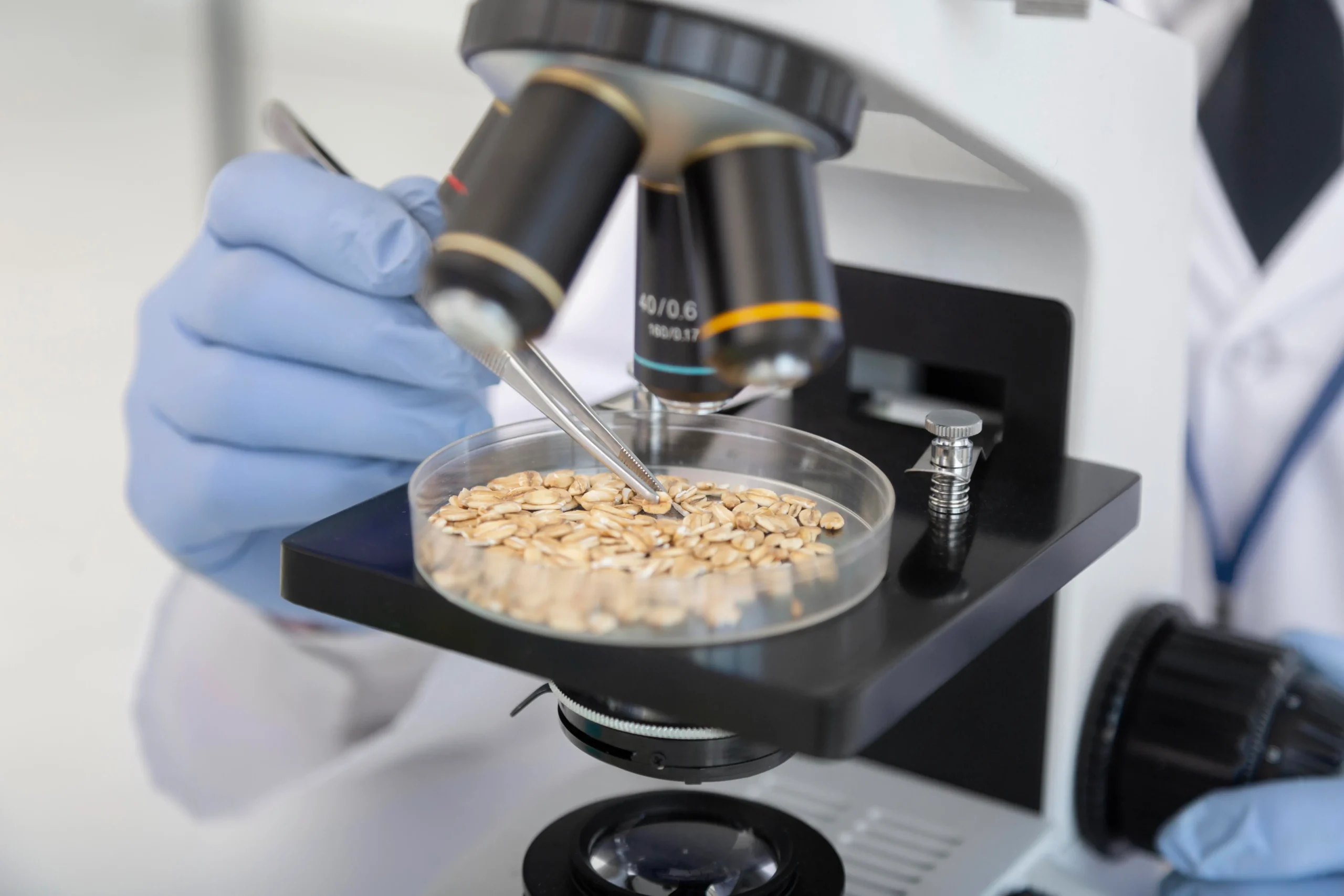
Nutrient fortification testing is essential to ensure that fortified cereals and beverages deliver the exact vitamins and minerals promised on their labels—safely, consistently, and in compliance with regulations. For manufacturers, this testing validates nutrient claims; for consumers, it ensures health benefits without risk. In a market where functional foods and nutraceutical products are growing rapidly, accurate fortification testing through a trusted food testing laboratory is no longer optional—it is a regulatory and quality necessity.
This blog explores how nutrient fortification testing works, the analytical methods used, applicable standards, and why partnering with accredited nutraceutical & functional food testing labs is critical for long-term brand trust and compliance.
Understanding Nutrient Fortification in Cereals and Beverages
Nutrient fortification refers to the intentional addition of essential micronutrients—such as iron, calcium, vitamin D, B-complex vitamins, and zinc—to food products to improve their nutritional value. Cereals and beverages are ideal vehicles for fortification due to their widespread consumption across age groups.
Why Cereals and Beverages?
- Widely consumed daily staples
- Easy integration of micronutrients
- Proven impact on public health (e.g., iron-fortified cereals reducing anemia)
However, fortification introduces complexity. Nutrients can degrade during processing, storage, or interaction with other ingredients. This is where functional food testing and food analysis labs play a vital role.
Why Nutrient Fortification Testing Is Critical
1. Consumer Safety and Health
Excess or deficient nutrient levels can pose health risks. For example, excessive vitamin A intake can be toxic, while insufficient iron defeats the purpose of fortification. Quality assurance testing ensures safe dosage levels.
2. Regulatory Compliance
In India, fortified foods must comply with FSSAI regulations, while export markets require alignment with Codex, EFSA, or FDA standards. Only NABL accredited labs in India can provide compliant test reports.
3. Label Claim Verification
Mislabeling—even unintentionally—can result in recalls, penalties, and loss of consumer trust. Fortification testing verifies that nutrient content matches declared values throughout shelf life.
4. Brand Credibility
Consistent testing through a reputed analytical testing lab builds long-term brand reliability, especially in competitive functional food markets.
Fortification Testing Methods Used in Cereals and Beverages
Modern food testing services rely on advanced analytical techniques to ensure accuracy and repeatability.
1. Chemical and Instrumental Analysis
High-Performance Liquid Chromatography (HPLC)
Used extensively for vitamin analysis (A, D, E, B-complex).
- High sensitivity and precision
- Ideal for fortified beverages and cereals
Inductively Coupled Plasma – Mass Spectrometry (ICP-MS)
Used for mineral testing such as iron, calcium, zinc, and magnesium.
- Detects trace-level elements
- Essential for micronutrient fortification testing
These techniques are standard in every top food testing lab in India offering nutraceutical testing services.
2. Stability and Shelf-Life Testing
Nutrients degrade over time due to:
- Heat processing
- Light exposure
- Moisture and oxygen
Functional food analysis includes accelerated and real-time stability studies to assess nutrient retention throughout the product’s shelf life.
Real-world example:
Iron-fortified breakfast cereals may lose up to 20% iron content over 6 months if packaging is inadequate. Stability testing identifies such risks early.
3. Homogeneity and Dosage Uniformity Testing
Fortified nutrients must be evenly distributed across batches. Quality assurance testing laboratories assess:
- Batch-to-batch consistency
- Uniform nutrient dispersion
This is particularly critical for powdered cereals and liquid beverages.
4. Contaminant and Safety Testing
Alongside fortification testing, comprehensive food testing laboratory protocols include:
- Heavy metals
- Pesticide residues
- Microbiological contamination
This integrated approach is a hallmark of reliable nutraceutical testing labs in India.
Standards and Regulations Governing Fortification Testing
Indian Standards (FSSAI)
- Food Safety and Standards (Fortification of Foods) Regulations
- Mandatory fortification levels for staples
- Defined testing frequency and methods
International Guidelines
- Codex Alimentarius
- EFSA (Europe)
- FDA (USA)
Only a competent analytical testing lab with regulatory expertise can interpret and apply these standards correctly.
Role of Nutraceutical & Functional Food Testing Labs
Specialized nutraceutical & functional food testing labs go beyond basic food safety testing. They provide:
- Nutrient profiling
- Bioavailability studies
- Method validation
- Regulatory documentation support
This holistic approach ensures fortified cereals and beverages remain compliant throughout their lifecycle.
Challenges in Nutrient Fortification Testing
Nutrient Interactions
Certain vitamins degrade faster in the presence of minerals. For example, vitamin C can accelerate iron oxidation.
Matrix Complexity
Cereals contain fibers, fats, and proteins that interfere with nutrient extraction—requiring advanced food analysis lab expertise.
Regulatory Variability
Different markets require different testing protocols, making global compliance complex.
These challenges highlight why choosing a reputed quality assurance lab is crucial.
Importance of Choosing a NABL Accredited Food Testing Lab
A NABL accredited lab in India ensures:
- Validated test methods
- Internationally accepted reports
- Regulatory confidence
Accreditation is especially critical for export-oriented fortified food brands.
How Fortification Testing Supports Public Health Goals
Government-led fortification programs depend heavily on accurate testing. Proper functional food testing has helped:
- Reduce iron-deficiency anemia
- Improve calcium intake in children
- Enhance vitamin D levels in urban populations
Testing ensures these initiatives achieve measurable outcomes.
Future Trends in Fortification Testing
- Rapid testing technologies
- Digital traceability of nutrient data
- AI-driven stability predictions
Leading analytical testing labs are already adopting these innovations to support next-generation functional foods.
Conclusion: Partnering with the Right Testing Expert
As fortified cereals and beverages continue to dominate the functional food market, nutrient fortification testing remains the backbone of safety, compliance, and consumer trust. From nutrient analysis to shelf-life studies, every step requires precision, expertise, and regulatory alignment.
Why Choose ITC Labs for Nutraceutical Testing?
ITC Labs stands out as one of the most trusted nutraceutical testing labs in India and a leader in functional food testing and quality assurance testing. With over 30 years of experience, ITC Labs offers end-to-end nutraceutical testing services supported by high-sensitivity chromatography and advanced analytical methodologies.
Recognised by FSSAI, NABL, BIS, APEDA, and AYUSH, ITC Labs aligns with global standards including ICH-Q3D. Their comprehensive solutions cover raw material validation, stability testing, shelf-life studies, and finished product analysis across all formats—cereals, beverages, functional foods, syrups, tablets, and capsules.
For brands seeking accuracy, compliance, and credibility, ITC Labs is a reliable partner in delivering safe and effective fortified food products.
FAQs on Nutrient Fortification Testing
1. What is fortification testing?
Fortification testing measures added vitamins and minerals in foods to ensure safety, accuracy, and regulatory compliance.
2. Is fortification testing mandatory in India?
Yes, for foods covered under FSSAI fortification regulations, testing through an approved food testing laboratory is mandatory.
3. How often should fortified foods be tested?
Testing is required during product development, batch release, and periodically throughout shelf life.
4. What is the difference between food testing and nutraceutical testing?
Nutraceutical testing includes advanced analysis for functional claims, bioactive compounds, and stability, beyond basic food safety tests.
5. Why choose a NABL accredited testing lab?
NABL accreditation ensures test accuracy, method validation, and global acceptance of reports.