

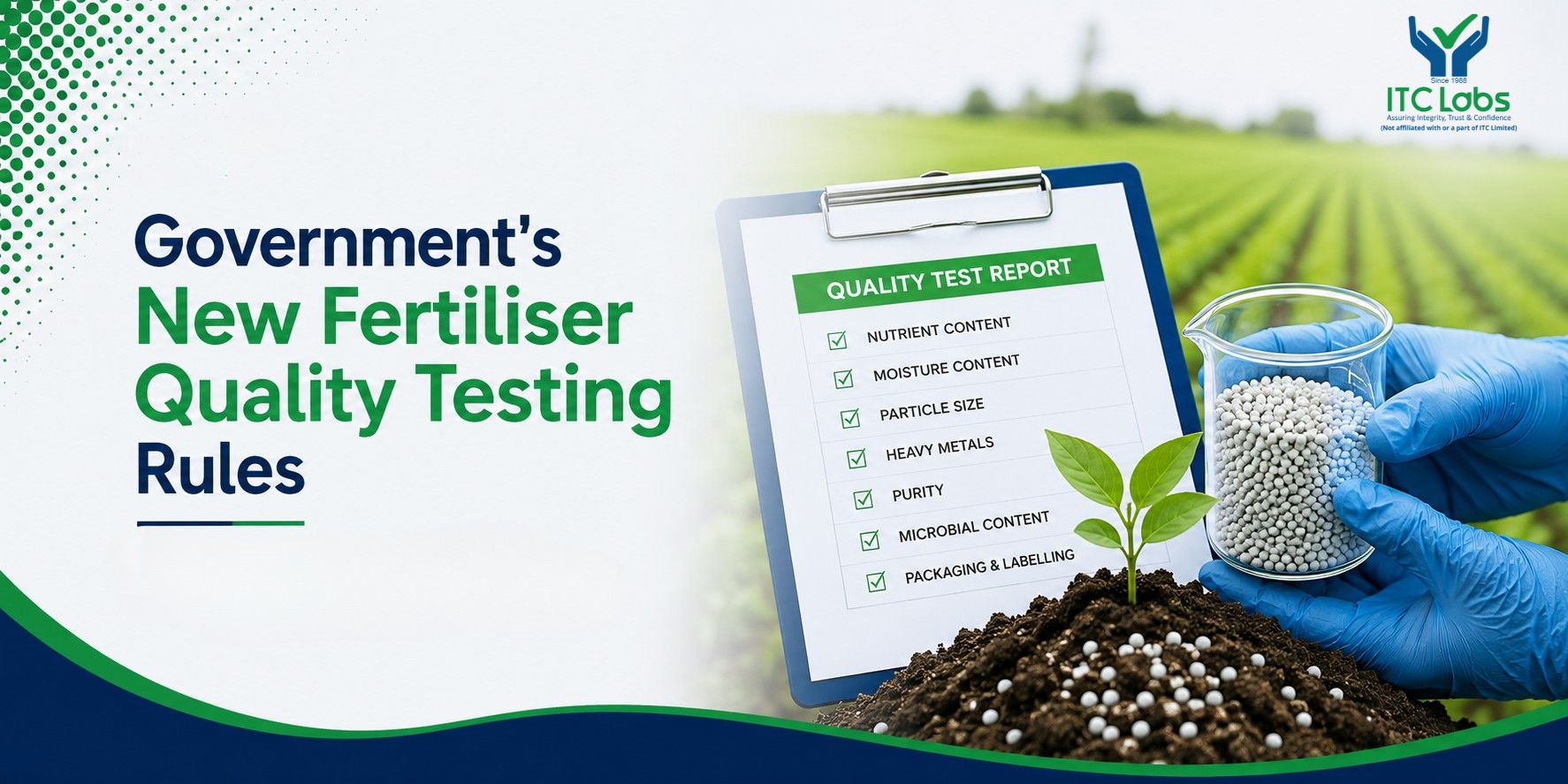
India’s agricultural sector depends heavily on the availability of high-quality fertilisers. Fertilisers play an important role in supporting crop productivity, soil health, and agricultural output. However, ensuring that every fertiliser product consistently meets the required quality standards has long been a challenge.
To strengthen accountability and improve transparency, the Government of India has introduced a revised fertiliser quality testing framework under the Fertiliser Control Order (FCO). The updated system aims to make testing more reliable while giving manufacturers a structured process to address disputed test results.
For fertiliser manufacturers, this development goes beyond regulatory compliance. It reinforces the need for accurate laboratory testing, robust quality control practices, proper documentation, and reliable testing partners throughout the production process.
Understanding the New Fertiliser Quality Testing Framework
The revised fertiliser quality testing framework introduces a multi-level testing mechanism for fertiliser samples that are initially classified as non-standard. Earlier, manufacturers often had limited options to challenge a test result. Under the new framework, they can request additional analyses through designated laboratories, creating a more transparent and scientifically robust evaluation process.
The objective is simple: improve the accuracy of testing while ensuring that manufacturers receive fair opportunities to verify product quality. At the same time, the framework strengthens confidence in the fertilisers reaching farmers across the country.
This approach places greater emphasis on scientific verification and gives manufacturers a more structured mechanism for addressing potentially disputed test results.
What Does This Mean for Fertiliser Manufacturers?
The updated fertiliser quality testing framework brings both new responsibilities and new opportunities. Manufacturers that already maintain strong quality systems are likely to benefit, while those relying only on end-product inspections may need to strengthen their processes.
The focus is shifting from simply identifying quality failures to preventing them through continuous monitoring, testing, and documentation.
Here are some of the key implications for fertiliser manufacturers.
1. Greater Focus on Product Quality
Quality can no longer be viewed as a final checkpoint before dispatch. Every stage of production, from raw material selection to finished product testing, must contribute to compliance.
Regular laboratory analysis helps identify deviations early, reducing the likelihood of products being classified as non-standard during regulatory inspections.
By monitoring quality parameters at different stages of manufacturing, businesses can identify process variations before they affect an entire production batch. This preventive approach can also support more consistent product performance.
2. Increased Importance of Laboratory Testing
With multiple levels of verification now possible, laboratory reports will play an even more critical role in demonstrating compliance.
Accurate testing ensures that manufacturers have reliable data to support product quality whenever questions arise. This makes choosing a competent testing laboratory more important than ever.
A laboratory should have appropriate technical capabilities, qualified personnel, validated testing procedures, and the necessary accreditation for the relevant testing requirements.
For manufacturers, reliable laboratory data can support internal quality control as well as provide useful documentation when products are subject to regulatory scrutiny.
3. Better Risk Management
Non-compliant fertilisers can lead to regulatory action, financial losses, delayed market entry, and reputational damage.
Routine testing allows manufacturers to detect quality issues before products leave the facility. Instead of reacting to failures, businesses can proactively improve production consistency and reduce compliance risks.
A preventive testing strategy can also help manufacturers identify recurring issues in raw materials, production processes, storage conditions, or finished products.
4. Stronger Documentation and Traceability
The revised fertiliser quality testing framework also highlights the importance of maintaining proper documentation.
Detailed testing records, quality reports, and batch-wise analysis help manufacturers demonstrate compliance during inspections and simplify the resolution of disputes if they occur.
Maintaining organised records also makes it easier to trace the history of a product batch, identify the source of a quality deviation, and take corrective action when required.
Why Laboratory Testing Should Be Part of Every Manufacturing Process
Many quality issues cannot be identified through visual inspection alone. Nutrient imbalance, moisture variation, contamination, or incorrect composition often require advanced analytical techniques.
Comprehensive fertiliser testing can help evaluate important quality parameters such as:
- Nutrient composition
- Moisture content
- Physical characteristics
- Chemical composition
- Contaminants and impurities
- Compliance with applicable standards
Laboratory testing provides manufacturers with objective data that can be used to evaluate whether products meet defined specifications.
Testing throughout the manufacturing cycle, not just before product release, helps improve consistency while reducing the risk of regulatory non-compliance.
Testing Raw Materials
Raw materials directly influence the quality of the finished fertiliser. Testing incoming materials can help manufacturers identify variations before they enter the production process.
This can reduce the risk of using unsuitable or inconsistent raw materials and help maintain uniformity between batches.
Conducting In-Process Testing
In-process quality checks allow manufacturers to monitor critical stages of production. If a deviation is detected, corrective action can potentially be taken before the issue affects the final product.
This approach can improve process control and reduce unnecessary waste, rework, and production losses.
Testing Finished Products
Finished-product testing provides an important final verification before products are released to the market. It helps manufacturers confirm that the batch meets the applicable specifications and quality requirements.
Maintaining batch-wise test reports also provides a documented record of quality verification.
The Business Benefits of Proactive Fertiliser Testing
The revised fertiliser quality testing framework is ultimately encouraging manufacturers to adopt a preventive approach to quality assurance.
Businesses that invest in routine laboratory testing can benefit from:
- Improved regulatory compliance
- Greater product consistency
- Reduced risk of product rejection
- Better customer confidence
- Lower recall and rework costs
- Stronger brand reputation
These advantages extend well beyond compliance. They contribute directly to operational efficiency and long-term business growth.
When quality problems are detected early, manufacturers may be able to avoid the higher costs associated with rejected batches, production interruptions, customer complaints, reprocessing, or product recalls.
Preparing for the New Regulatory Landscape
As regulatory expectations continue to evolve, manufacturers should review their existing quality assurance systems. This includes evaluating testing frequency, reviewing laboratory partnerships, and ensuring production processes consistently meet required standards.
A proactive quality management strategy can help manufacturers adapt more effectively to changing regulatory expectations.
Some practical steps include:
- Test incoming raw materials before production.
- Conduct in-process quality checks at critical stages.
- Verify finished products before market release.
- Maintain detailed laboratory reports for every batch.
- Review quality control procedures regularly.
- Maintain proper batch-wise traceability.
- Partner with an experienced, NABL-accredited testing laboratory.
These measures not only support compliance with the new fertiliser quality testing framework but also strengthen overall manufacturing performance.
Choosing the Right Fertiliser Testing Laboratory
Selecting a suitable laboratory is an important part of a manufacturer’s quality assurance strategy. Test results can influence production decisions, regulatory responses, and product release, making accuracy and reliability essential.
Manufacturers should consider factors such as:
NABL Accreditation
Partnering with a NABL-accredited laboratory for relevant testing requirements can provide greater confidence in the laboratory’s technical competence and testing systems.
Testing Capabilities
The laboratory should have the analytical capabilities required for the specific fertiliser products and parameters being tested.
Technical Expertise
Experienced professionals and appropriate testing methodologies can contribute to reliable and scientifically sound results.
Accurate Reporting
Clear and comprehensive test reports make it easier for manufacturers to review results, maintain records, and demonstrate quality compliance.
Consistent Turnaround
Efficient testing and reporting can help manufacturers make timely production and product-release decisions.
How ITC Labs Supports Fertiliser Quality Testing
ITC Labs supports fertiliser manufacturers with comprehensive testing solutions designed to help businesses meet evolving regulatory requirements with confidence.
Backed by advanced analytical capabilities, experienced professionals, and a commitment to accuracy, ITC Labs delivers reliable test results that support quality assurance across every stage of production.
From evaluating important quality parameters to supporting batch-wise quality verification, laboratory testing can form an important part of a manufacturer’s overall quality management strategy.
As the industry adapts to the new fertiliser quality testing framework, partnering with a trusted laboratory like ITC Labs can help manufacturers stay compliant, minimise risk, and deliver high-quality fertiliser products to the market.
Conclusion
The Government’s revised fertiliser quality testing framework represents a significant step toward improving quality assurance and transparency within India’s fertiliser industry. While the updated regulations introduce additional oversight, they also provide manufacturers with a more structured and scientifically sound testing process.
For businesses, the message is clear: quality can no longer be treated as an afterthought. Consistent laboratory testing, thorough documentation, effective quality control, and reliable analytical support are now essential for maintaining compliance and protecting brand credibility.
Manufacturers that adopt a proactive approach to quality testing can not only reduce regulatory risks but also improve production consistency, strengthen customer confidence, and support long-term business performance.
As fertiliser quality requirements continue to evolve, having a reliable testing partner can make quality assurance more systematic and effective. ITC Labs can support manufacturers with comprehensive fertiliser testing solutions designed to help them make informed quality decisions and meet applicable testing requirements with confidence.
Frequently Asked Questions
1. What is the new fertiliser quality testing framework?
The new framework introduces a multi-level testing process for non-standard fertiliser samples, improving transparency, accuracy, and providing manufacturers with opportunities for additional laboratory verification.
2. Why is fertiliser quality testing important for manufacturers?
Fertiliser quality testing helps manufacturers ensure product compliance, maintain consistent quality, reduce regulatory risks, and build trust with distributors, farmers, and regulatory authorities.
3. How does laboratory testing support regulatory compliance?
Laboratory testing verifies that fertilisers meet prescribed quality standards, helping manufacturers comply with the Fertiliser Control Order and avoid penalties, product rejection, or legal issues.
4. What parameters are commonly tested in fertilisers?
Fertiliser testing typically includes nutrient composition, moisture content, chemical properties, contaminants, physical characteristics, and other quality parameters specified under applicable regulatory standards.
5. How often should fertiliser manufacturers conduct laboratory testing?
Manufacturers should perform routine testing on raw materials, in-process samples, and finished products to ensure consistent quality and compliance throughout the production cycle.
6. Why should manufacturers choose a NABL-accredited laboratory for fertiliser testing?
A NABL-accredited laboratory provides accurate, reliable, and technically validated test results, helping manufacturers meet regulatory requirements while strengthening product quality and credibility.