
Herbal and Ayurvedic products have been used for centuries as part of traditional healthcare systems. Today, the demand for herbal medicines, Ayurvedic formulations, plant-based supplements, and natural wellness products continues to grow. As consumers become more conscious of product safety and ingredient transparency, manufacturers must ensure that their products meet appropriate quality standards and regulatory requirements.
However, maintaining the quality and authenticity of herbal products can be challenging. Natural ingredients may vary in chemical composition depending on their geographical origin, harvesting season, storage conditions, processing methods, and extraction techniques. Additionally, the presence of adulterants, contaminants, or incorrect plant species can affect product quality and safety.
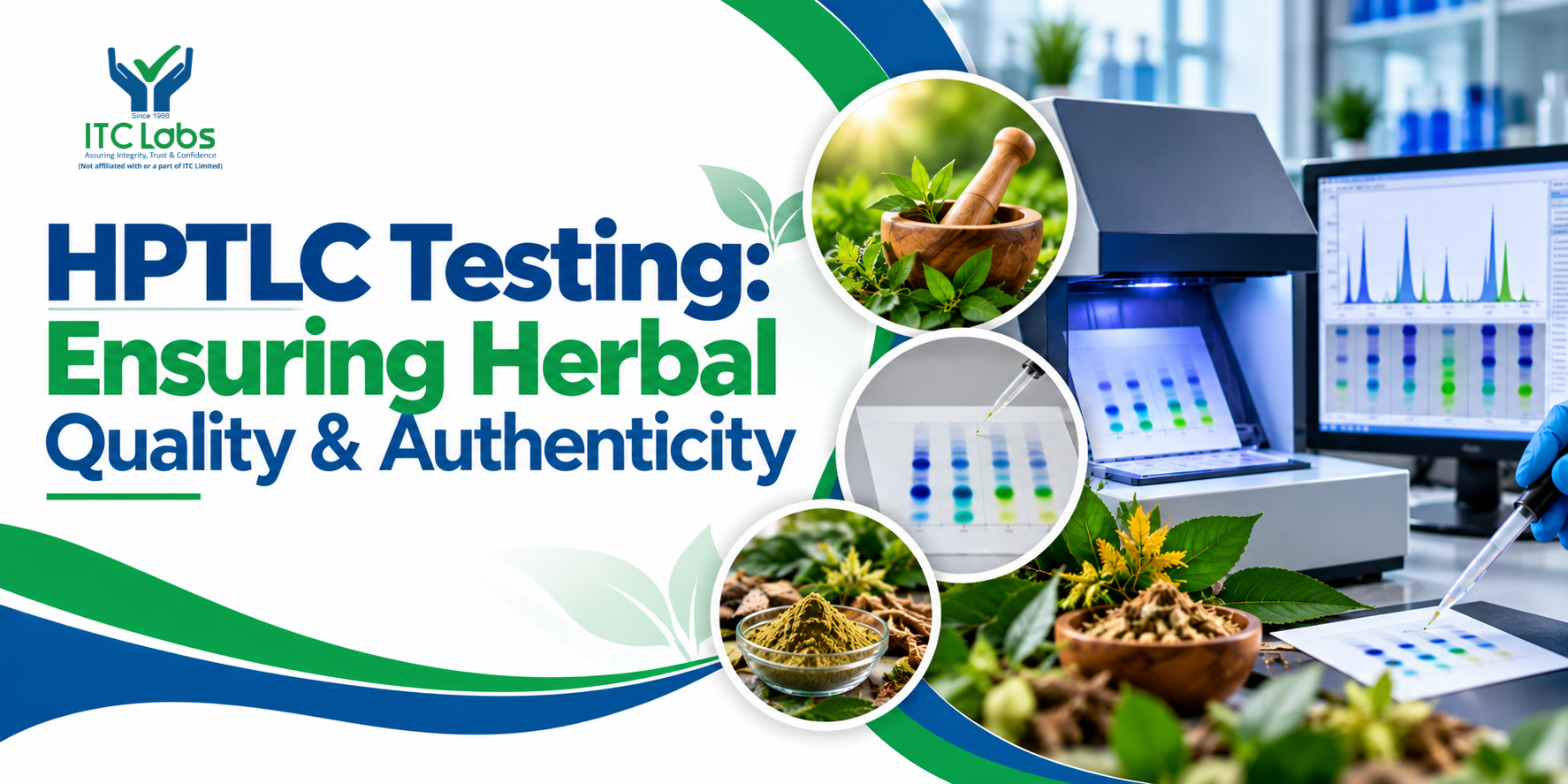
This is where High-Performance Thin-Layer Chromatography (HPTLC) plays an important role. HPTLC is an analytical technique used to identify, separate, and compare chemical compounds present in herbal ingredients and finished formulations. It helps laboratories develop chemical fingerprints of plant materials, verify ingredient identity, and assess consistency between batches.
For manufacturers looking for reliable Ayurvedic medicine testing and herbal quality assurance, HPTLC offers valuable analytical information that supports product authentication and quality control. At ITC Labs, advanced analytical technologies, including CAMAG HPTLC, can support the systematic evaluation of herbal and Ayurvedic products.
What Is HPTLC Testing?
High-Performance Thin-Layer Chromatography is an advanced form of thin-layer chromatography used for the separation and analysis of chemical substances in a sample.
In this technique, a sample containing multiple chemical compounds is applied to a specially prepared chromatographic plate. A suitable solvent system moves across the plate through capillary action, separating the compounds according to their chemical properties and interactions with the stationary and mobile phases.
After separation, the plate can be examined under visible light, ultraviolet light, or after applying appropriate derivatization reagents. The resulting pattern of separated compounds is known as a chromatographic fingerprint.
Modern HPTLC systems can also use digital imaging and densitometric analysis to evaluate specific compounds and compare their concentrations against suitable reference standards.
For an Ayurvedic product testing laboratory, this technique can help identify characteristic plant constituents and detect differences between samples. When performed using validated or appropriately established methods, HPTLC supports herbal drug analysis and provides valuable evidence for assessing the identity and consistency of botanical ingredients.
Why HPTLC Testing Important for Herbal Products?
Herbal formulations are complex mixtures of naturally occurring chemical substances. Their composition can change because of differences in plant varieties, environmental conditions, harvesting practices, and manufacturing processes.
Without suitable analytical testing, it may be difficult to establish whether a raw material contains the expected botanical ingredients or whether different production batches have a consistent chemical profile.
HPTLC helps address these challenges in several ways.
1. Identification and Authentication of Herbal Ingredients
One of the most important applications of HPTLC is the identification of herbal ingredients. Each plant contains a characteristic combination of chemical constituents, although these may vary depending on several factors.
HPTLC separates these constituents and produces a visual fingerprint that can be compared with an authenticated reference material or an appropriate pharmacopoeial reference profile.
This comparison helps analysts determine whether a sample exhibits the expected chemical characteristics of the intended plant material.
For example, when testing a botanical ingredient used in an Ayurvedic formulation, the laboratory can compare its chromatographic fingerprint with that of a suitable reference sample.
This approach supports the authentication process and may help identify certain forms of substitution or adulteration. However, a matching fingerprint alone does not establish every aspect of botanical identity, so additional tests may be necessary depending on the material and applicable standards.
Reliable identification is an essential part of Ayurvedic drug testing, particularly when several plant species have similar physical appearances or are sold under comparable traditional names.
2. Detection of Adulteration and Substitution
Adulteration is a significant quality concern in the herbal products industry. It can occur when an incorrect plant species, a lower-quality substitute, or an undeclared ingredient is used in place of the intended material.
Such practices may compromise product quality and, in some cases, create safety concerns.
HPTLC can help identify suspicious differences in chemical fingerprints by revealing unexpected bands, missing characteristic compounds, or substantial variations from an established reference profile.
These differences can indicate that a sample requires further investigation.
For example, if a herbal raw material shows a chromatographic pattern that differs significantly from its authenticated reference, analysts may investigate the possibility of substitution, contamination, or processing-related changes.
Although HPTLC cannot detect every possible adulterant, it is a valuable screening and identification tool within a broader herbal medicine quality control testing programme.
3. Evaluation of Chemical Consistency Between Batches
Consistency is essential for manufacturers producing herbal medicines on a commercial scale. Products manufactured using the same formulation should demonstrate an appropriate level of consistency in their identity and relevant quality attributes.
However, natural raw materials may differ from batch to batch due to seasonal variations, cultivation conditions, and differences in processing.
HPTLC fingerprinting allows laboratories to compare multiple samples and evaluate variations in their chromatographic profiles.
These comparisons can help manufacturers identify unusual batches, investigate differences in incoming raw materials, and monitor the consistency of finished formulations.
For companies seeking dependable Ayurvedic medicines quality testing, HPTLC can contribute to a documented quality control process that covers raw materials, intermediate products, and finished goods.
4. Identification and Quantification of Marker Compounds
Some herbal products contain specific chemical constituents known as marker compounds. These compounds may be selected to support identification, assess consistency, or monitor particular aspects of product quality.
HPTLC can be used to evaluate suitable marker compounds and, where the analytical method has been appropriately validated, estimate their concentrations using densitometric measurements.
The results can help manufacturers assess whether a sample meets established specifications for the selected marker.
It is important to understand that a marker compound does not necessarily represent the complete therapeutic activity of a plant. Herbal products often contain multiple constituents that contribute to their overall chemical profile.
Nevertheless, marker-based analysis is a useful component of herbal formulation testing when suitable reference standards, validated procedures, and acceptance criteria are available.
Looking for Reliable Herbal and Ayurvedic Testing Services?
Ensure herbal product purity, authenticity, and quality with ITC Labs’ testing services, including HPTLC analysis and other relevant quality assessment parameters.
How Does the HPTLC Testing Process Work?
A structured HPTLC testing procedure generally involves several stages. The exact process depends on the sample type, analytical objective, and applicable test method.
Step 1: Sample Collection and Preparation
The laboratory receives the herbal raw material, extract, powder, or finished formulation. The sample is documented and prepared using an appropriate extraction procedure.
Sample preparation is important because the quality of the final chromatographic result depends partly on how effectively the relevant compounds are extracted from the material.
Step 2: Application of the Sample
A measured quantity of the prepared sample is applied to an HPTLC plate, usually alongside suitable reference standards or comparison samples.
Accurate application helps improve the reproducibility and comparability of results.
Step 3: Chromatographic Separation
The plate is placed in a chamber containing a suitable mobile phase. As the solvent moves through the stationary phase, the sample components separate according to their individual properties.
Selecting an appropriate solvent system is essential for obtaining a useful chromatographic fingerprint.
Step 4: Visualization and Documentation
Following separation, the plate is examined under suitable lighting conditions. Derivatization reagents may be applied when required to make specific compounds visible.
The resulting chromatographic pattern is documented using suitable imaging or scanning equipment.
Step 5: Fingerprint Comparison and Analysis
The sample profile is compared with the appropriate reference standard, authenticated material, or established specification.
Depending on the purpose of the test, the analyst may evaluate characteristic bands, retention factors, relative intensities, and densitometric measurements.
Step 6: Interpretation and Reporting
The analyst evaluates the results according to the relevant method and acceptance criteria. The findings are then documented in a laboratory report.
A complete quality assessment may also require other analytical tests, depending on the product and regulatory requirements.
Applications of HPTLC in Ayurvedic and Herbal Medicine Testing
HPTLC is useful across several stages of herbal product manufacturing, from the verification of incoming raw materials to the evaluation of finished formulations.
Raw Material Authentication
Manufacturers can use HPTLC to evaluate whether botanical ingredients demonstrate the expected chemical characteristics before they enter the production process.
This supports the work of a Herbal products testing laboratory and helps identify materials requiring further investigation.
Standardization of Herbal Extracts
Herbal extracts may differ in composition because of variations in extraction conditions, raw material quality, and processing methods.
HPTLC fingerprinting and marker analysis can help evaluate these differences and support the development of appropriate extract specifications.
Finished Product Evaluation
Ayurvedic formulations may contain multiple botanical ingredients, making their chemical profiles more complex than those of individual raw materials.
Depending on the formulation and validated method, HPTLC may help identify selected constituents or compare the product against an established reference profile.
This is particularly useful when integrated into comprehensive Ayurvedic laboratory testing services.
Research and Formulation Development
During product development, HPTLC can support the comparison of raw materials, extracts, and prototype formulations.
It can also help analysts investigate changes associated with different extraction procedures, processing conditions, or storage periods.
These applications make HPTLC a valuable analytical technique for laboratories supporting herbal product development and quality assurance.
HPTLC Compared With Other Herbal Testing Techniques
HPTLC is an important analytical tool, but it is not a replacement for every other laboratory test. Different methods address different quality and safety requirements.
- HPTLC: Useful for chromatographic fingerprinting, comparative identification, and selected marker analysis.
- HPLC: Often used for more detailed separation and quantification of specific compounds, depending on the method.
- GC and GC-MS: Useful for analysing suitable volatile compounds and certain residual solvents or pesticide residues.
- ICP-MS and AAS: Used for analysing specified elements, including potentially toxic heavy metals.
- Microbiological testing: Used to evaluate microbial contamination and compliance with applicable microbiological limits.
- Pesticide residue and aflatoxin analysis: Used to assess specific chemical contaminants that may pose safety risks.
A comprehensive Ayurvedic medicine testing programme combines appropriate methods according to the product’s composition, intended use, applicable standards, and risk profile.
For example, a product with an acceptable HPTLC fingerprint may still require separate testing for heavy metals, microbial contamination, pesticide residues, or aflatoxins.
This is why manufacturers should choose testing arrangements that evaluate both product identity and relevant safety parameters.
The Role of HPTLC in Regulatory Compliance and Quality Assurance
Herbal and Ayurvedic product manufacturers must determine which regulatory requirements and analytical specifications apply to their products.
Depending on the product category and intended market, relevant requirements may include applicable provisions of the Ayurvedic Pharmacopoeia of India, Indian Pharmacopoeia, other recognised standards, and regulatory directions.
HPTLC may support compliance when it is included in a relevant official or validated analytical procedure. However, the suitability of a method depends on the specific ingredient, product, and testing requirement.
A reliable testing programme should include appropriate sampling procedures, documented analytical methods, reference standards, instrument calibration, quality control checks, and competent interpretation of results.
Manufacturers should also maintain traceable records of testing and investigate any results that do not meet established specifications.
Working with an experienced laboratory offering Herbal medicine testing services can help businesses select suitable analytical procedures and develop a more systematic approach to quality assurance.
It is equally important to verify a laboratory’s accreditation status, approved scope of testing, and competence for the specific tests required. Accreditation should never be assumed to cover every method or product category offered by a laboratory.
Choosing the Right Laboratory for HPTLC Testing
Selecting the right testing partner is an important decision for Ayurvedic and herbal product manufacturers. A capable laboratory should have suitable analytical instruments, qualified personnel, documented procedures, and a clear understanding of the applicable testing requirements.
When evaluating an Ayurvedic medicine testing laboratory in India, manufacturers should consider the following factors:
- Analytical capabilities: Check whether the laboratory offers HPTLC fingerprinting and other tests relevant to the product.
- Instrument availability: Ask about the analytical systems used, including HPTLC equipment such as CAMAG systems where relevant.
- Method suitability: Confirm that the laboratory can apply appropriate methods for the specific herbal ingredient or finished formulation.
- Quality management: Review its procedures for sample handling, instrument maintenance, documentation, and result verification.
- Regulatory understanding: Ensure the laboratory understands the applicable pharmacopoeial standards and product-specific requirements.
- Accreditation scope: If accreditation is required, verify that the relevant test and material fall within the laboratory’s current accredited scope.
Businesses searching online for a Herbal medicine testing lab near me should look beyond geographical convenience and compare analytical capabilities, service scope, turnaround time, and reporting practices.
Similarly, anyone looking for a NABL accredited Ayurvedic testing laboratory should independently verify the laboratory’s current NABL accreditation and the applicable scope. NABL accreditation is specific to the recognised scope and does not automatically establish accreditation for every Ayurvedic or herbal testing service.
A suitable laboratory can help manufacturers build confidence in their raw materials and finished products while supporting consistent quality control.
Why Comprehensive Herbal Formulation Testing Matters
HPTLC provides valuable information about chemical identity and consistency, but the overall quality of a herbal medicine depends on several additional factors.
A complete quality assessment may include physicochemical testing, identification of specified ingredients, assay of selected marker compounds, heavy metal analysis, pesticide residue testing, microbial limits, aflatoxin analysis, and residual solvent testing where applicable.
Shelf-life and stability studies may also be required to assess how product characteristics change under defined storage conditions.
An experienced Herbal drug analysis provider can help determine which tests are appropriate for the product and its intended use.
Combining HPTLC with other suitable analytical techniques creates a more comprehensive approach to herbal medicine quality control testing. It helps manufacturers investigate quality issues, maintain documented specifications, and make better-informed decisions about product release.
Ultimately, testing should be designed around the actual risks and requirements of each product rather than relying on a single analytical technique.
Conclusion: Choose ITC Labs for Herbal and Ayurvedic Product Testing
HPTLC testing is an important tool for ensuring the identity, authenticity, and consistency of herbal and Ayurvedic products. By generating characteristic chemical fingerprints and supporting the analysis of selected marker compounds, it helps manufacturers evaluate raw materials, compare production batches, and investigate potential quality issues.
However, reliable product quality requires more than fingerprint analysis alone. Appropriate complementary tests, suitable analytical methods, documented procedures, and compliance with applicable standards are equally important for building a comprehensive quality assurance system.
ITC Labs offers testing services for herbal and Ayurvedic products, including analytical capabilities involving CAMAG HPTLC, alongside other relevant testing parameters. Manufacturers seeking Ayurvedic medicine testing, herbal formulation testing, or broader quality assessment can contact ITC Labs to discuss their product specifications and testing requirements.
Whether you need raw material authentication, chemical profiling, contaminant analysis, or finished-product evaluation, selecting the right testing partner can help strengthen quality control and support consumer confidence.
Contact ITC Labs to discuss suitable testing options for your herbal and Ayurvedic formulations and determine the analytical requirements relevant to your products.
Frequently Asked Questions (FAQs)
1. What is HPTLC testing in herbal medicines?
HPTLC is an analytical technique used to separate and visualise chemical compounds in herbal samples. It produces chromatographic fingerprints that can be compared with suitable reference materials to support ingredient identification, authentication, and consistency assessment.
2. Can HPTLC detect adulteration in Ayurvedic products?
HPTLC can help identify certain forms of adulteration or substitution by revealing differences between a sample’s chromatographic fingerprint and an appropriate reference profile. However, it cannot detect every possible adulterant, and additional analytical methods may be needed.
3. Is HPTLC enough for complete Ayurvedic medicine testing?
No. HPTLC mainly supports chemical fingerprinting, identification, and selected marker analysis. Depending on the product, comprehensive testing may also require heavy metal analysis, microbiological testing, pesticide residue analysis, aflatoxin testing, and other relevant quality assessments.
4. Why is HPTLC important for herbal product manufacturers?
HPTLC helps manufacturers compare raw materials and finished products, investigate unusual chemical profiles, and monitor consistency between batches. When used with suitable methods and specifications, it supports a structured quality assurance programme.
5. How can I choose an Ayurvedic medicine testing laboratory?
Look for a laboratory with appropriate analytical instruments, qualified technical personnel, relevant testing experience, documented quality procedures, and methods suited to your product. If accreditation is required, verify the laboratory’s current accreditation scope for the specific test.