
Organic farming is not just about avoiding chemicals. It is about understanding the soil deeply and managing it wisely. The most effective way to do this is through soil testing. In simple words, soil testing helps farmers know what their soil already has, what it lacks, and what it needs to grow healthy organic crops. When farmers use soil testing correctly, they can increase yields, reduce costs, protect soil health, and meet organic certification requirements.
In the very first step of organic farming, soil testing gives farmers clarity and confidence. It helps them make informed decisions instead of guessing. This blog explains how farmers can use soil testing to improve organic farming results, why it matters, and how a reliable soil testing lab for agriculture or agricultural testing lab plays a key role.
What Is Soil Testing and Why Is It Important for Organic Farming?
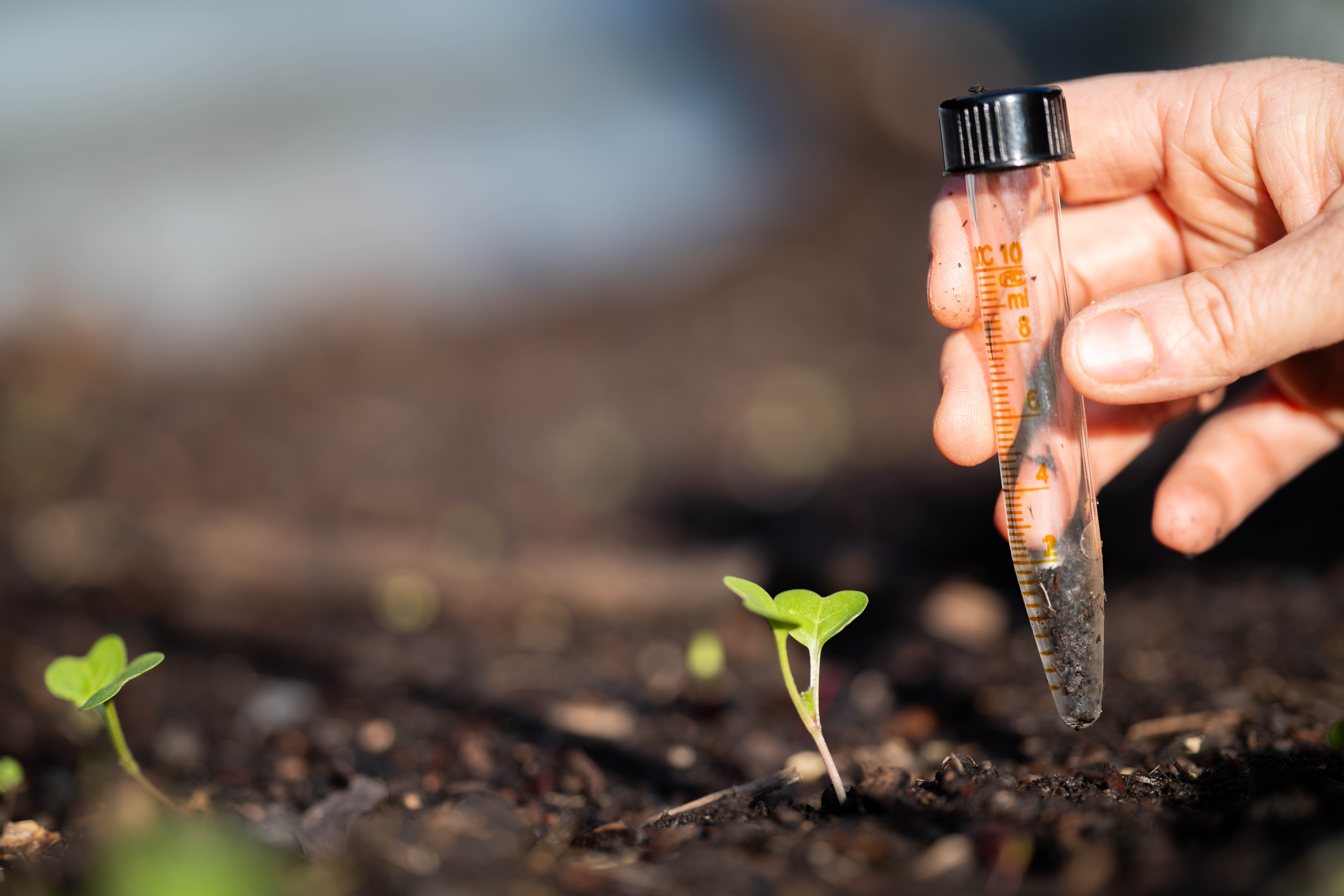
Soil testing is a scientific process where soil samples are analyzed in an agricultural soil testing lab to measure nutrients, pH, organic carbon, salinity, and possible contaminants.
In organic farming, soil is the foundation. Unlike conventional farming, organic farmers cannot rely on quick chemical fertilizers. Instead, they must work with the soil naturally. This makes soil testing even more important.
Why soil testing matters in organic farming
- Helps understand natural soil fertility
- Prevents overuse of organic inputs
- Supports long-term soil health
- Improves crop quality and yield
- Helps meet organic certification standards
Many successful organic farmers test their soil at least once a year and adjust their practices based on lab reports.
How Soil Testing Helps Farmers Understand Their Soil Better
Every field is different. Even two nearby farms may have completely different soil conditions. Soil testing gives farmers exact data, not assumptions.
Key parameters analyzed in soil testing
- Soil pH – affects nutrient availability
- Organic carbon – indicator of soil health
- Macro nutrients – Nitrogen (N), Phosphorus (P), Potassium (K)
- Micro nutrients – Zinc, Iron, Manganese, Copper, Boron
- Salinity & EC – important for irrigation planning
- Heavy metals or residues – critical for organic compliance
A professional agricultural testing lab or analytical labs near me can provide detailed soil health reports that guide organic farming decisions.
How Soil Testing Improves Nutrient Management in Organic Farming
One of the biggest mistakes in organic farming is blind application of compost, manure, or bio-inputs. More is not always better.
Role of soil testing in nutrient planning
- Identifies nutrient deficiencies before planting
- Prevents nutrient imbalance
- Helps calculate the right quantity of organic inputs
- Improves nutrient uptake by crops
For example, if soil testing shows high phosphorus levels, a farmer can avoid adding phosphorus-rich compost. This saves money and protects soil health.
Organic farmers working with a certified soil testing lab for agriculture often achieve 15–25% better nutrient efficiency.
Soil Testing and Soil pH: A Game Changer for Organic Crops
Soil pH directly impacts nutrient availability. Many organic farms fail not due to lack of nutrients, but due to wrong pH levels.
How soil testing helps manage pH
- Identifies acidic or alkaline soil
- Suggests natural amendments like lime or gypsum
- Improves microbial activity in soil
- Enhances root growth
For example, vegetables like tomatoes prefer slightly acidic soil. Soil testing helps farmers adjust pH naturally and improve yields without chemicals.
How Soil Testing Supports Compost and Bio-Input Use
Organic farming depends heavily on compost, vermicompost, green manure, and bio-fertilizers.
Benefits of soil testing for compost planning
- Prevents nutrient overload
- Improves compost efficiency
- Helps match compost type to soil needs
- Reduces input wastage
Many farmers using soil testing reports from analytical testing services report better crop performance even with lower input quantities.
Soil Testing for Better Crop Selection in Organic Farming
Not all crops grow well in all soils. Soil testing helps farmers choose crops that naturally suit their soil conditions.
Examples
- Sandy soil → Groundnut, watermelon
- Clay soil → Rice, wheat
- High organic matter → Vegetables and spices
This reduces crop stress and improves organic yield consistency.
Role of Agricultural Testing Labs in Organic Certification
Organic certification bodies require proof that soil is free from prohibited substances.
A certified agricultural soil testing lab near me helps farmers:
- Test for pesticide residues
- Detect heavy metals
- Maintain compliance records
- Meet export and certification standards
Accredited labs with NABL recognition are preferred for certification and export.
Soil Testing and Long-Term Soil Health
Organic farming is a long-term commitment. Soil testing helps farmers track soil improvement year after year.
Long-term benefits
- Increased organic carbon
- Better soil structure
- Improved water retention
- Enhanced microbial activity
Farmers who regularly work with analytical research and development labs often see sustainable yield growth over 5–7 years.
Why Choose a Professional Soil Testing Lab for Agriculture?
Not all labs provide the same quality. A professional agricultural testing lab offers:
- Validated testing methods
- Accurate and repeatable results
- Expert interpretation
- Reliable recommendations
Many farmers search for analytical labs near me but should always check:
- NABL accreditation
- Experience in agricultural commodities
- Organic testing capability
Soil Testing, R&D Laboratories, and Innovation in Organic Farming
Advanced R&D laboratories support farmers with:
- Customized testing
- New organic input trials
- Soil health improvement studies
- Analytical research and development
This scientific support bridges the gap between traditional knowledge and modern organic farming.
Real-World Example: Soil Testing Success in Organic Farming
An organic vegetable farmer in Maharashtra faced low yields despite using good compost. Soil testing revealed zinc deficiency and high pH. With lab-guided zinc correction and pH management, yields improved by 30% within two seasons.
This shows how analytical testing services directly impact farm profitability.
Conclusion: Improve Organic Farming Results with Soil Testing and ITC Labs
Soil testing is not an expense—it is an investment in organic farming success. It empowers farmers to make better decisions, protect soil health, improve yields, and meet certification requirements.
For farmers and agri-businesses looking for a trusted soil testing lab for agriculture, ITC Labs stands out as a reliable partner.
Why Choose ITC Labs for Agricultural Commodities Testing?
- Exclusive India partner of GALAB Laboratories GmbH, Germany
- Advanced analytical infrastructure with labs in North and South India
- Expertise in organic and high-sensitivity testing
- NABL-accredited testing and quality inspection services
- APEDA-trained samplers across ports, mandis, and ICDs
- Support for sampling, inspections, container stuffing, and stock audits
- Fast turnaround, digital reporting, and secure CoA delivery
Whether you are an organic farmer, exporter, or agri-business, ITC Labs provides end-to-end analytical testing services to support sustainable and profitable organic farming.
Healthy soil leads to healthy crops—and soil testing is the first step.
FAQs on Soil Testing for Organic Farming
1. How often should organic farmers do soil testing?
Organic farmers should test soil once a year or before every major cropping cycle.
2. Is soil testing mandatory for organic certification?
Yes, soil testing is essential to prove soil safety and compliance with organic standards.
3. Can soil testing reduce organic farming costs?
Yes, it prevents unnecessary input use and improves efficiency.
4. What should I look for in an agricultural testing lab?
Look for NABL accreditation, organic testing expertise, and reliable reporting.
5. Does soil testing help in export of agricultural commodities?
Absolutely. Soil and residue testing are crucial for export compliance.