
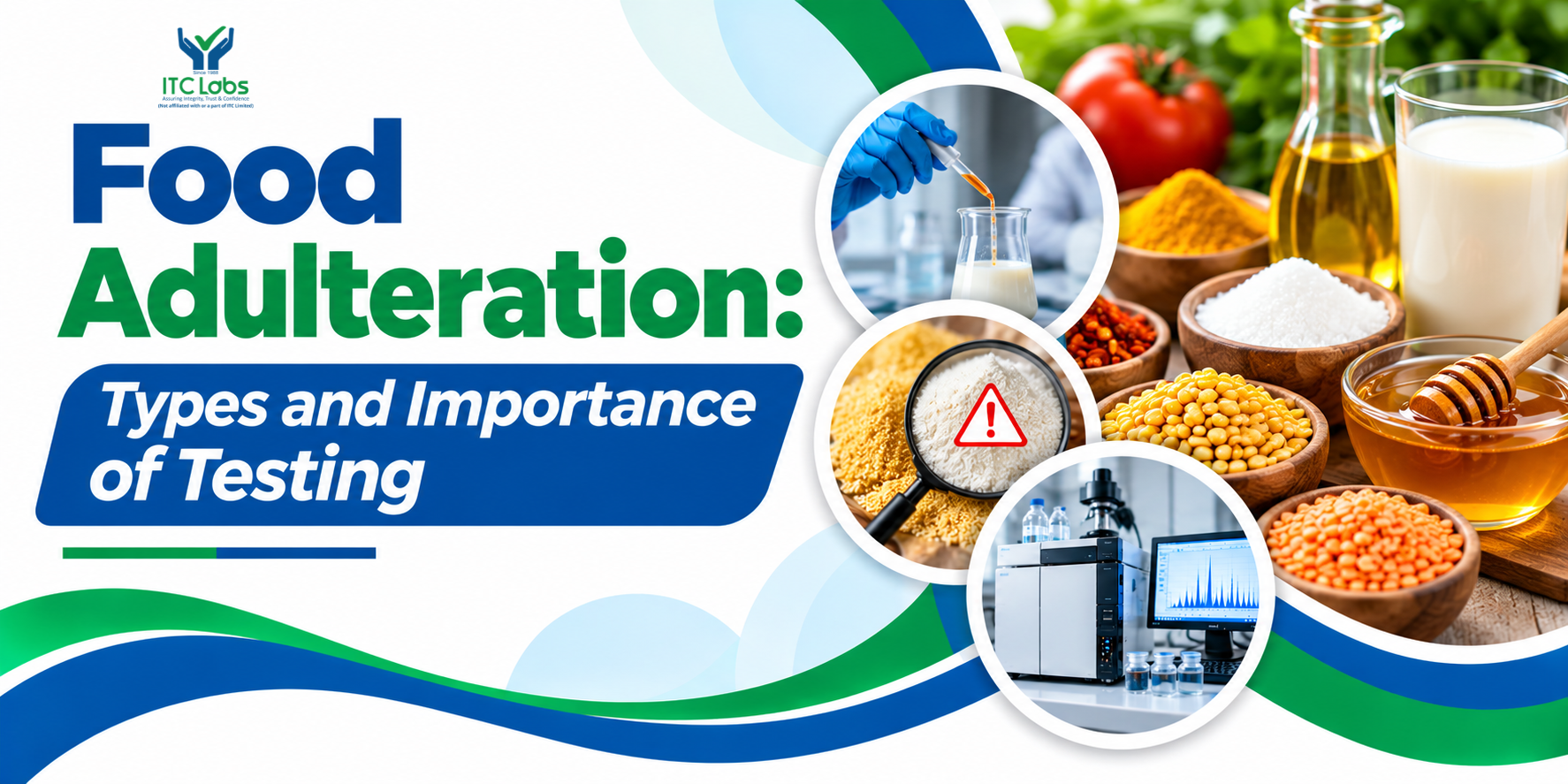
Food is one of the most essential requirements for human survival, health, and well-being. Consumers expect the food they purchase and consume to be pure, hygienic, nutritious, and safe. However, food adulteration has become a significant concern in the food industry, affecting product quality, nutritional value, authenticity, and consumer safety.
From milk and dairy products to spices, honey, sweets, coffee, and other everyday food items, adulteration can occur at different stages of the food supply chain. Unscrupulous manufacturers or suppliers may add cheaper substances, substitute original ingredients, remove valuable components, or use unauthorised colours to increase profits or improve the appearance of products.
For example, milk may be diluted with water, honey may be mixed with sugar syrup, chilli powder may contain brick powder or unauthorised colours, and coffee may be adulterated with chicory beyond the declared composition. Similarly, artificial colours may be used to enhance the appearance of green peas, while cereal-based sweets may contain unauthorised colouring substances such as Metanil Yellow.
Such practices can mislead consumers and create potential health risks. Therefore, understanding the definition of food adulteration, its different types, and the importance of food testing is essential for consumers, food manufacturers, processors, retailers, and regulatory authorities.
In this article, we will explore what food adulteration means, common examples, its effects, detection methods, and how professional food testing laboratories help ensure food quality and safety.
What Is Food Adulteration? Definition and Meaning
Food adulteration refers to the deliberate or accidental addition, substitution, removal, or contamination of food with substances that reduce its quality, purity, authenticity, or safety.
In simple terms, food adulteration occurs when a food product does not meet the expected standards of composition, quality, or safety because of the presence of an unwanted, unauthorised, or misleading substance.
An adulterant may be a cheaper ingredient, an industrial substance, an unauthorised food colour, an inferior-quality material, or another substance that changes the original composition of the food.
For example:
- Adding water to milk to increase its volume.
- Mixing sugar syrup into honey.
- Adding brick powder or unauthorised colours to chilli powder.
- Using chicory as an undeclared substitute or addition in coffee.
- Using artificial colours to make green peas appear fresher.
- Adding non-permitted colouring substances to sweets.
Food adulteration is not limited to the addition of harmful substances. It can also involve economically motivated adulteration, where a valuable ingredient is replaced or diluted with a cheaper alternative.
It is important to distinguish adulteration from accidental food contamination. Contamination may occur unintentionally through microorganisms, chemicals, or foreign materials, whereas adulteration can involve deliberate manipulation or misrepresentation of food composition. Both can compromise food safety and require appropriate testing.
What Are the Different Types of Food Adulteration?
Food adulteration can occur in several forms depending on the type of food product and the substance involved. Understanding these categories helps food businesses identify possible quality issues and select appropriate testing parameters.
1. Addition of Cheaper Substances
This involves adding inexpensive substances to increase the quantity of a food product or reduce manufacturing costs.
Examples include:
- Water added to milk.
- Sugar syrup added to honey.
- Cheaper ingredients mixed with premium food products.
2. Substitution of Original Ingredients
Substitution occurs when an original or valuable ingredient is replaced with a cheaper material.
Examples include:
- Substituting genuine saffron with dried maize fibres.
- Replacing pure ingredients with inferior-quality alternatives.
- Using undeclared substitutes in food products.
3. Addition of Unauthorised Food Colours
Some manufacturers may use unauthorised colours to improve the appearance of food products.
Examples include:
- Metanil Yellow in cereal-based sweets.
- Unauthorised artificial colours in green peas.
- Non-permitted colours in spices and confectionery.
Not all artificial food colours are prohibited. Only colours permitted for the relevant food category and within prescribed limits may be used under applicable regulations.
4. Addition of Foreign Materials
Foreign materials may be introduced to increase product weight, alter texture, or imitate the appearance of genuine ingredients.
Examples include:
- Brick powder in chilli powder.
- Other mineral or particulate materials in powdered spices.
- Unwanted fibres in saffron.
5. Dilution of Food Products
Dilution occurs when valuable food components are reduced by adding cheaper liquids or substances.
Examples include:
- Water in milk.
- Sugar syrup or water in honey.
- Undeclared dilution of other liquid food products.
6. Removal of Valuable Components
Adulteration may also involve removing valuable ingredients from food and selling the remaining product as if it were original.
For example, removing milk fat and selling the resulting product as full-fat milk without proper declaration or compliance may constitute misrepresentation.
Understanding these different forms of adulteration helps manufacturers and food businesses establish better raw-material inspection and quality control procedures.
Common Examples of Food Adulteration in Everyday Food Products
Food adulteration can affect almost every category of food, including dairy products, sweets, spices, beverages, and natural food ingredients. Some common examples are explained below.
A. Adulteration in Dairy Products
Dairy products such as milk, khoa, paneer, ghee, and butter are widely consumed in Indian households. Due to their high demand and commercial value, they may be vulnerable to adulteration.
Common concerns include:
- Milk: Addition of water, starch, urea, or other unauthorised substances.
- Khoa: Use of starch, cheaper ingredients, or non-milk substances to imitate genuine khoa.
- Paneer: Substitution or dilution of milk solids and use of unsuitable ingredients.
- Ghee: Mixing with cheaper fats or oils instead of pure milk fat.
- Butter: Mixing with other fats or oils or misrepresenting the product’s composition.
Regular dairy product testing helps verify composition, identify possible adulterants, and assess compliance with applicable food standards.
B. Adulteration in Dairy-Based Sweets
Indian dairy-based sweets such as peda, barfi, kalakand, rasmalai, and milk cake are prepared using milk, khoa, sugar, and other ingredients.
Possible adulteration concerns include:
- Use of starch or non-milk ingredients.
- Substitution of genuine milk solids with cheaper materials.
- Addition of unauthorised synthetic colours.
- Use of inferior-quality raw materials.
Testing dairy-based sweets helps manufacturers verify product authenticity and maintain consistent quality.
C. Metanil Yellow in Cereal-Based Sweets
Cereal-based sweets are prepared using ingredients such as gram flour, wheat flour, rice flour, and other cereal-derived materials.
One important adulteration concern is the use of Metanil Yellow, a non-permitted synthetic colour, to give food products a bright yellow appearance.
Metanil Yellow is not a permitted food colour under Indian food safety regulations. Its presence in food products is a serious adulteration concern.
Laboratory analysis helps detect unauthorised synthetic colouring substances and supports the verification of food colour compliance.
D. Added Colours and Brick Powder in Chilli Powder
Chilli powder is a commonly used spice in Indian cooking. Its natural red colour and pungency make it an important ingredient in various food preparations.
However, adulteration may involve:
- Addition of unauthorised synthetic colours.
- Mixing of brick powder or other foreign materials.
- Addition of artificial substances to improve colour intensity.
- Mixing inferior-quality materials with genuine chilli powder.
Brick powder may increase the weight of chilli powder and affect its purity. Unauthorised colours may make the product appear brighter than its natural appearance.
Laboratory testing can help identify foreign materials and detect unauthorised colouring substances.
E. Chicory Powder in Coffee
Chicory is a plant-derived ingredient that is sometimes blended with coffee. Coffee-chicory blends are commercially available and are not inherently adulterated when properly formulated and labelled.
However, problems arise when chicory is added beyond the declared composition or when a product is misrepresented as pure coffee.
Testing helps determine the coffee-chicory composition and verify whether the product matches its declared identity and applicable requirements.
F. Sugar and Water in Honey
Honey is a natural food product valued for its flavour, sweetness, and characteristic composition.
Some common adulteration concerns include:
- Addition of sugar syrup.
- Excessive moisture or water content.
- Mixing with cheaper sweetening substances.
- Misrepresentation of the product as pure honey.
Honey testing can include moisture, sugar profile, and other relevant authenticity parameters. Advanced analytical techniques may also be used when specific syrup adulteration is suspected.
G. Dried Maize Fibre in Saffron
Saffron is one of the most expensive spices in the world. Its high commercial value makes it vulnerable to substitution and adulteration.
Dried maize fibres may be coloured and shaped to resemble genuine saffron strands.
Other possible adulteration concerns include the use of dyed plant materials and inferior-quality substitutes.
Laboratory examination can help assess saffron authenticity through appropriate physical, chemical, and microscopic tests.
H. Artificial Colours in Green Peas
Green peas are commonly used in household cooking, restaurants, and food processing.
One adulteration concern is the use of unauthorised artificial colours to make peas appear greener and fresher.
Artificial colouring can mislead consumers regarding the actual quality and freshness of the product.
Appropriate laboratory analysis helps identify unauthorised synthetic colours and assess compliance with applicable food safety requirements.
Looking for a Reliable Food Adulteration Testing Laboratory?
Ensure food quality, purity, and safety with reliable Food Adulteration Testing from ITC Labs. Detect unwanted substances, verify product authenticity, and support compliance with applicable FSSAI standards through professional food testing services.
Why Is Food Adulteration Testing Important?
Food adulteration testing is essential for ensuring that food products meet prescribed quality, composition, and safety requirements.
Testing is beneficial not only for consumers but also for manufacturers, suppliers, retailers, food processors, and regulatory authorities.
Here are some important reasons why food adulteration testing matters.
Protects Consumer Health
Testing helps identify potentially harmful, unauthorised, or unwanted substances in food. This reduces the risk of consumers being exposed to unsafe ingredients.
Ensures Food Quality and Purity
Laboratory analysis helps verify whether food products contain the ingredients and composition mentioned on their labels.
Prevents Economic Fraud
Adulteration often involves replacing expensive ingredients with cheaper alternatives. Testing helps identify such practices and protect consumers from paying premium prices for inferior products.
Supports Regulatory Compliance
Food businesses must comply with applicable FSSAI standards and requirements. Laboratory testing helps manufacturers evaluate their products against relevant regulatory specifications.
Builds Consumer Confidence
Consumers are more likely to trust brands that maintain transparent sourcing, consistent quality, and appropriate food safety practices.
Improves Manufacturing Standards
Regular testing helps manufacturers identify raw-material quality issues, improve production processes, and establish effective quality control systems.
How Is Food Adulteration Detected in a Laboratory?
Food adulteration detection requires appropriate analytical techniques based on the food category and suspected adulterant.
A professional food testing laboratory follows systematic procedures to obtain accurate and reliable results.
Some commonly used laboratory approaches include:
- Physical examination: Evaluating colour, texture, appearance, odour, and foreign particles.
- Chemical analysis: Identifying specific chemical substances and checking food composition.
- Microscopic examination: Detecting foreign materials, plant fibres, and other physical adulterants.
- Chromatographic techniques: Identifying and quantifying specific compounds, colours, sugars, and other food components.
- Spectroscopic techniques: Analysing the chemical composition of food samples.
- Microbiological testing: Evaluating food products for relevant pathogenic and spoilage microorganisms.
The selection of a testing method depends on the product, suspected adulterant, applicable regulatory standard, and required detection limits.
A laboratory should use suitable validated methods and provide results based on the relevant testing parameters.
Role of Food Testing Laboratories in Preventing Food Adulteration
Food testing laboratories play an important role in maintaining food quality and safety throughout the supply chain.
They help manufacturers verify raw materials, examine finished products, identify possible adulterants, and evaluate compliance with applicable standards.
For example, a dairy manufacturer may require milk and ghee composition analysis, while a spice manufacturer may need testing for unauthorised colours and foreign materials.
Similarly, honey manufacturers may require sugar profile analysis, and sweet manufacturers may need testing for unauthorised synthetic colours such as Metanil Yellow.
By conducting regular testing, food businesses can:
- Identify adulteration before products reach consumers.
- Verify the quality of purchased raw materials.
- Maintain product consistency.
- Support regulatory requirements.
- Improve supplier evaluation.
- Reduce product rejection and reputational risks.
Choosing an appropriately accredited food testing laboratory is therefore an important part of an effective food safety management system.
Why Choose ITC Labs for Food Adulteration Testing?
When it comes to food quality, purity, and authenticity, selecting a reliable testing laboratory is essential. ITC Labs provides food testing services to help manufacturers, processors, suppliers, and food businesses evaluate product quality and identify potential adulteration.
With recognised accreditations and modern analytical facilities, ITC Labs supports food businesses in maintaining quality standards and meeting applicable regulatory requirements.
Food Products and Adulteration Testing Areas Covered by ITC Labs
ITC Labs covers various food categories and adulteration-related testing requirements, including:
| Food category | Adulteration testing areas |
| Dairy products | Milk, khoa, paneer, ghee, and butter |
| Dairy-based sweets | Detection of possible adulterants and quality verification |
| Cereal-based sweets | Detection of Metanil Yellow |
| Chilli powder | Detection of added colours and brick powder |
| Coffee | Detection and estimation of chicory |
| Honey | Detection of added sugar and water through relevant parameters |
| Saffron | Detection of dried maize fibre and other possible substitutes |
| Green peas | Detection of unauthorised artificial colours |
These testing areas help food businesses identify potential adulteration, verify product composition, and maintain product authenticity.
Accreditations and Recognitions
ITC Labs has several important accreditations and recognitions, including:
- NABL Accreditation (ISO/IEC 17025:2017).
- FSSAI Approved Laboratory.
- BIS Empanelled.
- APEDA Recognized.
- Approved for fortified food testing, including rice, milk, oil, and salt.
- Recognized by organic certification bodies, including NOP, NPOP, and EU Organic.
- Spices Board of India Approved.
- Tea Board of India Recognized.
- State and Central Government Recognitions.
Its food testing services also cover bakery products, oils and fats, spices, dairy products, and nutraceuticals, along with shelf-life studies, allergen analysis, contaminant detection, and nutritional labelling.
The availability of individual tests under an accreditation should be confirmed against the laboratory’s current approved scope.
Conclusion: Ensure Food Quality and Purity with ITC Labs
Food adulteration is a serious concern that affects food quality, authenticity, consumer confidence, and public health. From milk and dairy-based sweets to spices, honey, coffee, saffron, and green peas, adulteration can occur in numerous everyday food products.
Understanding the definition of food adulteration, identifying common adulterants, and conducting regular laboratory testing are essential steps towards maintaining food safety.
For food manufacturers, processors, suppliers, and retailers, working with a reliable food testing laboratory helps verify product composition, detect unwanted substances, and support compliance with applicable food safety regulations.
ITC Labs provides food testing services across multiple food categories, including dairy products, dairy-based sweets, cereal-based sweets, spices, coffee, honey, saffron, and green peas.
Whether you need testing for Metanil Yellow in cereal-based sweets, added colours and brick powder in chilli powder, chicory in coffee, sugar adulteration in honey, dried maize fibre in saffron, or artificial colours in green peas, ITC Labs can support your food quality and adulteration testing requirements, subject to the availability of the relevant testing parameters.
Choose ITC Labs for reliable food analysis and take a step towards safer, purer, and more authentic food products.
Frequently Asked Questions (FAQs)
Q1. What is food adulteration in simple words?
Food adulteration means adding, substituting, removing, or introducing unwanted or unauthorised substances into food, resulting in a reduction in its quality, purity, authenticity, or safety.
Q2. What are the most common examples of food adulteration in India?
Common examples include water in milk, sugar syrup in honey, brick powder in chilli powder, chicory in coffee, dried maize fibres in saffron, and unauthorised artificial colours in sweets and green peas.
Q3. Why is food adulteration testing important?
Food adulteration testing helps identify unwanted or unauthorised substances, verify food composition, maintain product quality, protect consumers, and support compliance with FSSAI regulations.
Q4. How can food adulteration be detected?
Food adulteration can be detected through physical, chemical, microscopic, chromatographic, and spectroscopic testing methods. The appropriate technique depends on the food product and suspected adulterant.
Q5. Which laboratory is suitable for food adulteration testing in India?
A laboratory with appropriate FSSAI recognition, NABL accreditation, qualified technical personnel, and relevant testing facilities is a suitable choice. ITC Labs offers food testing services across several categories, including dairy products, sweets, spices, honey, coffee, saffron, and green peas.