
In today’s world, electronic products are a part of nearly everything we use — from smartphones and laptops to electric vehicles and medical devices. But what ensures these products are safe, reliable, and compliant with global standards? The answer lies in electronics testing services.
Before any electronic product reaches consumers or industrial users, it must undergo rigorous evaluation through certified electronics testing labs. These services identify faults, confirm performance, and ensure the product adheres to safety and environmental regulations. Whether you’re a manufacturer in India or an exporter targeting international markets, using professional electronics testing services is essential for success.
In this comprehensive guide, we explore what electronics testing involves, the different types of testing, why it’s important, and how to choose the right electronic testing laboratory for your business.
What Are Electronics Testing Services?
Electronics testing services refer to a wide range of tests performed on electronic components, devices, and assemblies to evaluate their safety, functionality, reliability, and compliance with local and international standards.
These services are usually carried out in specialized electronics testing labs that are equipped with precision instruments and follow standard operating procedures. The testing can be done at different stages of product development — from prototyping to final production.
Manufacturers rely on these services to meet requirements for certifications such as BIS (India), CE (Europe), FCC (USA), RoHS, ELV, and others.
Why Are Electronics Testing Services Important?
Electronics product testing is a non-negotiable part of modern product development. It ensures that devices meet safety, functional, and environmental standards. Without proper testing, products may fail, cause harm, or be rejected in international markets.
Here are some critical reasons why electronics testing services are important:
- Ensures product safety for consumers
- Reduces the risk of recalls or product failures
- Improves reliability and performance
- Demonstrates compliance with legal and environmental standards
- Helps obtain certifications required for selling in domestic and export markets
- Enhances customer trust and brand reputation
For example, a mobile charger that hasn’t been tested for voltage stability and overheating risks can not only damage devices but also pose a fire hazard. Testing helps eliminate such risks early in the product lifecycle.
Key Types of Electronics Testing Services
Understanding the types of testing available can help businesses choose the right approach for their products. Here are the major categories of electronics testing services:
Functional Testing
This type of testing checks whether the electronic product performs according to its design specifications. It is used to validate that all components and systems work as intended under normal conditions.
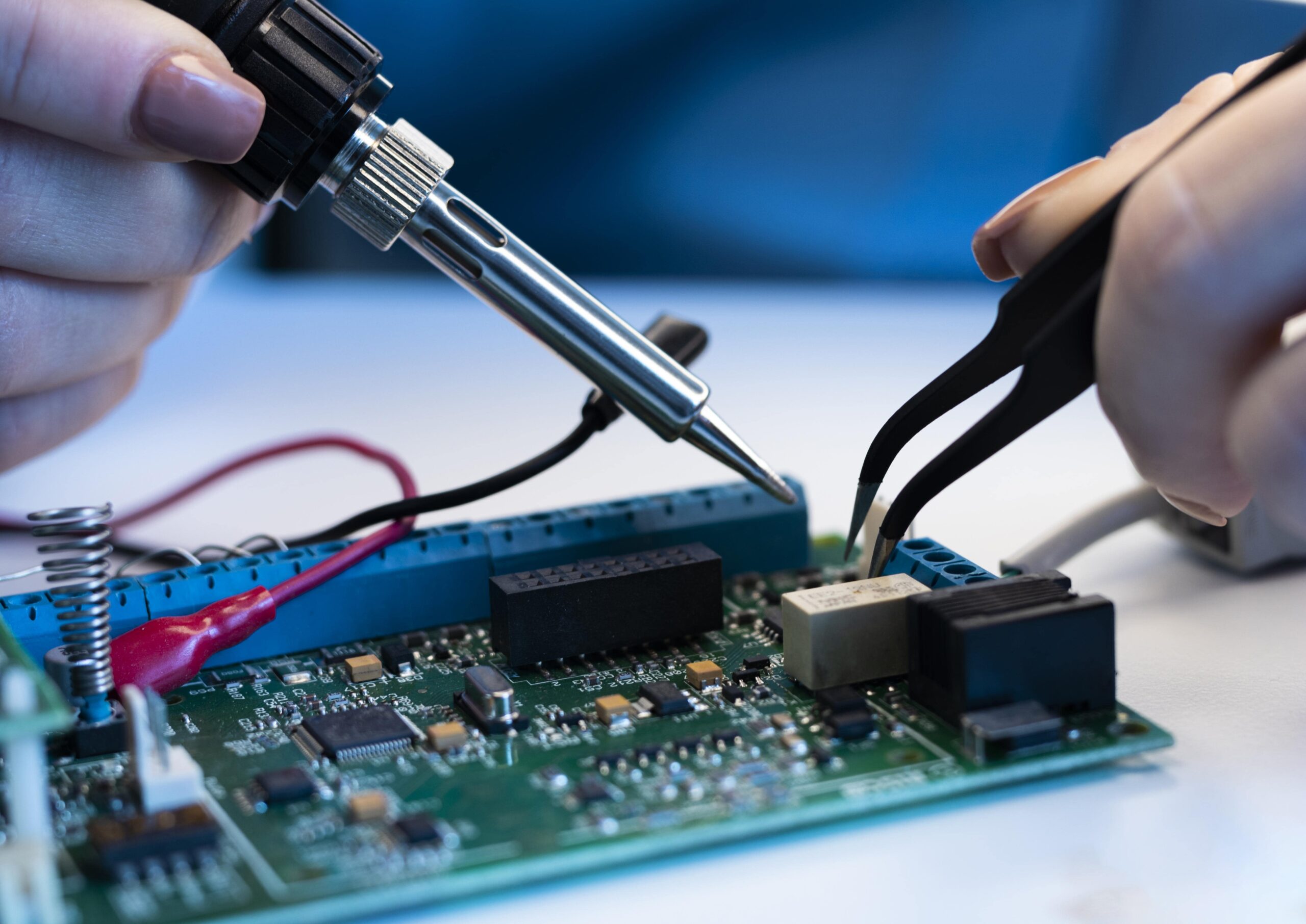
Example: Testing a PCB for proper power distribution, signal integrity, and functional logic.
Environmental Testing
Environmental testing exposes the product to conditions such as extreme temperatures, humidity, dust, salt spray, and vibration. It assesses whether the product can operate reliably in real-world conditions.
Example: Automotive components tested in high-temperature chambers to simulate tropical summers.
EMC/EMI Testing (Electromagnetic Compatibility and Interference)
This testing ensures that a product neither emits nor is affected by unwanted electromagnetic radiation. It is essential for compliance with CE, FCC, and other standards.
Example: Testing a wireless router to ensure it doesn’t interfere with nearby electronic equipment.
Reliability and Durability Testing
These tests evaluate the product’s performance over time and under stress. It may include burn-in testing, mechanical shock, thermal cycling, and vibration analysis.
Example: Running an industrial control board continuously for 1,000 hours to simulate long-term operation.
Chemical and Regulatory Compliance Testing
Testing for the presence of restricted or hazardous substances such as lead, cadmium, mercury, and VOCs is crucial for environmental and safety compliance. These tests are typically required for regulations like RoHS 2.0 and ELV.
Common chemical and material tests include:
- RoHS 2.0 compliance (EU Directive 2019)
- ELV (End-of-Life Vehicle) testing
- VOC testing for indoor air quality
- Odour testing for user experience
- Aldehyde and ketone analysis for chemical safety
Inside an Electronics Testing Lab
A fully equipped electronics testing lab uses advanced instruments and follows standardized procedures to deliver precise, repeatable results. In India, labs like ITC Testing Lab offer cutting-edge testing infrastructure designed to meet global standards.
Instruments commonly used include:
ED XRF (Energy Dispersive X-ray Fluorescence): Used for RoHS and elemental screening
ICPMS (Inductively Coupled Plasma Mass Spectrometry): Detects trace levels of metals
GCMS (Gas Chromatography Mass Spectrometry): Used with pyrolyzers, thermal desorbers, and headspace sampling for VOC and odour testing
HPLC (High-Performance Liquid Chromatography): Separates and analyzes complex chemical compounds
Such equipment ensures that electronics testing is both comprehensive and compliant with strict certification requirements.
Industries That Rely on Electronics Testing
Electronics testing is a core requirement across many industries in India and globally. Some of the major sectors include:
Automotive: For electronic control units (ECUs), sensors, and infotainment systems
Medical Devices: To ensure patient safety and functional reliability
Consumer Electronics: Phones, tablets, and smart appliances must pass rigorous testing
Industrial Equipment: Controllers, drives, and sensors in manufacturing environments
Aerospace and Defense: Requires high-reliability components tested under stress
Home Automation and IoT: Requires electrical and EMC testing for safe operation
Each industry has specific testing needs, and certified electronic testing laboratories are equipped to handle sector-specific standards and protocols.
Benefits of Electronics Testing Services
Enhances Product Safety
Testing ensures that the product is electrically safe, free from hazardous materials, and resistant to operational failures.
Improves Market Access
Most global markets require products to be certified before they can be sold. Electronics testing is a critical step for BIS (India), CE (Europe), FCC (USA), and other certifications.
Minimizes Risk of Recalls
Product recalls can be financially and reputationally damaging. Thorough testing significantly reduces this risk by identifying issues before mass production.
Supports Innovation
Testing gives engineers data to improve product designs, enhance performance, and introduce new features confidently.
Boosts Consumer Trust
When customers see that a product is tested and certified, it builds credibility and brand loyalty.
The Role of Compliance in Product Success
Compliance is not just a box to tick. It is a key part of product strategy, especially for companies that export or serve high-risk industries. Failing to comply with regulations like RoHS, ELV, or BIS can result in fines, market bans, or product seizures.
In India, electronic products such as LED lights, mobile chargers, televisions, and IT equipment require BIS certification. For automotive exports, ELV testing is mandatory. For European markets, RoHS 2.0 and CE are required.
Partnering with a full-service electronics testing lab ensures that compliance is handled smoothly and efficiently.
Real-World Example
A leading Indian electronics manufacturer attempted to launch a new smart home controller in Europe. The product was returned to customs due to non-compliance with RoHS standards. After engaging with a certified electronics testing lab, they re-engineered the product, passed testing, and successfully entered the market. The experience saved future losses and strengthened their internal design process.
Frequently Asked Questions (FAQ)
What does an electronics tester do?
An electronics tester is a device or a technician that checks the performance, safety, and integrity of electronic components or systems. It is used to measure voltages, current, resistance, and to ensure the functionality of circuits and devices.
What are the three types of electrical testing?
The three most common types of electrical testing are:
Functional Testing: To check operational accuracy
Insulation Resistance Testing: To ensure electrical insulation is intact
Dielectric Withstand Testing (Hi-Pot): To assess insulation strength under high voltage
How to test electronic products?
Electronic products are tested using multimeters, oscilloscopes, test fixtures, and automated test equipment. In a lab setting, products are also subjected to environmental and compliance testing using advanced instruments.
How to test an electronic device?
Testing an electronic device involves several steps:
- Visual inspection for physical defects
- Measurement of voltage, current, and resistance
- Running functional test cases
- Stress testing under thermal or mechanical loads
- Compliance testing for certifications like RoHS, CE, or BIS
Why Choose ITC Labs for Electronics Testing Services?
When it comes to reliable and advanced electronics testing services in India, ITC Testing Labs is a trusted partner across industries. We offer comprehensive electrical and electronics product testing services supported by cutting-edge technology and a team of experienced professionals.
Our laboratory capabilities include:
- RoHS 2.0 testing (per updated EU Directive 2019)
- ELV (End-of-Life Vehicle) compliance testing
- VOC, odour, aldehyde, and ketone analysis
- Reliability and performance evaluations
- EMC, functional, and environmental testing
The lab is equipped with high-precision instruments including ED XRF, ICPMS, GCMS with pyrolyzer and thermal desorber, and HPLC — allowing complete scope of analysis for both consumer and industrial electronics.
With a deep understanding of compliance regulations and a client-focused approach, ITC Labs helps businesses deliver market-ready products that meet the highest quality and safety standards.
Work with ITC Labs to ensure your electronic products are safe, compliant, and built to last.