
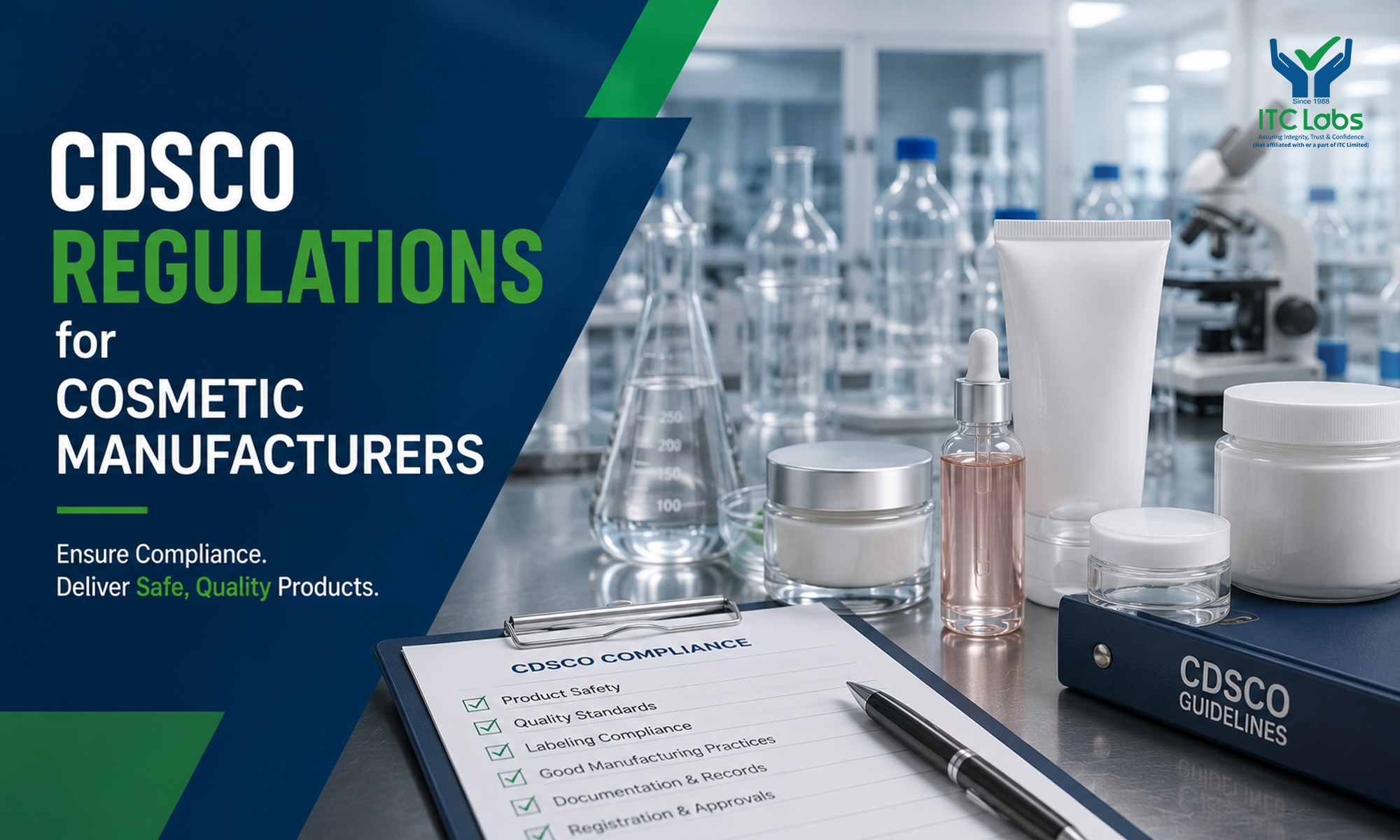
The Indian cosmetics industry is growing rapidly, driven by rising consumer awareness, innovation, and demand for safe, high-quality products. However, bringing a cosmetic product to market involves more than creating an effective formulation. Manufacturers must ensure compliance with CDSCO cosmetic regulations to meet legal requirements and protect consumer safety.
Understanding these regulations can help cosmetic manufacturers avoid delays, penalties, product recalls, and reputational damage. This guide explains everything you need to know about CDSCO cosmetic regulations, including the regulatory framework, compliance requirements, and the importance of laboratory testing.
What Are CDSCO Cosmetic Regulations?
The Central Drugs Standard Control Organization (CDSCO) is India’s national regulatory authority responsible for overseeing the import, registration, and safety of cosmetic products. Working under the Ministry of Health and Family Welfare, CDSCO ensures that cosmetics available in the Indian market comply with the provisions of the Drugs and Cosmetics Act, 1940, and the Cosmetics Rules, 2020.
The primary objective of CDSCO cosmetic regulations is to ensure that cosmetic products are safe for consumers, accurately labelled, and manufactured according to prescribed quality standards.
Who Needs to Comply?
CDSCO cosmetic regulations apply to various stakeholders within the cosmetics supply chain, including:
- Cosmetic manufacturers
- Importers
- Brand owners
- Private label companies
- Contract manufacturers
- Distributors importing cosmetic products into India
Whether you manufacture skincare products, hair care solutions, makeup, perfumes, or personal care products, compliance with CDSCO requirements is essential before launching your products.
Key Requirements Under CDSCO Cosmetic Regulations
Manufacturers must fulfil several requirements before marketing cosmetic products in India.
1. Compliance with Cosmetics Rules, 2020
The Cosmetics Rules, 2020 introduced a modern regulatory framework covering licensing, manufacturing, labelling, import, quality control, and inspections. Manufacturers must obtain the necessary approvals before production and distribution.
2. Proper Manufacturing Licence
Manufacturers are required to obtain a valid manufacturing licence issued by the State Licensing Authority. The manufacturing facility must comply with Good Manufacturing Practices (GMP) and maintain appropriate infrastructure, hygiene, and quality management systems.
3. Product Safety
Safety remains the foundation of CDSCO cosmetic regulations. Products must be free from harmful contaminants and should not pose any health risks under normal usage conditions.
Testing may include:
- Microbiological testing
- Heavy metal testing
- Stability testing
- Preservative efficacy testing
- Physico-chemical analysis
These tests help verify product quality, consistency, and consumer safety before market release.
4. Ingredient Compliance
Manufacturers must ensure that all ingredients used in cosmetic formulations comply with Indian regulatory requirements. The use of prohibited or restricted substances can result in regulatory action and product recalls.
It is equally important to maintain complete documentation regarding ingredient sourcing, formulation records, and quality specifications.
5. Labelling Requirements
One of the most important aspects of CDSCO cosmetic regulations is accurate product labelling.
Labels should generally include:
- Product name
- Manufacturer’s name and address
- Batch number
- Manufacturing date
- Expiry or “Best Before” date where applicable
- Net quantity
- Ingredient declaration
- Directions for use
- Necessary warnings and precautions
Incorrect or misleading labels may result in non-compliance.
Why Cosmetic Testing Is Essential for Compliance
Meeting CDSCO cosmetic regulations goes beyond documentation. Laboratory testing provides scientific evidence that products meet applicable safety and quality requirements.
Testing helps manufacturers:
- Verify product safety
- Identify microbial contamination
- Confirm formulation stability
- Evaluate shelf life
- Detect heavy metals and contaminants
- Support quality assurance programs
- Reduce the risk of product recalls
Partnering with an accredited laboratory ensures reliable testing results and smoother regulatory compliance.
Common Challenges Manufacturers Face
Many cosmetic companies, particularly startups, struggle with regulatory compliance due to limited knowledge of applicable requirements.
Some common challenges include:
- Incomplete regulatory documentation
- Incorrect product labelling
- Lack of stability data
- Non-compliant ingredients
- Inadequate quality testing
- Delays in licensing approvals
Working with regulatory experts and experienced testing laboratories can significantly reduce these challenges.
Best Practices for Manufacturers
To remain compliant with CDSCO cosmetic regulations, manufacturers should adopt a proactive quality approach throughout product development.
Some best practices include:
- Review regulatory requirements before formulation development.
- Source ingredients from qualified suppliers.
- Conduct laboratory testing during product development.
- Validate product stability before commercial launch.
- Maintain complete manufacturing and quality records.
- Perform periodic quality audits.
- Stay updated with regulatory amendments.
These practices not only improve compliance but also strengthen brand credibility and consumer trust.
Benefits of Complying with CDSCO Cosmetic Regulations
Regulatory compliance offers several long-term business advantages.
Manufacturers can:
- Improve consumer confidence
- Reduce regulatory risks
- Minimise product recalls
- Enhance product quality
- Support domestic and international market expansion
- Build a strong brand reputation
Investing in compliance today can save significant costs associated with regulatory action in the future.
Conclusion
Understanding and complying with CDSCO cosmetic regulations is essential for every cosmetic manufacturer operating in India. From obtaining the necessary licences to ensuring proper labelling and conducting comprehensive laboratory testing, every step contributes to delivering safe, compliant, and high-quality cosmetic products.
If you’re looking for reliable cosmetic testing services, ITC Labs offers comprehensive testing solutions to help manufacturers meet regulatory requirements with confidence. From microbiological and stability testing to heavy metal analysis and quality evaluation, our experienced team supports cosmetic brands throughout the compliance journey. Partner with ITC Labs to ensure your products meet the highest standards of safety, quality, and regulatory excellence.
Frequently Asked Questions (FAQs)
1. What are CDSCO cosmetic regulations?
CDSCO cosmetic regulations are regulatory requirements issued under the Drugs and Cosmetics Act and Cosmetics Rules, 2020 to ensure cosmetic products sold in India are safe, properly labelled, and compliant.
2. Is cosmetic testing mandatory under CDSCO regulations?
Laboratory testing is essential to demonstrate product safety, quality, and compliance with applicable standards before cosmetics are introduced into the market.
3. Which products are covered under CDSCO cosmetic regulations?
The regulations apply to skincare products, hair care products, makeup, perfumes, deodorants, personal care products, and other cosmetic formulations manufactured or imported into India.
4. Why is stability testing important for cosmetics?
Stability testing helps determine a product’s shelf life, maintains formulation integrity, and ensures the cosmetic remains safe and effective throughout its intended storage period.
5. What are the common tests performed on cosmetic products?
Common cosmetic tests include microbiological testing, heavy metal analysis, preservative efficacy testing, stability testing, physico-chemical analysis, and contaminant testing.
6. How can ITC Labs help cosmetic manufacturers?
ITC Labs provides comprehensive cosmetic testing services that help manufacturers verify product safety, maintain quality, and comply with CDSCO cosmetic regulations before market launch.