
When it comes to developing safe, allergy-free skincare and beauty products, cosmetic testing labs play a pivotal role in ensuring every formula meets safety and quality benchmarks. In vitro testing — one of the most advanced scientific approaches in modern cosmetic research — has become a cornerstone for brands aiming to develop non-irritant and allergy-free cosmetics.
Unlike traditional in vivo (animal-based) methods, in vitro testing uses human cell cultures and advanced analytical systems to predict skin reactions without involving live subjects. This not only ensures accuracy but also aligns with global ethical standards and consumer expectations. In this blog, we’ll explore the growing importance of in vitro testing in cosmetics, its benefits for allergy-free formulations, and why partnering with the right cosmetic testing labs—like ITC Labs—is crucial for success.
What Is In Vitro Testing and Why It Matters in Cosmetic Science
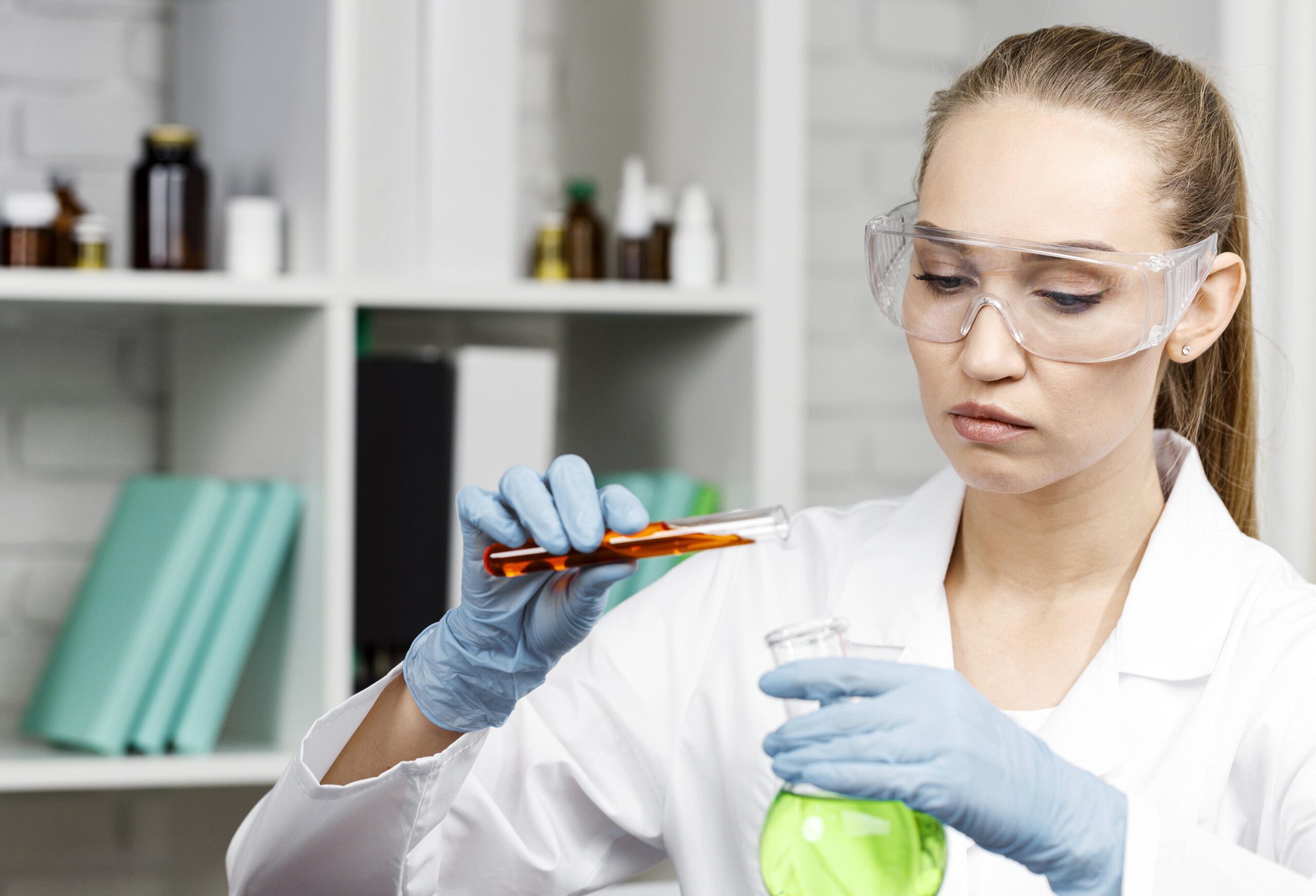
In vitro testing refers to laboratory-based experiments performed in controlled environments using human or synthetic skin cell models. The word in vitro literally means “in glass,” representing the test tube or petri dish environment where these tests take place.
Modern lab testing for cosmetic products relies on this technique to determine how ingredients or formulations interact with skin tissues, helping predict potential allergic reactions, irritation, or toxicity before products reach human users.
Why it matters:
- Provides accurate and reproducible data.
- Reduces reliance on animal testing (in compliance with EU and Indian CPCSEA guidelines).
- Offers insights into product safety at early development stages.
- Supports regulatory compliance for Cosmetics Testing and Analysis Services across international markets.
How Cosmetic Testing Labs Use In Vitro Methods
Today’s cosmetic testing labs use a range of in vitro methodologies to evaluate product safety and performance. Some of the most common testing parameters include:
1 Cytotoxicity Testing
Evaluates whether cosmetic ingredients cause damage to human cells. This is critical for determining the safety of products like serums, sunscreens, and foundations.
2 Skin Irritation and Sensitization Tests
In vitro skin models such as EpiDerm or SkinEthic replicate human epidermis. These tests help predict whether a product might cause redness, itching, or allergic reactions — key for brands promoting “hypoallergenic” or “sensitive-skin-safe” claims.
3 Phototoxicity Testing
Determines if cosmetic ingredients become harmful when exposed to sunlight. This is especially relevant for sunscreens and day creams.
4 Genotoxicity and Mutagenicity Testing
Ensures that ingredients don’t damage DNA, contributing to long-term skin health and safety.
By using such tests, analytical testing labs help brands create products that meet both consumer expectations and international regulatory standards.
In Vitro vs. In Vivo Testing: The Modern Cosmetic Shift
Traditionally, cosmetics were tested using in vivo (animal-based) methods. However, global regulations and consumer preferences have rapidly shifted toward ethical, non-animal testing alternatives.
| Aspect | In Vitro Testing | In Vivo Testing |
| Animal Use | None | Often involves animals |
| Accuracy | High – uses human cell models | Moderate – may differ from human reactions |
| Cost & Time | Efficient and faster | Costly and time-consuming |
| Ethical Concerns | None | Significant |
| Regulatory Acceptance | Widely accepted in EU, India, USA | Declining use globally |
Modern Cosmetic Testing Services prefer in vitro testing due to its scientific reliability and alignment with cruelty-free standards.
The Benefits of In Vitro Testing for Allergy-Free Cosmetics
As consumer awareness grows, “allergy-free” and “dermatologist-tested” labels are no longer marketing buzzwords—they’re essential proof of product credibility. In vitro testing offers several advantages for achieving these claims:
1 Early Detection of Allergens
In vitro assays can identify allergenic potential at the ingredient level. This allows manufacturers to modify or replace risky components before large-scale production.
2 Consumer Confidence
Products tested through certified quality assurance laboratories are more trusted by consumers, especially those with sensitive skin or allergies.
3 Compliance with Global Regulations
Regulatory bodies like the FDA, BIS (India), and the EU Cosmetics Regulation (EC) No 1223/2009 all emphasize product safety validation. In vitro testing ensures compliance without violating animal welfare laws.
4 Time and Cost Efficiency
In vitro tests are faster to perform and more scalable than animal testing, helping brands accelerate their time-to-market while ensuring safety.
5 Supporting Innovation in Clean Beauty
With the clean beauty trend on the rise, analytical testing labs use in vitro methods to validate “free-from” claims—free from parabens, sulfates, artificial fragrances, and allergens.
The Role of Analytical Testing Labs in Cosmetic Development
Every successful cosmetic product passes through rigorous evaluation by specialized analytical testing labs. These labs act as the scientific backbone of product development, offering multiple Cosmetics Testing and Analysis Services such as:
- Stability testing (ensuring product durability under different conditions)
- Microbiological testing (checking contamination risks)
- Toxicological assessments
- Chemical composition analysis
- Allergen screening
By partnering with an NABL accredited lab in India, brands ensure compliance with both domestic and international standards such as ISO/IEC 17025. Accreditation indicates that a quality assurance testing laboratory meets strict benchmarks for accuracy, consistency, and reliability.
NABL Accredited Labs in India: Raising the Global Standard
India has become a growing hub for cosmetic testing labs due to its strong regulatory infrastructure and NABL (National Accreditation Board for Testing and Calibration Laboratories) certification framework.
Why NABL accreditation matters:
- Ensures testing accuracy and reliability.
- Recognized internationally, enabling export-ready compliance.
- Offers confidence to both manufacturers and consumers.
- Provides data accepted by regulators worldwide.
Leading NABL accredited labs in India combine advanced technology with global testing standards to help brands achieve excellence in product safety and performance.
The Importance of a Quality Assurance Laboratory
A quality assurance laboratory plays a crucial role beyond initial testing—it ensures consistency throughout production. These labs verify that the final product maintains the same safety and efficacy levels as tested prototypes.
Regular quality assurance testing laboratory checks include:
- Batch-to-batch variation monitoring
- Contamination control
- Packaging compatibility tests
- Long-term stability analysis
Such consistent monitoring ensures that consumers receive high-quality, safe, and allergy-free products every time.
Real-World Example: How In Vitro Testing Changed the Game
A major global skincare brand recently reformulated its anti-aging cream using plant-based peptides. Initial in vitro tests revealed mild irritation potential due to one preservative. By substituting it early, the brand launched a safer, hypoallergenic version—saving months of reformulation and costly recalls.
This case demonstrates how lab testing for cosmetic products through in vitro methods can prevent consumer harm and protect brand reputation.
Future of In Vitro Testing in the Cosmetic Industry
The future is undeniably cruelty-free and innovation-driven. With ongoing advances in bioengineering and AI-integrated data analysis, in vitro methods are becoming even more predictive and efficient.
Upcoming trends include:
- 3D skin tissue engineering for more realistic results.
- Organ-on-a-chip technology to simulate human physiological responses.
- Integration of AI-driven predictive modeling for faster result interpretation.
Such advancements will further solidify in vitro testing as the global gold standard for cosmetic safety evaluation.
Conclusion: Partner with ITC Labs — Your Trusted Ally in Cosmetic Testing
Ensuring product safety, reliability, and regulatory compliance is no longer optional — it’s a necessity for any cosmetic brand. In vitro testing offers a safe, ethical, and scientifically advanced path to achieving allergy-free cosmetic products.
Why Choose ITC Labs for Cosmetic Testing?
With over 36 years of expertise in analytical testing and quality assurance, ITC Labs stands as a trusted partner for the global cosmetics industry. Their NABL-accredited facilities and expert scientists deliver precise, reliable, and timely testing for diverse cosmetic formulations.
ITC Labs’ Key Strengths:
- Advanced infrastructure and equipment.
- Highly experienced professionals in analytical testing.
- Comprehensive reports with personalized consultation.
- Unwavering focus on client satisfaction and regulatory compliance.
Whether you’re launching a new product line or validating an existing one, ITC Labs offers world-class Cosmetic Testing Services and Cosmetics Testing and Analysis Services that ensure your products meet the highest standards of safety and performance.
Partner with ITC Labs today to safeguard your brand’s reputation and deliver the quality your consumers trust.
FAQs About In Vitro Testing and Cosmetic Testing Labs
Q1. Why is in vitro testing preferred over animal testing in cosmetics?
Because it provides accurate, human-relevant results while adhering to ethical standards. Many countries have banned animal testing, making in vitro methods the industry’s preferred choice.
Q2. How do cosmetic testing labs ensure product safety for sensitive skin?
They conduct skin irritation, sensitization, and cytotoxicity tests using human cell models to identify allergens before products hit the market.
Q3. What does NABL accreditation mean for cosmetic testing?
It signifies that a lab meets strict international standards for testing accuracy, reliability, and competence — a must for credible Cosmetic Testing Services in India.
Q4. How long does in vitro testing for cosmetics take?
Typically 2–4 weeks, depending on the complexity of tests and the number of ingredients involved.
Q5. Can startups access these testing services affordably?
Yes. Many analytical testing labs and quality assurance laboratories offer customized testing packages tailored for small to medium cosmetic brands.