
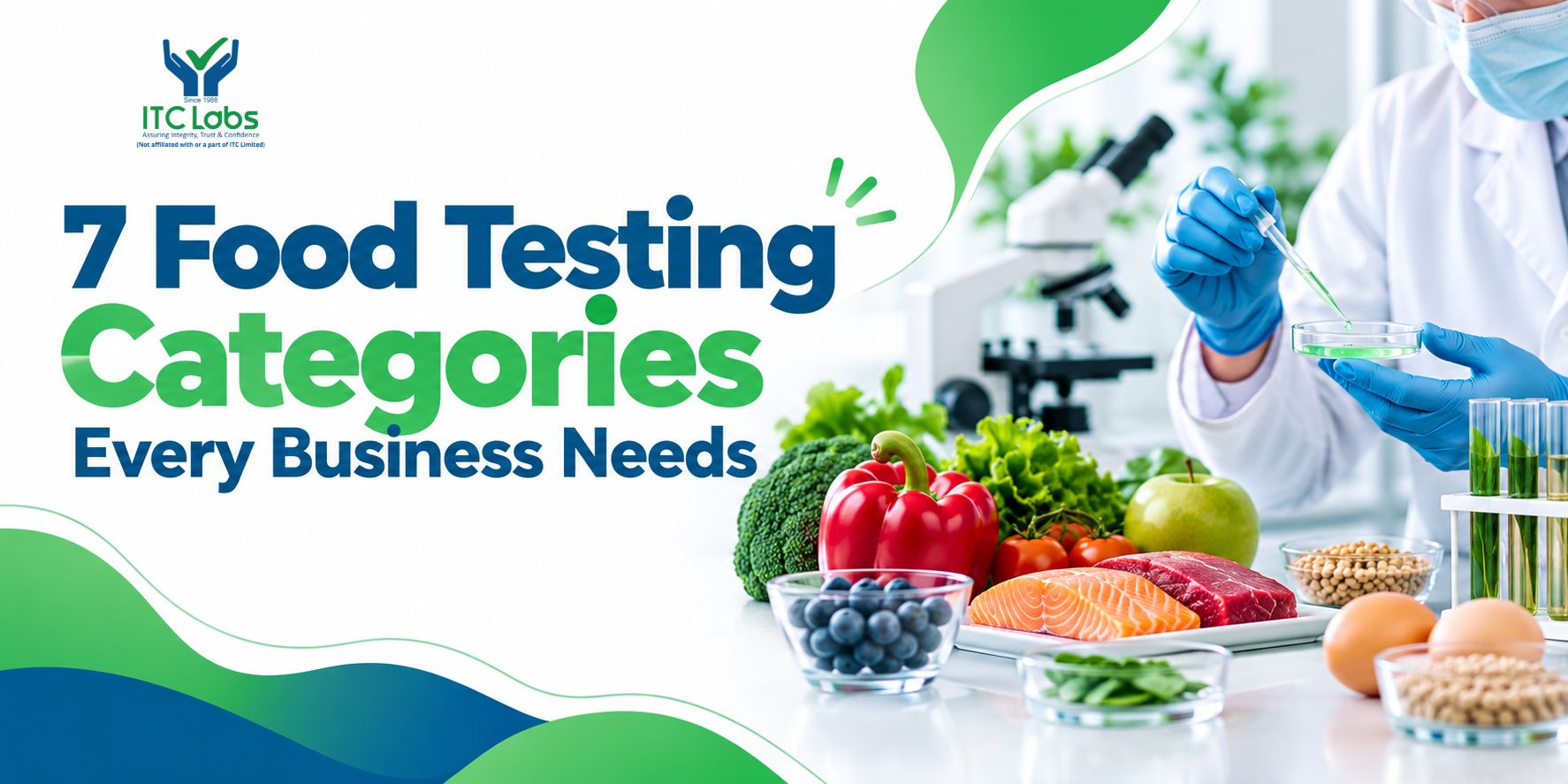
Food safety and quality are essential for every food manufacturer, processor, supplier, and brand. From raw materials to finished products, proper testing helps businesses identify potential risks, maintain consistent quality, meet regulatory requirements, and protect consumers.
Professional food testing services provide scientific insights into the safety, composition, nutritional value, and quality of food products. Whether you are launching a new product or maintaining an established product line, working with a reliable food testing lab can help ensure that your products meet applicable standards.
Here are 7 core categories of food testing that every food business should know.
1. Microbiological Food Testing
Microbiological testing is one of the most important areas of food safety testing. It helps identify microorganisms that may cause food spoilage or foodborne illness.
Testing may include the detection or enumeration of organisms such as:
-
Total plate count
-
Yeast and mould
-
Coliforms
-
E. coli
-
Salmonella
-
Staphylococcus aureus
-
Other relevant pathogens
Food manufacturers can use microbiological testing to assess the hygiene and safety of raw materials, production environments, and finished products.
Reliable food safety testing labs use appropriate analytical methods and controlled laboratory procedures to provide dependable results.
2. Chemical and Contaminant Testing
Food products can sometimes be exposed to unwanted chemical contaminants during cultivation, processing, storage, packaging, or transportation. Chemical testing helps businesses identify potentially harmful substances and maintain product safety.
Depending on the product and applicable requirements, testing can cover:
-
Heavy metals
-
Pesticide residues
-
Mycotoxins
-
Veterinary drug residues
-
Food additives
-
Preservatives
-
Process contaminants
-
Other chemical contaminants
A professional food analysis lab can help businesses determine which chemical tests are appropriate for their specific products and regulatory requirements.
3. Nutritional Analysis and Labelling
Nutritional testing helps determine the nutritional composition of a food product. Accurate nutritional information is important for product development, quality control, and regulatory labelling.
Common parameters may include:
-
Protein
-
Fat
-
Carbohydrates
-
Dietary fibre
-
Energy value
-
Total sugars
-
Sodium
-
Moisture
-
Ash
Businesses can use results from an analytical testing lab to support nutritional declarations and develop appropriate product specifications.
Accurate nutritional analysis can also help manufacturers maintain consistency between production batches and provide consumers with reliable product information.
4. Allergen Testing
Food allergens are an important concern for manufacturers and consumers. Even small amounts of certain allergenic ingredients can present risks to sensitive individuals.
Allergen testing can help businesses identify the presence of specific allergens in products or assess potential cross-contact risks.
Depending on the product and market requirements, testing may focus on allergens such as:
-
Milk
-
Soy
-
Gluten
-
Peanuts
-
Tree nuts
-
Egg
-
Other regulated allergens
Working with experienced Food Testing Labs can help manufacturers develop suitable testing programs and support appropriate allergen management.
5. Physical and Quality Testing
Food quality is not limited to microbiological or chemical safety. Physical and quality parameters can also influence product performance, appearance, consistency, and shelf stability.
Testing may include parameters such as:
-
Moisture
-
pH
-
Acidity
-
Texture
-
Colour
-
Total soluble solids
-
Density
-
Foreign matter
-
Product-specific quality characteristics
These tests can be particularly useful for manufacturers looking to maintain consistency across different production batches.
A specialized food testing lab can design testing protocols according to the characteristics of the food product and the manufacturer’s quality objectives.
6. Shelf-Life and Stability Testing
Shelf-life testing determines how a food product changes over time under defined storage conditions. It can help businesses establish appropriate expiry or best-before periods and understand how factors such as temperature, humidity, packaging, and storage affect product quality.
Shelf-life programs may evaluate:
-
Microbiological safety
-
Nutritional and chemical stability
-
Sensory or physical changes
-
Oxidation
-
Moisture changes
-
Product quality over time
For businesses developing new products, shelf-life testing can be an important part of product development and commercialization.
This is where analytical research & development capabilities can add value by helping companies evaluate product stability and optimize formulations and testing strategies.
7. Product-Specific and Regulatory Testing
Different food categories can have different testing requirements. Bakery products, dairy products, oils and fats, spices, beverages, nutraceuticals, and other food products may require specialized analytical testing.
Regulatory testing may help businesses demonstrate that products meet applicable food safety and quality requirements.
When searching for a laboratory, businesses may look for an accredited testing laboratory near me that has suitable facilities, qualified personnel, appropriate analytical capabilities, and relevant accreditation.
For businesses specifically searching online, terms such as Food testing near me, food testing services near me, or FSSAI approved Food Testing Lab near me can help identify laboratories serving their area. However, businesses should always verify the laboratory’s current accreditation, scope of testing, and suitability for their specific product and test requirements.
Need Reliable Food Testing Services?
Get comprehensive food testing support for microbiological testing, contaminants, allergens, nutritional analysis, shelf-life studies, and regulatory compliance.
Why Choosing the Right Food Testing Laboratory Matters
Selecting the right laboratory is an important decision because test results can influence product release, regulatory compliance, quality assurance, shelf-life decisions, and consumer safety.
Before selecting a laboratory, consider:
-
Relevant accreditation and recognition
-
Scope of testing
-
Testing methods and capabilities
-
Experience with your specific food category
-
Reporting and turnaround times
-
Technical expertise
-
Product development and R&D support
-
Ability to perform regulatory and specialized testing
Whether you need routine quality analysis or complex contaminant and regulatory testing, a capable laboratory can become an important part of your food safety and quality-management program.
Why Choose ITC Labs for Food Testing?
For businesses looking for reliable food testing support, ITC Labs is an option worth considering. ITC Labs is recognised by regulatory bodies such as NABL, FSSAI, and APEDA as an accredited food testing laboratory. This recognition helps demonstrate its commitment to testing precision, quality, and applicable compliance requirements.
ITC Labs provides food testing services for a range of product categories, including:
-
Bakery products
-
Oils and fats
-
Spices
-
Dairy products
-
Nutraceuticals
Its laboratory capabilities can also support different stages of product development and market entry, including shelf-life testing, allergen analysis, contaminant detection, and nutritional labelling.
For businesses seeking a consumer food testing lab, food analysis lab, or food safety testing labs, choosing a laboratory with appropriate accreditation, technical capabilities, and experience can help provide greater confidence in testing results.
Conclusion
Food testing is an essential part of maintaining food safety, quality, regulatory compliance, and consumer confidence. From microbiological and contaminant testing to nutritional analysis, allergen testing, shelf-life studies, and specialized product testing, the right testing program can help food businesses make informed decisions at every stage of the product lifecycle.
If you are looking for a laboratory partner for comprehensive food testing services, ITC Labs can be considered for its accredited laboratory capabilities and experience across bakery products, oils and fats, spices, dairy, and nutraceuticals. Its services also cover areas such as shelf-life testing, allergen analysis, contaminant detection, nutritional labelling, and product development support.
FAQs
1. What are the main categories of food testing?
The major categories include microbiological testing, chemical and contaminant testing, nutritional analysis, allergen testing, physical and quality testing, shelf-life testing, and product-specific or regulatory testing.
2. Why is food testing important for food businesses?
Food testing helps businesses assess product safety and quality, identify contaminants, verify nutritional information, support shelf-life claims, maintain consistency, and meet applicable regulatory requirements.
3. How do I find a reliable food testing laboratory near me?
When searching for food testing near me, check the laboratory’s accreditation, testing scope, experience with your food category, available analytical methods, and regulatory recognition. You can also search for terms such as food testing services near me or accredited testing laboratory near me.
4. Does every food product require the same testing?
No. Testing requirements can vary according to the type of food, ingredients, manufacturing process, intended market, regulatory requirements, and potential safety risks. A laboratory can help determine an appropriate testing plan.
5. Can food testing laboratories support new product development?
Yes. Many laboratories provide analytical testing and R&D support for new product development, including nutritional analysis, shelf-life studies, allergen testing, contaminant analysis, and product-specific testing. These services can support analytical research & development throughout the product-development process.