
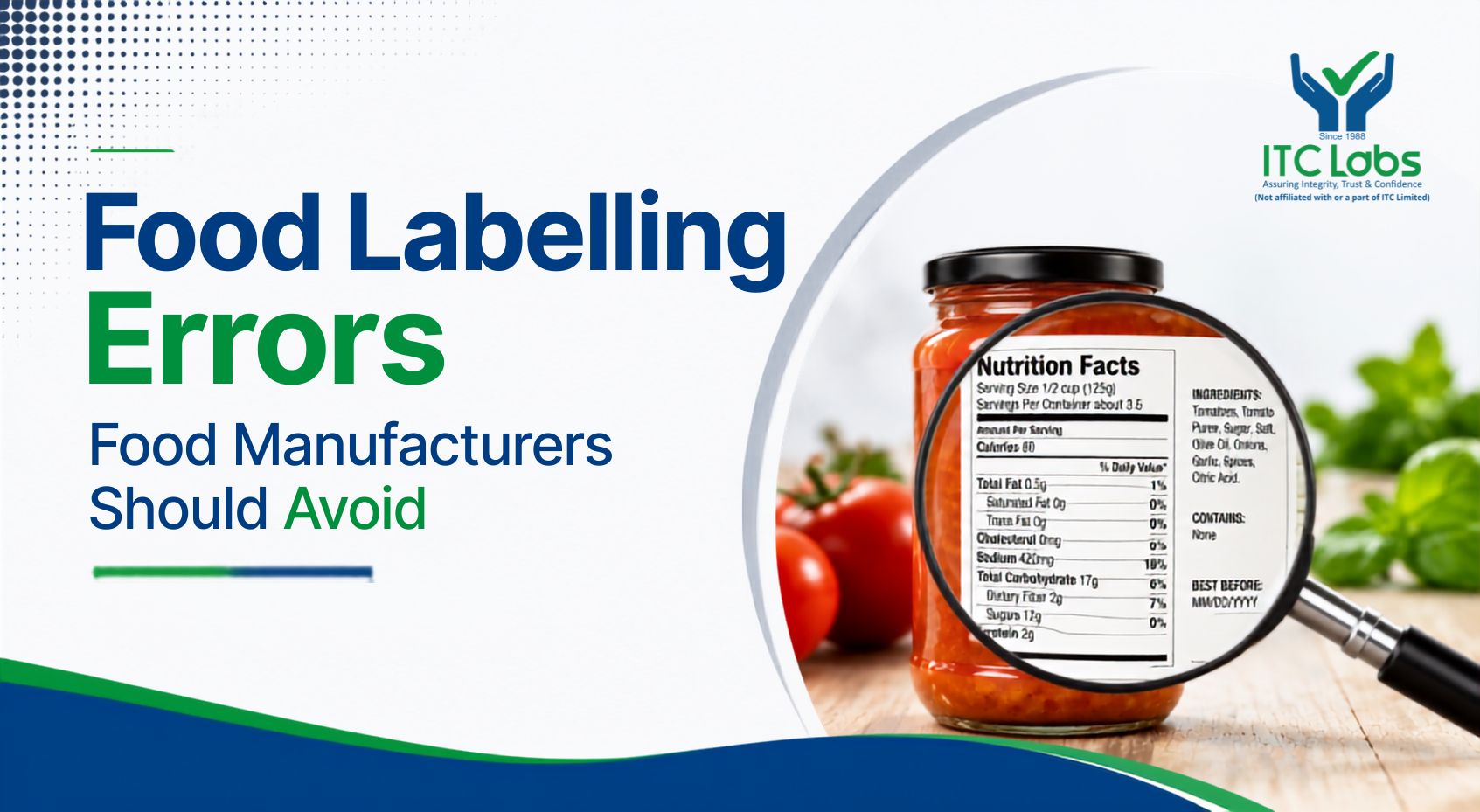
Food labels do much more than display a product name or list ingredients. They provide consumers with important information about the product while helping manufacturers comply with regulatory requirements. A well-prepared label builds trust, whereas an inaccurate one can lead to product recalls, regulatory action, rejected consignments, and damage to a company’s reputation.
For food manufacturers, food labelling is not simply a packaging requirement. It is a critical part of quality assurance and compliance. Even small mistakes can have significant business consequences.
In this blog, we’ll look at five common food labelling mistakes manufacturers should avoid and how laboratory testing can help ensure labels remain accurate and compliant.
Why Accurate Food Labelling Matters
Consumers today pay close attention to food labels. They check ingredient lists, nutritional information, allergen declarations, expiry dates, and product claims before making purchasing decisions.
Regulatory authorities are equally vigilant. Labels that contain inaccurate or misleading information can result in penalties, product recalls, or delays in market approvals.
By following proper food labelling practices, manufacturers can improve consumer confidence while meeting regulatory expectations.
5 Common Food Labelling Mistakes Manufacturers Should Avoid
1. Incorrect Nutritional Information
One of the most common food labelling mistakes is displaying nutritional values that do not match the actual product.
This often happens when manufacturers rely on estimated values instead of laboratory analysis or fail to update labels after changing ingredients or formulations.
Incorrect nutritional information can mislead consumers and attract regulatory scrutiny.
How to Avoid Incorrect Nutritional Information
- Verify nutritional values through laboratory testing.
- Update labels whenever product formulations change.
- Review nutrition panels periodically to ensure accuracy.
2. Missing or Incorrect Allergen Declarations
Food allergies can pose serious health risks. Failing to declare allergens correctly may not only affect consumers but can also expose manufacturers to legal and regulatory issues.
Manufacturers should clearly identify allergens present in the product or introduced during processing.
Common Food Allergens
- Milk
- Peanuts
- Tree nuts
- Soy
- Wheat
- Eggs
Proper testing and quality checks help reduce the chances of incorrect allergen declarations.
3. Misleading Product Claims
Claims such as “Natural,” “High Protein,” “Sugar-Free,” or “Rich in Fibre” should always be backed by evidence.
Making unsupported claims is a common food labelling mistake that can affect brand credibility and regulatory compliance.
Before printing such claims, manufacturers should verify that the product meets applicable standards and that laboratory results support the information being displayed.
4. Errors in Ingredient Lists
Ingredient lists should accurately reflect the product formulation and follow the required order of declaration.
Mistakes such as omitted ingredients, outdated formulations, or incorrect ingredient names can create compliance issues.
Manufacturers should review labels whenever suppliers, recipes, or formulations change to ensure ingredient declarations remain accurate.
5. Skipping Label Verification Before Product Launch
Many manufacturers spend significant time developing products but overlook one final step: verifying the label before printing.
Simple errors like incorrect nutritional values, missing declarations, or outdated regulatory information can easily go unnoticed until products reach the market.
A final review supported by laboratory testing helps ensure the food labelling is accurate before production begins.
How Laboratory Testing Supports Food Labelling
Accurate labels begin with accurate data.
Laboratory testing helps manufacturers verify product information before it appears on the packaging. It supports:
- Nutritional analysis
- Ingredient verification
- Contaminant analysis
- Allergen testing
- Regulatory compliance
- Product quality assessment
Instead of relying on assumptions or outdated information, manufacturers can make label claims based on reliable test results.
Benefits of Accurate Food Labelling
Investing in proper food labelling offers long-term business advantages.
Manufacturers can:
- Reduce the risk of regulatory action
- Improve customer trust
- Support product exports
- Minimise product recalls
- Maintain consistent product quality
- Strengthen brand reputation
Accurate labels also make it easier to meet buyer requirements, particularly when supplying retailers or exporting products to international markets.
Best Practices for Food Manufacturers
To reduce food labelling errors, manufacturers should:
- Verify nutritional information through laboratory testing.
- Review labels whenever formulations change.
- Ensure allergen declarations are accurate.
- Validate product claims before printing.
- Conduct a final compliance review before product launch.
These simple steps can help prevent costly mistakes while improving overall product quality.
Conclusion
Accurate food labelling is essential for every food manufacturer. It protects consumers, supports regulatory compliance, strengthens brand credibility, and reduces the risk of costly recalls or rejected products. Even minor errors on a label can have a significant impact on business operations.
At ITC Labs, we help food manufacturers build confidence in their product labels through reliable food testing and analytical services. From nutritional analysis and ingredient verification to contaminant testing and compliance support, our experienced team provides accurate results that help businesses meet regulatory requirements and deliver safe, high-quality products to the market.
Partner with ITC Labs to ensure your food labels are backed by trusted scientific data.
Frequently Asked Questions About Food Labelling
1. Why Is Food Labelling Important for Manufacturers?
Food labelling helps manufacturers comply with regulations, provide accurate product information, build consumer trust, and reduce the risk of recalls and penalties.
2. What Information Should Be Included on a Food Label?
A food label typically includes the product name, ingredient list, nutritional information, allergen declarations, manufacturing details, expiry date, and other mandatory regulatory information.
3. How Does Laboratory Testing Support Food Labelling?
Laboratory testing verifies nutritional values, ingredient composition, allergens, and other quality parameters, helping manufacturers create accurate and compliant food labels.
4. Can Incorrect Food Labelling Lead to Product Recalls?
Yes. Incorrect or misleading food labels can result in regulatory action, product recalls, shipment rejections, and loss of consumer confidence.
5. How Often Should Manufacturers Review Their Food Labels?
Manufacturers should review food labels whenever formulations, ingredients, suppliers, or regulatory requirements change to ensure continued compliance.
6. Why Choose ITC Labs for Food Testing?
ITC Labs provides reliable food testing services that help manufacturers verify product quality, support accurate food labelling, and meet regulatory compliance requirements.