
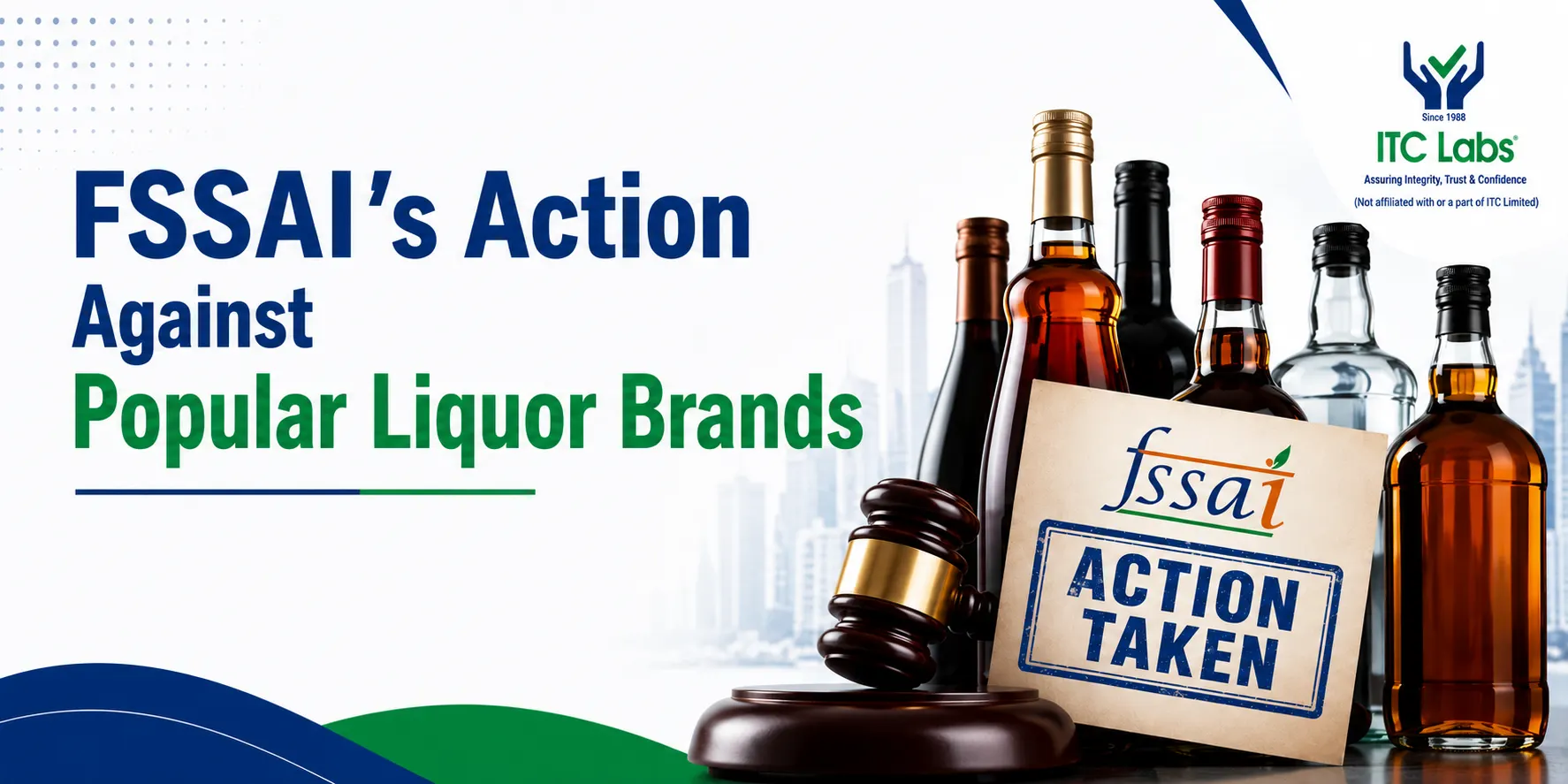
The recent action by the Food Safety and Standards Authority of India (FSSAI) against several popular liquor brands has sparked widespread discussion across the alcoholic beverage industry. While the case specifically involves flavoured rum variants, the larger takeaway extends far beyond a single brand. It highlights the growing emphasis on regulatory compliance, product quality, and scientific testing across India’s beverage industry.
For manufacturers, this is a reminder that meeting consumer expectations is only one part of the equation. Equally important is ensuring that every product complies with FSSAI regulations and quality standards before it reaches the market.
Why Did FSSAI Take Action?
According to reports, FSSAI directed authorities to stop the sale of certain flavoured rum variants after concerns were raised regarding their regulatory classification and compliance. The case demonstrates that regulatory bodies are closely monitoring product formulations, labelling, and approvals to ensure that products sold in the market meet applicable food safety and quality requirements.
While investigations and regulatory actions may differ from one case to another, the message is consistent: compliance cannot be treated as an afterthought.
For beverage manufacturers, even minor oversights in formulation, ingredient declarations, or regulatory approvals can lead to significant business consequences.
A Wake-Up Call for India’s Beverage Industry
India’s alcoholic beverage market is expanding rapidly. Alongside this growth comes greater scrutiny from regulators and increasing consumer awareness.
Today’s consumers expect beverages that are not only enjoyable but also manufactured under stringent quality standards. Regulatory authorities are responding by strengthening inspections and enforcing compliance more actively than ever before.
As a result, manufacturers need to build quality into every stage of production, from sourcing raw materials to the final product.
The Growing Importance of Beverage Testing
One of the most effective ways to reduce compliance risks is through comprehensive beverage testing.
Laboratory testing helps manufacturers verify whether their products meet the required safety and quality parameters before they enter the market. It also provides documented evidence of compliance during regulatory inspections.
A robust testing programme can identify potential issues long before they become regulatory concerns.
Some of the key testing areas include:
- Alcohol content verification
- Chemical analysis
- Contaminant testing
- Heavy metals analysis
- Microbiological testing
- Ingredient verification
- Stability studies
- Shelf-life testing
- Packaging compatibility testing
These analyses help manufacturers produce beverages that are consistent, safe, and compliant with applicable regulations.
Why Regulatory Compliance Matters
Regulatory compliance is about much more than avoiding penalties.
It protects consumers, preserves brand reputation, and supports long-term business growth.
When a product is found to be non-compliant, manufacturers may face:
- Product withdrawals or market restrictions
- Financial losses
- Damage to brand credibility
- Increased regulatory inspections
- Loss of consumer confidence
- Supply chain disruptions
In today’s competitive beverage market, rebuilding trust after a regulatory issue can be far more difficult than preventing one in the first place.
Quality Should Begin Before Production
Many businesses still rely heavily on end-product testing. However, quality assurance is most effective when it begins much earlier.
A preventive approach includes testing raw materials, validating formulations, monitoring production processes, and verifying the final product before release.
This reduces the likelihood of unexpected compliance issues while improving product consistency across production batches.
Manufacturers that invest in preventive quality control often experience fewer recalls, better operational efficiency, and stronger customer confidence.
Staying Ahead of Evolving Regulations
Food safety regulations continue to evolve as new ingredients, formulations, and manufacturing practices enter the market.
For beverage manufacturers, staying informed about regulatory updates is no longer optional.
Companies should regularly review:
- FSSAI guidelines
- Product formulations
- Ingredient approvals
- Labelling requirements
- Packaging compliance
- Quality management systems
Working closely with experienced testing laboratories also helps businesses adapt more quickly to changing regulatory expectations.
Building Consumer Trust Through Scientific Testing
Consumers today are more informed than ever before.
They read labels, compare products, and increasingly value transparency from brands. Scientific testing plays an important role in supporting these expectations.
When manufacturers validate their products through accredited laboratory testing, they demonstrate a commitment to quality, safety, and compliance.
This not only reduces regulatory risks but also strengthens consumer confidence and enhances brand reputation.
In an industry where competition is intense, trust has become one of the strongest differentiators.
The Road Ahead for Beverage Manufacturers
The recent FSSAI action should not be viewed solely as an isolated regulatory event. Instead, it serves as an important reminder that India’s beverage industry is entering an era of greater accountability.
Manufacturers that prioritise scientific testing, regulatory compliance, and continuous quality improvement will be better positioned to navigate this changing landscape.
Rather than reacting to enforcement actions, businesses should focus on building proactive quality systems that minimise risks before products reach consumers.
Conclusion
The recent regulatory action against popular liquor brands reinforces an important lesson for every beverage manufacturer: compliance and quality must go hand in hand. As regulations become more stringent, relying on thorough laboratory testing is one of the most effective ways to ensure product safety, maintain regulatory compliance, and protect brand reputation.
At ITC Labs, we support beverage manufacturers with comprehensive testing solutions designed to help meet regulatory requirements and maintain consistent product quality. From chemical and microbiological analysis to contaminant testing and quality evaluation, our experienced team delivers reliable results that help businesses make informed decisions with confidence. By partnering with a trusted testing laboratory, manufacturers can stay prepared for evolving regulations while building safer, higher-quality beverages for the market.
Frequently Asked Questions (FAQs)
1. Why did FSSAI take action against certain liquor brands?
FSSAI reportedly directed authorities to stop the sale of certain flavoured rum variants due to concerns related to regulatory classification and compliance. The action highlights the importance of adhering to applicable food safety regulations, product standards, and approval requirements.
2. Why is regulatory compliance important for beverage manufacturers?
Regulatory compliance helps ensure that beverages meet established safety and quality standards before reaching consumers. It also reduces the risk of product withdrawals, regulatory action, financial losses, and damage to brand reputation.
3. How does beverage testing help manufacturers maintain compliance?
Comprehensive laboratory testing verifies that beverage products meet required quality and safety parameters. It also provides documented evidence of compliance that can support manufacturers during regulatory inspections and quality audits.
4. What types of tests are commonly performed on alcoholic beverages?
Common beverage testing includes alcohol content verification, chemical analysis, contaminant testing, heavy metals analysis, microbiological testing, ingredient verification, stability studies, shelf-life testing, and packaging compatibility testing.
5. Can laboratory testing help prevent regulatory issues?
Yes. Regular laboratory testing can identify potential quality or compliance issues before products are released to the market, allowing manufacturers to take corrective action early and reduce regulatory risks.
6. What are the consequences of non-compliance with FSSAI regulations?
Non-compliance may result in product withdrawals, market restrictions, financial losses, increased regulatory scrutiny, supply chain disruptions, and reduced consumer confidence.
7. Why should quality assurance begin before production?
A preventive quality assurance approach includes testing raw materials, validating formulations, monitoring production processes, and verifying finished products. This helps improve consistency, reduce risks, and enhance overall product quality.
8. How often should beverage manufacturers review regulatory requirements?
Manufacturers should regularly review FSSAI guidelines, product formulations, ingredient approvals, labelling requirements, packaging compliance, and quality management systems to stay aligned with evolving regulations.
9. How does scientific testing improve consumer trust?
Accredited laboratory testing demonstrates a manufacturer’s commitment to product safety, quality, and regulatory compliance. This transparency helps build consumer confidence and strengthens brand reputation.
10. How can ITC Labs support beverage manufacturers?
ITC Labs provides comprehensive beverage testing services, including chemical analysis, microbiological testing, contaminant testing, heavy metals analysis, alcohol content verification, stability studies, shelf-life evaluation, and quality testing to help manufacturers meet regulatory requirements and maintain consistent product quality.