
The pharmaceutical industry operates under strict quality and safety standards, and even the smallest impurity can have serious consequences. One group of contaminants that has gained significant attention in recent years is nitrosamines. Following several global drug recalls, regulatory authorities have intensified their focus on nitrosamine testing, making it an essential part of pharmaceutical quality assurance.
For manufacturers, understanding the importance of nitrosamine testing is no longer optional. It is a regulatory requirement that helps ensure product safety, maintain compliance, and protect brand reputation. This guide explains what nitrosamines are, why they matter, and how manufacturers can effectively manage the risks.
What Are Nitrosamines?
Nitrosamines are chemical compounds that can form during the manufacturing, storage, or packaging of pharmaceutical products. Certain nitrosamines are classified as probable human carcinogens, meaning long-term exposure above acceptable limits may increase health risks.
Although these impurities are generally present in extremely small amounts, modern analytical techniques can detect them at trace levels. Regulatory authorities expect manufacturers to identify, assess, and control the presence of nitrosamines throughout the product lifecycle.
Why Has Nitrosamine Testing Become So Important?
The importance of nitrosamine testing came into the spotlight after several widely used medications were found to contain unacceptable levels of nitrosamine impurities. These discoveries resulted in global recalls and prompted health authorities to introduce stricter guidance for pharmaceutical manufacturers.
Today, organizations such as the U.S. Food and Drug Administration, European Medicines Agency, and Central Drugs Standard Control Organisation require manufacturers to evaluate the risk of nitrosamine formation and implement appropriate testing strategies.
Manufacturers that fail to comply may face product recalls, delayed approvals, warning letters, or damage to customer trust.
How Do Nitrosamines Form?
Nitrosamines can originate from several stages of pharmaceutical manufacturing. Understanding these sources helps manufacturers establish effective preventive measures.
Common Causes Include:
- Certain raw materials or intermediates used during synthesis
- Manufacturing processes involving nitrite-containing reagents
- Cross-contamination during production
- Solvents and catalysts that introduce impurities
- Degradation during storage
- Interactions with packaging materials under specific conditions
Because multiple factors may contribute to nitrosamine formation, manufacturers should perform comprehensive risk assessments before commercial production.
Why Manufacturers Should Prioritize Nitrosamine Testing
For pharmaceutical manufacturers, nitrosamine testing offers benefits that extend beyond regulatory compliance.
Protects Patient Safety
The primary objective of testing is to ensure medicines remain safe for consumers. Detecting trace impurities before products reach the market significantly reduces potential health risks.
Supports Regulatory Compliance
Health authorities now expect manufacturers to demonstrate that nitrosamine risks have been properly evaluated and controlled. Reliable analytical data helps support regulatory submissions and inspections.
Prevents Costly Product Recalls
A product recall can result in financial losses, disrupted supply chains, and long-term reputational damage. Routine testing enables manufacturers to identify issues early and take corrective action before distribution.
Strengthens Quality Management
Integrating nitrosamine testing into quality control programs helps manufacturers maintain consistent product quality while supporting Good Manufacturing Practices (GMP).
Which Pharmaceutical Products Require Nitrosamine Testing?
Although nitrosamine concerns initially focused on a limited number of medicines, regulatory expectations have expanded considerably.
Testing May Be Necessary For:
- Active Pharmaceutical Ingredients (APIs)
- Tablets and capsules
- Injectable formulations
- Oral liquid medicines
- Combination drug products
- Products with complex synthetic pathways
- Medicines using nitrite-containing materials
Ultimately, the requirement depends on the product’s manufacturing process and the outcome of a scientific risk assessment.
How Is Nitrosamine Testing Performed?
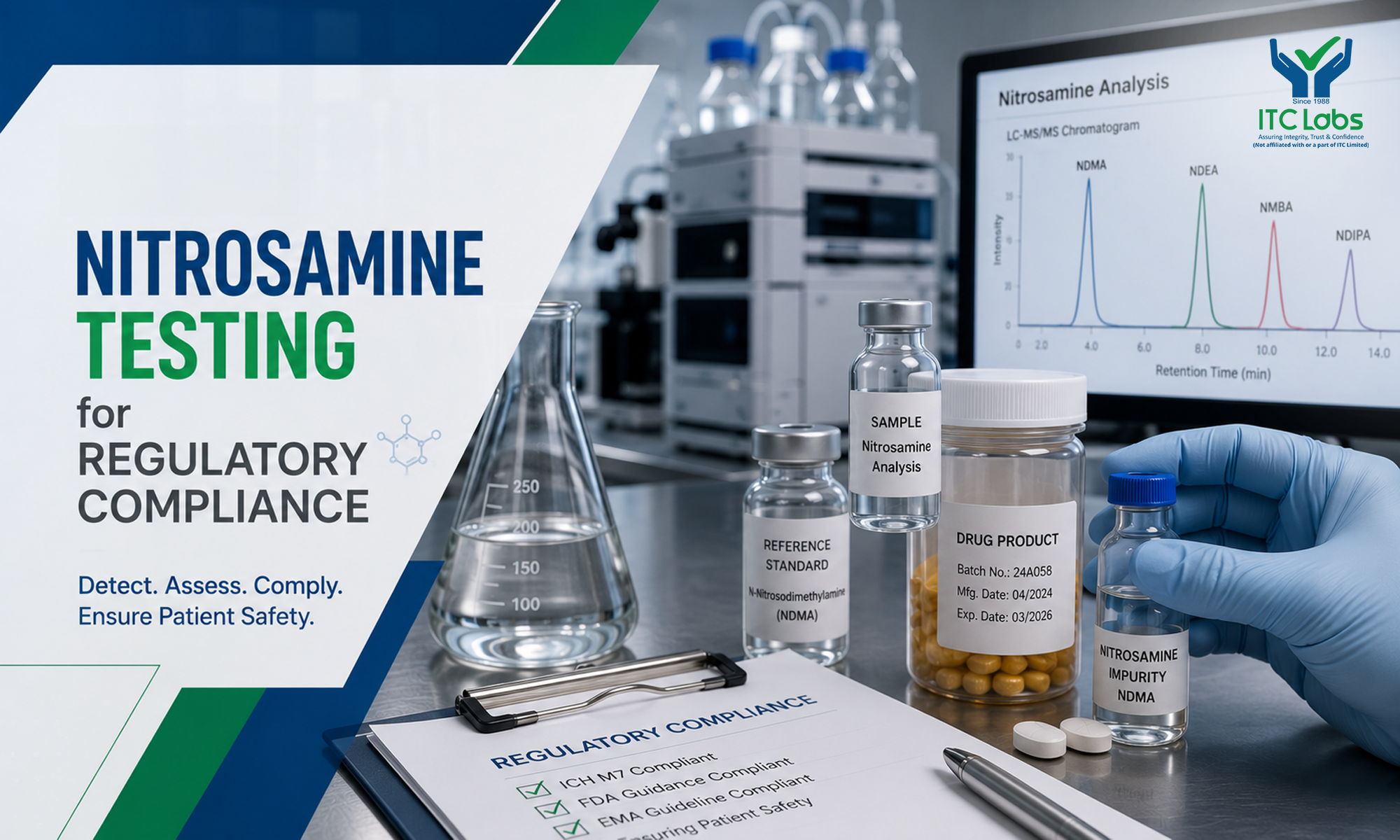
Detecting nitrosamines requires highly sensitive analytical techniques capable of identifying impurities at very low concentrations.
Common Methods Include:
- Liquid Chromatography-Mass Spectrometry (LC-MS/MS)
- Gas Chromatography-Mass Spectrometry (GC-MS)
- High-Resolution Mass Spectrometry (HRMS)
These advanced techniques provide accurate quantification while meeting stringent regulatory expectations. Proper method development, validation, and quality controls are equally important to ensure reliable results.
Best Practices for Pharmaceutical Manufacturers
Managing nitrosamine risks requires a proactive approach rather than relying solely on end-product testing.
Manufacturers Should Consider the Following Best Practices:
- Conduct detailed risk assessments during product development.
- Evaluate raw material suppliers and manufacturing processes.
- Monitor process changes that may introduce nitrosamine risks.
- Perform routine analytical testing where applicable.
- Validate analytical methods according to regulatory guidelines.
- Maintain complete documentation for audits and inspections.
- Partner with experienced third-party laboratories for independent testing.
These practices help manufacturers strengthen quality systems while reducing compliance risks.
Challenges in Nitrosamine Testing
Although nitrosamine testing has become increasingly important, it also presents several technical challenges.
Manufacturers Often Encounter:
- Detection at extremely low concentration levels
- Complex pharmaceutical formulations
- Frequent updates to regulatory guidance
- Method development for different product types
- Tight product launch timelines
Working with an experienced analytical laboratory can help overcome these challenges by providing validated methods, modern instrumentation, and regulatory expertise.
Choosing the Right Testing Laboratory
Selecting the right laboratory plays a critical role in obtaining accurate and reliable results.
An Ideal Testing Partner Should Offer:
- NABL-accredited testing capabilities
- Advanced LC-MS/MS and GC-MS instrumentation
- Experienced analytical scientists
- Regulatory-compliant methodologies
- Timely reporting and technical support
- Comprehensive documentation for audits and submissions
A dependable laboratory not only delivers accurate results but also supports manufacturers throughout the compliance process.
Conclusion
As regulatory expectations continue to evolve, nitrosamine testing has become an essential component of pharmaceutical quality assurance. Manufacturers that proactively identify and control nitrosamine risks are better positioned to maintain regulatory compliance, protect patient safety, and safeguard their market reputation.
At ITC Labs, we provide comprehensive pharmaceutical testing solutions designed to meet the evolving needs of manufacturers. Our advanced analytical capabilities, experienced scientists, and commitment to quality enable accurate detection of nitrosamine impurities in accordance with current regulatory requirements. Whether you need routine quality testing, method development, validation, or regulatory support, ITC Labs delivers reliable results with precision and efficiency. Partner with ITC Labs to strengthen your quality assurance program and ensure your pharmaceutical products meet the highest standards of safety and compliance.
Frequently Asked Questions
1. What is nitrosamine testing in pharmaceuticals?
Nitrosamine testing identifies and measures trace nitrosamine impurities in pharmaceutical products to ensure they meet regulatory safety limits and protect patient health.
2. Why is nitrosamine testing important for pharmaceutical manufacturers?
It helps manufacturers comply with regulatory requirements, prevent product recalls, ensure product safety, and maintain consistent quality throughout the manufacturing process.
3. Which pharmaceutical products require nitrosamine testing?
Nitrosamine testing may be required for APIs, tablets, capsules, injectables, oral liquids, and other products based on their manufacturing process and risk assessment.
4. What analytical methods are used for nitrosamine testing?
Common methods include LC-MS/MS, GC-MS, and high-resolution mass spectrometry, which can accurately detect nitrosamine impurities at very low concentrations.
5. How often should pharmaceutical manufacturers perform nitrosamine testing?
Testing frequency depends on regulatory guidance, product risk assessments, manufacturing changes, and the manufacturer’s quality management strategy.
6. Can nitrosamines form during pharmaceutical manufacturing?
Yes. Nitrosamines can form due to certain raw materials, manufacturing processes, solvents, degradation, or interactions during storage and packaging.
7. How does third-party nitrosamine testing benefit manufacturers?
Independent testing laboratories provide unbiased results, advanced analytical expertise, regulatory-compliant methods, and reliable documentation to support audits and product approvals.
8. How can ITC Labs support pharmaceutical manufacturers with nitrosamine testing?
ITC Labs offers advanced nitrosamine testing using validated analytical methods, helping manufacturers meet regulatory requirements, ensure product quality, and maintain compliance with confidence.