
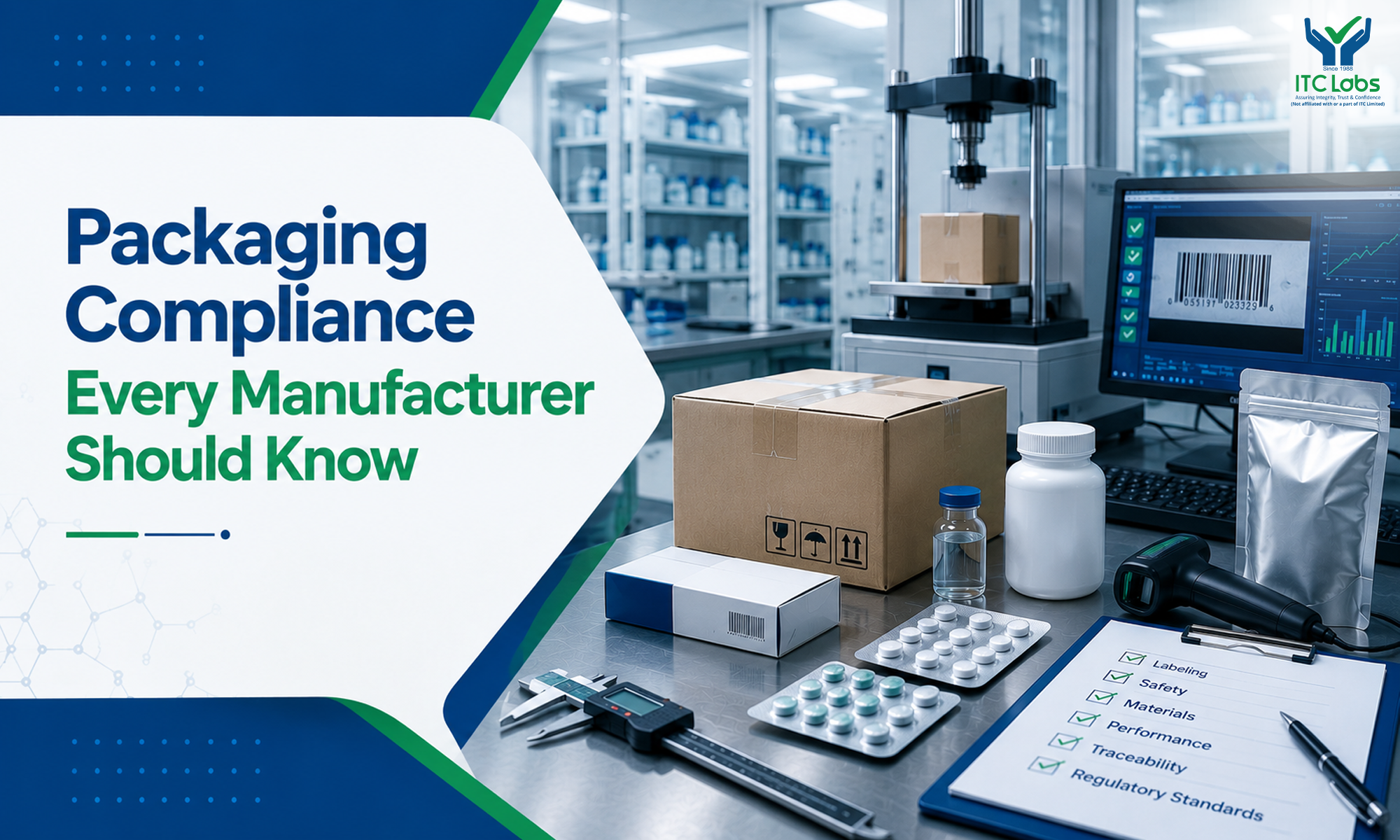
Packaging is much more than a protective layer around a product. It plays a critical role in maintaining product quality, ensuring consumer safety, supporting transportation, and meeting regulatory requirements. For manufacturers, packaging must not only perform well throughout the supply chain but also comply with industry-specific standards and legal regulations.
Failing to meet packaging compliance requirements can lead to product recalls, rejected shipments, regulatory penalties, damaged brand reputation, and dissatisfied customers. As businesses expand into domestic and international markets, understanding these requirements has become more important than ever.
In this blog, we’ll explore the essential packaging compliance requirements every manufacturer should know, the role of testing in ensuring compliance, and how choosing the right testing partner can help bring products to market with confidence.
What Are Packaging Compliance Requirements?
Packaging compliance requirements refer to the regulations, standards, and testing criteria that packaging materials and finished packaging must meet before they are used for commercial distribution.
These requirements ensure that packaging:
- Protects the product throughout its lifecycle
- Does not contaminate the contents
- Meets applicable safety and environmental regulations
- Withstands transportation and storage conditions
- Complies with customer and industry specifications
The exact compliance requirements vary depending on the product category, packaging material, target market, and applicable regulatory framework.
Why Packaging Compliance Matters
For manufacturers, packaging failures can be costly. A damaged package can result in product loss, customer complaints, increased returns, and disruptions across the supply chain.
Meeting packaging compliance requirements offers several business benefits, including:
- Improved product protection
- Reduced transportation damage
- Better customer satisfaction
- Enhanced brand reputation
- Regulatory compliance
- Lower warranty and replacement costs
- Increased confidence among distributors and retailers
By validating packaging performance before products reach the market, manufacturers can reduce risks while improving overall product quality.
Common Packaging Compliance Requirements
Although compliance requirements differ across industries, several key areas apply to most packaging applications.
Material Safety
Packaging materials must be suitable for their intended use. This is especially important for food, pharmaceutical, cosmetic, and healthcare products, where packaging comes into direct or indirect contact with sensitive contents.
Manufacturers should verify that packaging materials meet relevant safety requirements and do not introduce harmful contaminants into the product.
Mechanical Strength
Packaging must withstand normal handling, stacking, storage, and transportation without failure.
Mechanical performance is commonly evaluated through tests such as:
- Compression testing
- Drop testing
- Burst strength testing
- Tensile testing
- Edge crush testing
- Box compression testing
These tests help confirm that packaging can protect products under real-world conditions.
Transportation Performance
Packages travel through multiple stages before reaching customers, including warehouses, loading docks, distribution centers, and transportation vehicles.
Compliance testing evaluates how packaging performs under conditions such as:
- Vibration
- Shock
- Compression
- Repeated handling
- Environmental exposure
Testing helps manufacturers minimize product damage throughout the supply chain.
Environmental Resistance
Packaging often encounters varying temperatures, humidity levels, and environmental conditions during storage and transportation.
Meeting packaging compliance requirements involves verifying that packaging maintains its strength and integrity when exposed to changing environmental conditions.
Environmental testing helps identify weaknesses before products are shipped to customers.
Industry-Specific Packaging Compliance
Different industries have unique packaging regulations based on product safety and intended use.
Food Packaging
Food packaging must preserve freshness while preventing contamination. Manufacturers should ensure packaging materials comply with food contact regulations and maintain product safety throughout the product’s shelf life.
Pharmaceutical Packaging
Pharmaceutical packaging must protect medicines from moisture, light, oxygen, and contamination while maintaining product stability.
Tamper-evident features, child-resistant packaging, and labeling requirements are also important considerations.
Consumer Goods Packaging
Packaging for consumer products must be durable enough to withstand transportation while maintaining product appearance and functionality.
Retail-ready packaging often requires additional performance validation before distribution.
The Role of Packaging Testing in Compliance
Meeting packaging compliance requirements isn’t simply about selecting the right materials. Manufacturers must verify packaging performance through laboratory testing.
Packaging testing helps determine whether packaging can perform as intended under realistic operating conditions.
Some commonly performed evaluations include:
Compression Testing
Measures the package’s ability to withstand stacking loads during storage and transportation.
Drop Testing
Simulates accidental drops that may occur during handling and shipping.
Vibration Testing
Evaluates packaging performance under continuous vibration experienced during road, rail, sea, or air transport.
Seal Integrity Testing
Confirms that sealed packages remain leak-proof and maintain product protection.
Environmental Conditioning
Exposes packaging to controlled temperature and humidity conditions before performance testing.
These tests provide valuable data that supports product quality and regulatory compliance.
Challenges Manufacturers Face
Meeting packaging compliance requirements can become increasingly complex as products are distributed across multiple markets.
Some common challenges include:
- Changing regulatory requirements
- Diverse customer specifications
- Export compliance
- Sustainable packaging initiatives
- Material substitutions
- Increasing product protection expectations
Without proper testing and validation, even small design changes can affect packaging performance and compliance.
Manufacturers can improve packaging reliability by following a structured compliance approach.
Some recommended practices include:
- Select packaging materials carefully.
- Validate packaging performance through testing.
- Review applicable regulatory requirements regularly.
- Maintain proper documentation.
- Test packaging after design modifications.
- Conduct periodic quality assessments.
- Partner with accredited testing laboratories.
A proactive compliance strategy reduces risks while supporting consistent product quality.
Choosing the Right Packaging Testing Partner
An experienced testing laboratory provides more than just test reports. The right partner helps manufacturers understand regulatory expectations, evaluate packaging performance, and identify opportunities for improvement.
When selecting a laboratory, consider factors such as:
- Accredited testing capabilities
- Advanced testing equipment
- Industry expertise
- Comprehensive reporting
- Fast turnaround times
- Customized testing solutions
- Technical guidance
Working with an experienced laboratory ensures that packaging meets both customer expectations and regulatory requirements.
Conclusion
As products move through increasingly complex supply chains, meeting packaging compliance requirements has become essential for manufacturers across industries. From selecting suitable materials to validating packaging through mechanical, environmental, and transportation testing, every step contributes to product quality, regulatory compliance, and customer satisfaction. A well-planned compliance strategy not only minimizes the risk of product damage and recalls but also strengthens brand credibility and supports long-term business growth.
ITC Labs offers comprehensive packaging testing services to help manufacturers confidently meet evolving packaging compliance requirements. With advanced testing facilities and experienced technical professionals, ITC Labs performs a wide range of packaging evaluations, including compression, drop, vibration, seal integrity, environmental conditioning, and performance testing. Whether you’re developing packaging for food, pharmaceuticals, consumer goods, or industrial products, ITC Labs provides accurate, reliable, and standards-driven testing solutions that help ensure your packaging is compliant, durable, and ready for the market.
Frequently Asked Questions
What are packaging compliance requirements?
Packaging compliance requirements are regulations and testing standards that ensure packaging is safe, durable, compliant, and suitable for its intended application.
Why are packaging compliance requirements important for manufacturers?
Meeting packaging compliance requirements helps manufacturers prevent product damage, ensure regulatory compliance, reduce recalls, and improve customer satisfaction.
Which industries require packaging compliance testing?
Food, pharmaceutical, cosmetic, consumer goods, electronics, automotive, and industrial manufacturers commonly require packaging compliance testing.
What tests are performed to meet packaging compliance requirements?
Common tests include compression testing, drop testing, vibration testing, seal integrity testing, environmental conditioning, and transportation performance testing.
How does packaging testing support regulatory compliance?
Packaging testing verifies that packaging meets applicable safety, performance, and quality standards before products are distributed or exported.
Can packaging compliance testing reduce product damage during transit?
Yes. Packaging compliance testing evaluates packaging strength and durability, helping minimize damage during storage, handling, and transportation.
How often should manufacturers conduct packaging compliance testing?
Manufacturers should perform packaging compliance testing during product development, after design changes, and periodically to maintain consistent product quality.
Why choose ITC Labs for packaging compliance testing?
ITC Labs provides comprehensive packaging compliance testing services, helping manufacturers validate packaging performance, meet regulatory requirements, and deliver reliable products to market.