
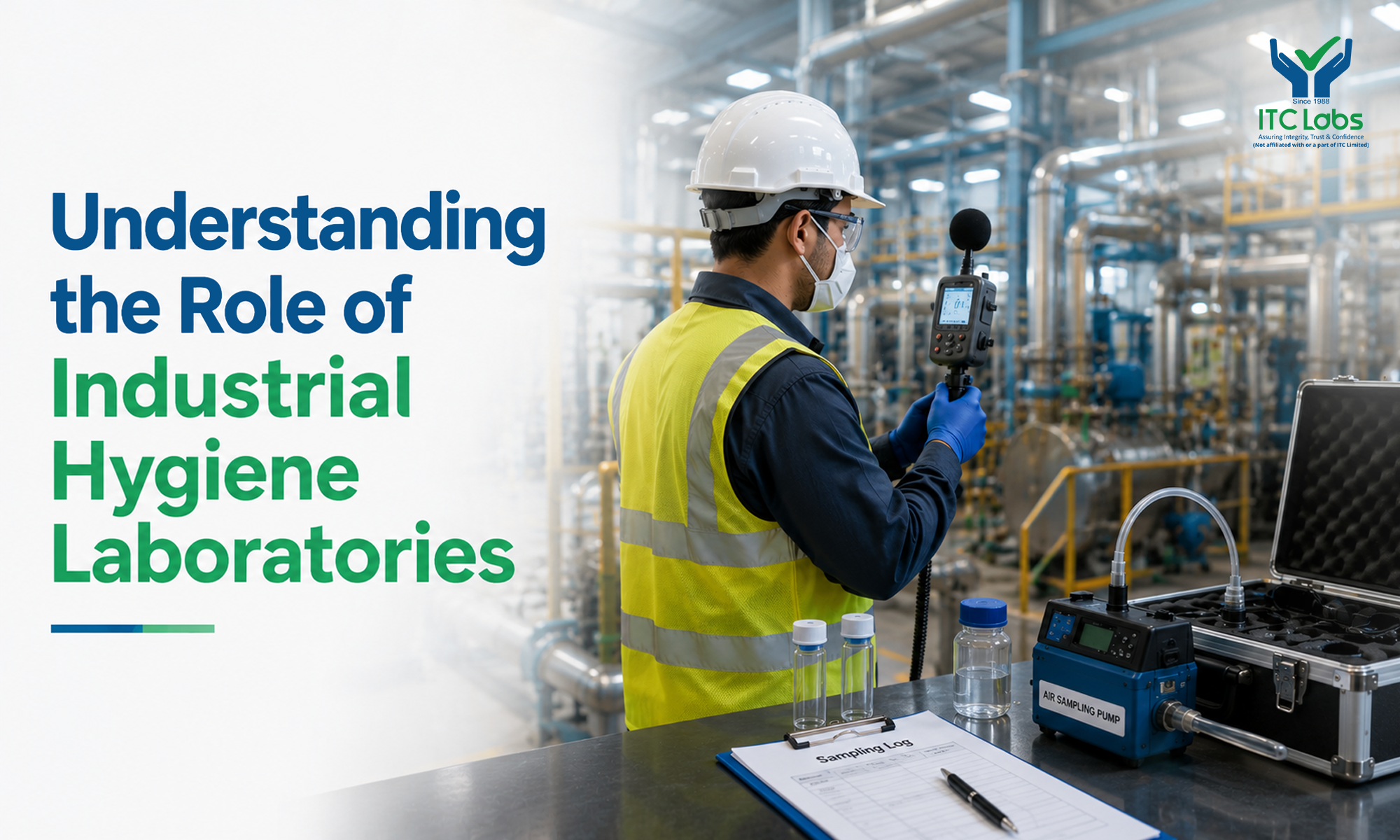
A safe workplace is more than just a regulatory requirement; it is a fundamental responsibility of every organization. Employees across manufacturing plants, construction sites, pharmaceutical facilities, laboratories, and processing industries are exposed to various workplace hazards that can impact their health and well-being. From airborne contaminants and chemical exposure to noise and poor indoor air quality, these risks must be identified and controlled effectively.
This is where Industrial Hygiene Testing plays a crucial role. Industrial hygiene laboratories help organizations assess workplace hazards, monitor exposure levels, and ensure compliance with occupational health and safety standards. By providing scientific data and reliable analysis, these laboratories support businesses in creating healthier and safer work environments.
In this blog, we will explore what industrial hygiene testing is, why it matters, and how industrial hygiene laboratories contribute to workplace safety and employee health.
What is Industrial Hygiene Testing?
Industrial hygiene testing is the process of identifying, evaluating, and controlling environmental factors in the workplace that may affect employee health. These factors may include:
- Airborne dust and particulates
- Chemical vapors and gases
- Noise levels
- Biological contaminants
- Indoor air quality concerns
- Heat stress and thermal conditions
The objective of industrial hygienist testing is to measure exposure levels and determine whether they fall within acceptable occupational limits. The data collected helps organizations implement corrective actions and preventive measures to protect workers.
Why Occupational Health and Safety Matters
Occupational health and safety directly influence employee productivity, morale, and overall business performance. Uncontrolled workplace hazards can lead to:
- Respiratory illnesses
- Hearing loss
- Skin disorders
- Occupational diseases
- Workplace accidents and injuries
- Reduced productivity and increased absenteeism
Investing in industrial hygiene services enables organizations to identify risks before they become serious health concerns proactively. It also helps businesses meet regulatory requirements and demonstrate their commitment to employee welfare.
The Importance of Industrial Hygiene Laboratories
Modern workplaces rely on scientific testing to accurately evaluate environmental conditions. This is where industrial hygiene testing laboratories become essential.
Industrial hygiene laboratories analyze samples collected from workplace environments and provide precise data regarding employee exposure to hazardous substances. Their findings support informed decision-making and effective risk management strategies.
Some of the key functions of industrial hygiene laboratories include:
1. Air Quality Assessment
Poor air quality is one of the most common workplace hazards. Dust, fumes, volatile organic compounds (VOCs), and chemical vapors can affect employee health over time.
Through industrial hygiene monitoring services, laboratories evaluate air samples and identify contaminants present in the workplace. The results help organizations improve ventilation systems and implement exposure control measures.
2. Chemical Exposure Analysis
Many industries handle chemicals that can pose health risks when exposure exceeds permissible limits.
Industrial hygiene inspections and testing services help assess chemical exposure levels and determine whether workers are adequately protected through engineering controls, administrative measures, or personal protective equipment (PPE).
3. Noise Monitoring
Excessive workplace noise can lead to permanent hearing damage. Industrial hygiene laboratories conduct noise assessments and monitoring programs to identify high-risk areas and recommend corrective actions.
4. Dust and Particulate Testing
Construction, mining, manufacturing, and processing industries often generate airborne dust. Certain dust particles can cause serious respiratory illnesses when inhaled over extended periods.
Regular industrial hygiene testing helps organizations evaluate dust concentrations and implement dust-control strategies.
Industrial Hygiene in India: Growing Importance
The focus on industrial hygiene in India has grown significantly over the past decade. With rapid industrialization and evolving workplace safety regulations, organizations are increasingly prioritizing employee health and environmental monitoring.
Industries such as:
- Pharmaceuticals
- Chemicals
- Food processing
- Manufacturing
- Automotive
- Construction
- Oil and gas
are actively adopting professional industrial hygiene services to ensure workplace compliance and improve occupational safety standards.
As awareness increases, businesses are also searching for reliable partners offering industrial hygiene testing near me to support their workplace health programs.
The Role of Accredited Testing Laboratories
The accuracy of industrial hygiene assessments depends heavily on the quality of laboratory testing. Working with an Accredited testing laboratory ensures that results are scientifically reliable and recognized by regulatory authorities.
An Accredited testing lab follows established quality systems, validated methodologies, and strict testing protocols. This provides organizations with confidence in the results and recommendations provided.
Benefits of choosing an accredited laboratory include:
- Accurate and reproducible test results
- Regulatory compliance support
- Improved workplace risk assessment
- Reliable exposure monitoring data
- Enhanced employee protection programs
Businesses often prefer NABL-certified labs near me because NABL accreditation demonstrates technical competence and adherence to internationally recognised quality standards.
Industrial Hygiene and Quality Assurance
Industrial hygiene is closely linked with workplace quality systems. Effective exposure monitoring and environmental testing contribute significantly to organizational quality objectives.
A professional quality assurance laboratory not only supports product quality but also helps maintain safe working conditions for employees.
Similarly, Quality assurance testing ensures that workplace controls and safety measures are functioning as intended. By integrating industrial hygiene practices into broader quality management systems, organizations can achieve both compliance and operational excellence.
Choosing the Right Industrial Hygiene Testing Partner
Selecting the right laboratory is critical for obtaining reliable data and actionable recommendations.
When evaluating industrial hygiene testing laboratories, organizations should consider:
- Accreditation status
- Technical expertise
- Industry experience
- Range of testing capabilities
- Turnaround time
- Compliance knowledge
- Advanced analytical infrastructure
An experienced Analytical testing Lab can provide comprehensive solutions for workplace monitoring, environmental assessments, and occupational health evaluations.
Businesses seeking the Best Testing services in India should prioritize laboratories with proven expertise, robust quality systems, and a commitment to scientific accuracy.
Conclusion
Industrial hygiene laboratories play a vital role in protecting employee health and creating safer workplaces. Through accurate exposure assessments, environmental monitoring, and scientific analysis, they help organizations identify hazards, maintain compliance, and reduce occupational health risks.
As workplace safety standards continue to evolve, investing in professional industrial hygiene services and reliable industrial hygiene monitoring services is no longer optional, it is essential for sustainable business operations.
At ITC Labs, we provide comprehensive industrial hygiene and analytical testing solutions designed to support occupational health and safety objectives across industries. As an accredited testing laboratory, our team combines technical expertise, advanced instrumentation, and quality-driven processes to deliver dependable results. Whether you require workplace exposure assessments, environmental monitoring, or specialized laboratory analysis, ITC Labs is committed to helping organizations maintain safer, healthier, and more compliant work environments.
Frequently Asked Questions
1. What is industrial hygiene testing?
Industrial hygiene testing identifies and evaluates workplace hazards such as chemicals, dust, noise, and air contaminants to protect employee health and safety.
2. Why are industrial hygiene services important?
Industrial hygiene services help prevent occupational illnesses, ensure regulatory compliance, and create safer working environments for employees.
3. What industries require industrial hygiene testing?
Manufacturing, pharmaceuticals, construction, food processing, chemicals, mining, and oil and gas industries commonly require industrial hygiene testing.
4. What does an industrial hygiene laboratory do?
An industrial hygiene laboratory analyzes workplace samples to assess exposure levels and identify potential health and safety risks.
5. How often should industrial hygiene monitoring be conducted?
Monitoring frequency depends on workplace hazards, regulatory requirements, and changes in processes, equipment, or working conditions.
6. What are industrial hygiene monitoring services?
These services measure workplace exposure to dust, chemicals, noise, and other hazards to ensure safe occupational conditions.
7. Why choose an accredited testing laboratory?
Accredited laboratories provide reliable, accurate, and compliant testing results that support informed workplace safety decisions.