
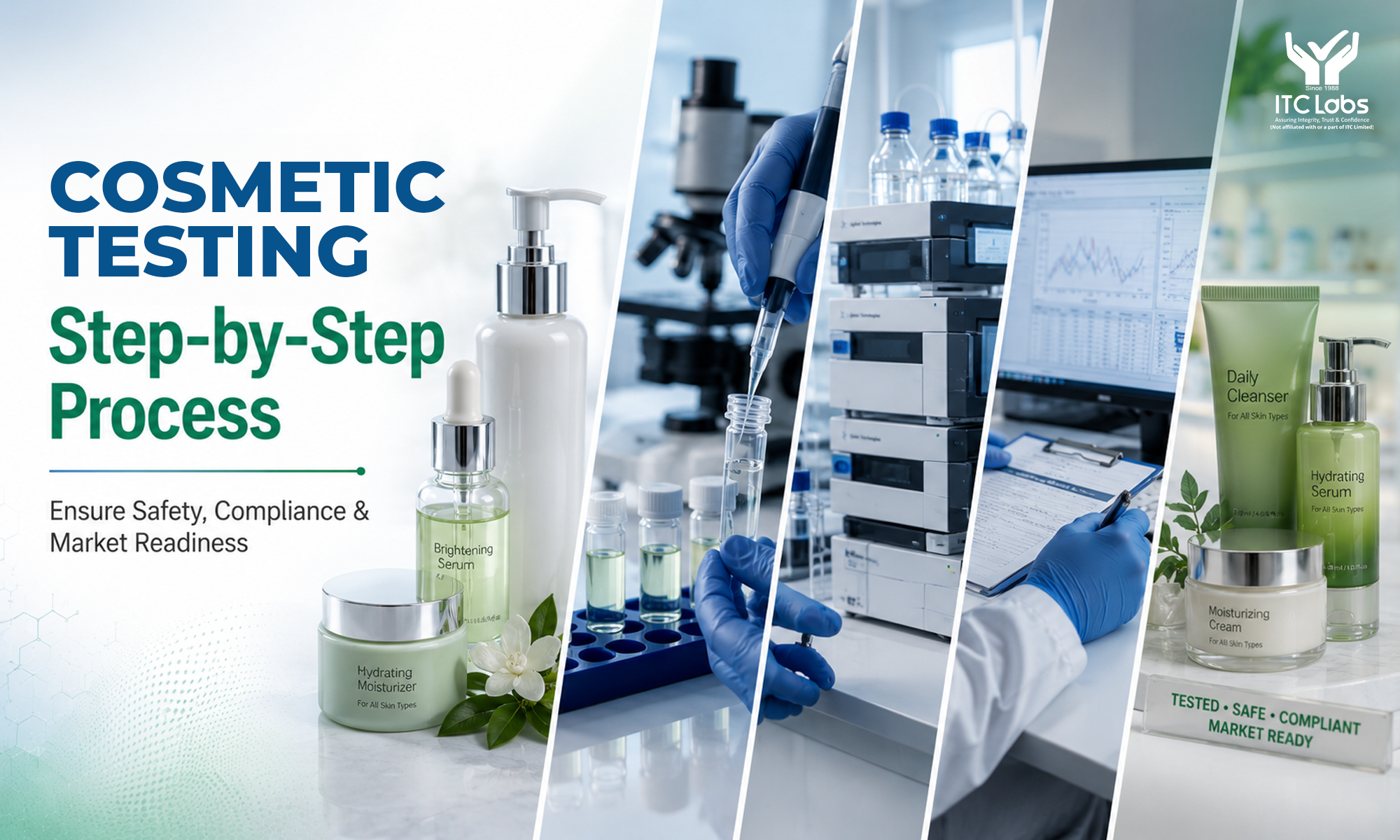
The cosmetic industry in India is growing rapidly, with new skincare, haircare, personal care, and beauty products entering the market every day. However, before any cosmetic product reaches consumers, it must undergo thorough cosmetic product testing to ensure safety, quality, and regulatory compliance. Whether you are a startup brand or an established manufacturer, partnering with a reliable cosmetic testing lab is essential for building consumer trust and maintaining product quality.
This guide explains the complete process of getting your cosmetic product tested, from sample submission to receiving the final test reports.
Why Cosmetic Product Testing is Important
Consumers expect cosmetic products to be safe, effective, and free from harmful contaminants. Proper cosmetic safety testing helps identify potential risks and ensures that products meet applicable quality standards before entering the market.
Working with professional cosmetic testing labs allows manufacturers to:
- Verify product safety and stability
- Ensure compliance with regulatory requirements
- Evaluate product performance and shelf life
- Detect microbial contamination and impurities
- Maintain consistent product quality
Many brands today rely on cosmetic testing services provided by an accredited testing lab to support product development and market approval.
Step 1: Identify the Testing Requirements
The first step is determining which tests are required for your cosmetic product. Different products have different testing needs depending on their formulation, intended use, and packaging.
Common categories of cosmetic testing include:
- Microbiological testing
- Stability studies
- Heavy metal analysis
- Preservative efficacy testing
- pH testing
- Physical and chemical analysis
- Contaminant screening
An experienced analytical testing lab can help determine the appropriate testing plan based on your product type.
Step 2: Choose a Reliable Cosmetic Testing Laboratory
Selecting the right laboratory is critical. Look for a cosmetics testing lab in India that has experience testing a wide range of cosmetic formulations.
Before choosing a laboratory, consider:
- Accreditation and certifications
- Industry experience
- Testing capabilities
- Turnaround time
- Regulatory expertise
- Quality management systems
Many manufacturers specifically prefer NABL-accredited labs in India because accreditation demonstrates technical competence and adherence to recognized testing standards.
When searching online, many businesses use terms such as cosmetic testing labs near me to find local facilities. However, it is important to prioritize expertise and accreditation over proximity alone.
Step 3: Submit Product Samples
Once you select a laboratory, the next step is sample submission. The testing laboratory will provide guidelines regarding:
- Sample quantity
- Packaging requirements
- Product information
- Ingredient details
- Manufacturing batch information
Providing complete and accurate information helps the laboratory conduct efficient analytical testing and reduces the possibility of delays.
Most cosmetics testing laboratories in India also require documentation related to product formulation and intended usage to support testing protocols.
Step 4: Conduct Analytical Testing
After receiving the samples, the laboratory begins analytical testing to evaluate the product’s physical, chemical, and microbiological characteristics.
Common parameters examined during testing include:
- pH levels
- Viscosity
- Active ingredient content
- Heavy metals
- Preservative levels
- Microbial contamination
A professional analytical testing lab uses advanced instruments and validated methodologies to generate accurate and reliable results.
This stage forms the foundation of overall cosmetic quality testing and helps manufacturers identify formulation issues before product launch.
Step 5: Perform Cosmetic Safety Testing
Safety is one of the most important aspects of product evaluation. Cosmetic safety testing helps determine whether the product is suitable for consumer use and free from harmful contaminants.
Depending on the product category, testing may include:
- Microbiological safety assessment
- Stability studies
- Preservative efficacy evaluation
- Contaminant screening
- Irritation risk assessment
Reputable cosmetic testing services focus on ensuring that products meet safety expectations while maintaining effectiveness throughout their shelf life.
Step 6: Quality Assurance Testing
After safety assessments are completed, laboratories perform quality assurance testing to verify consistency and compliance.
The purpose of quality assurance testing is to ensure that:
- Every batch meets specifications
- Product performance remains consistent
- Manufacturing processes are controlled
- Regulatory requirements are satisfied
Manufacturers often work closely with an accredited testing lab during this stage to establish robust quality control procedures and maintain product integrity.
Step 7: Review Test Reports
Once testing is completed, the laboratory issues detailed reports containing:
- Test methodologies
- Observations
- Results
- Compliance status
- Recommendations
These reports serve as documented evidence of cosmetic product testing and can be used for regulatory submissions, customer assurance, and internal quality management purposes.
Leading cosmetic testing labs provide comprehensive reports that help manufacturers make informed decisions regarding product launch and commercialization.
Step 8: Address Non-Conformities if Required
In some cases, testing may reveal issues such as microbial contamination, formulation instability, or deviations from specifications.
If this happens, manufacturers should:
- Investigate the root cause
- Modify formulations if necessary
- Improve manufacturing controls
- Submit revised samples for retesting
Experienced cosmetic testing services providers often offer technical guidance to help manufacturers resolve quality concerns efficiently.
Conclusion
Thorough cosmetic product testing is essential for ensuring the safety, quality, and compliance of cosmetic products before they reach consumers. From selecting the right cosmetic testing lab to conducting Analytical testing, cosmetic safety testing, and Quality assurance testing, each step plays a critical role in building consumer trust and maintaining product consistency. Partnering with an Accredited testing lab also helps manufacturers meet regulatory requirements and minimize the risk of product recalls or quality issues.
If you are looking for a trusted Cosmetics Testing Lab in India, ITC Labs offers comprehensive cosmetic testing services tailored to the needs of cosmetic manufacturers. With advanced testing infrastructure, experienced professionals, and a commitment to quality, ITC Labs supports businesses with accurate cosmetic quality testing, reliable analytical testing, and regulatory-compliant solutions. As one of the providers of the best Testing services in India, ITC Labs helps brands bring safe, high-quality cosmetic products to market with confidence.
Frequently Asked Questions
1. What is cosmetic product testing?
Cosmetic product testing is the process of evaluating cosmetic products for safety, quality, stability, and regulatory compliance before they are sold to consumers.
2. Why is cosmetic safety testing important?
Cosmetic safety testing helps identify potential health risks, contamination, and formulation issues to ensure products are safe for consumer use.
3. How do I choose the right cosmetic testing lab?
Look for an accredited testing lab with relevant expertise, modern testing facilities, experienced scientists, and recognized accreditations such as NABL.
4. Are NABL-accredited labs required for cosmetic testing?
While not always mandatory, many manufacturers prefer working with NABL-accredited labs in India because they demonstrate technical competence and reliability.
5. What tests are commonly performed on cosmetic products?
Common tests include microbiological analysis, stability testing, preservative efficacy testing, heavy metal analysis, pH testing, and other Analytical testing procedures.
6. How long does cosmetic product testing take?
The timeline depends on the product type and testing requirements. Basic testing may take a few days, while stability studies can take several weeks or months.
7. Can startups use Cosmetic Testing Services?
Yes. Cosmetic Testing Services are beneficial for startups, SMEs, and large manufacturers looking to ensure product safety and compliance.
8. What are the benefits of working with cosmetics testing laboratories in India?
Professional cosmetics testing laboratories in India provide regulatory support, quality assurance, accurate Analytical testing, and cost-effective testing solutions for cosmetic manufacturers.