
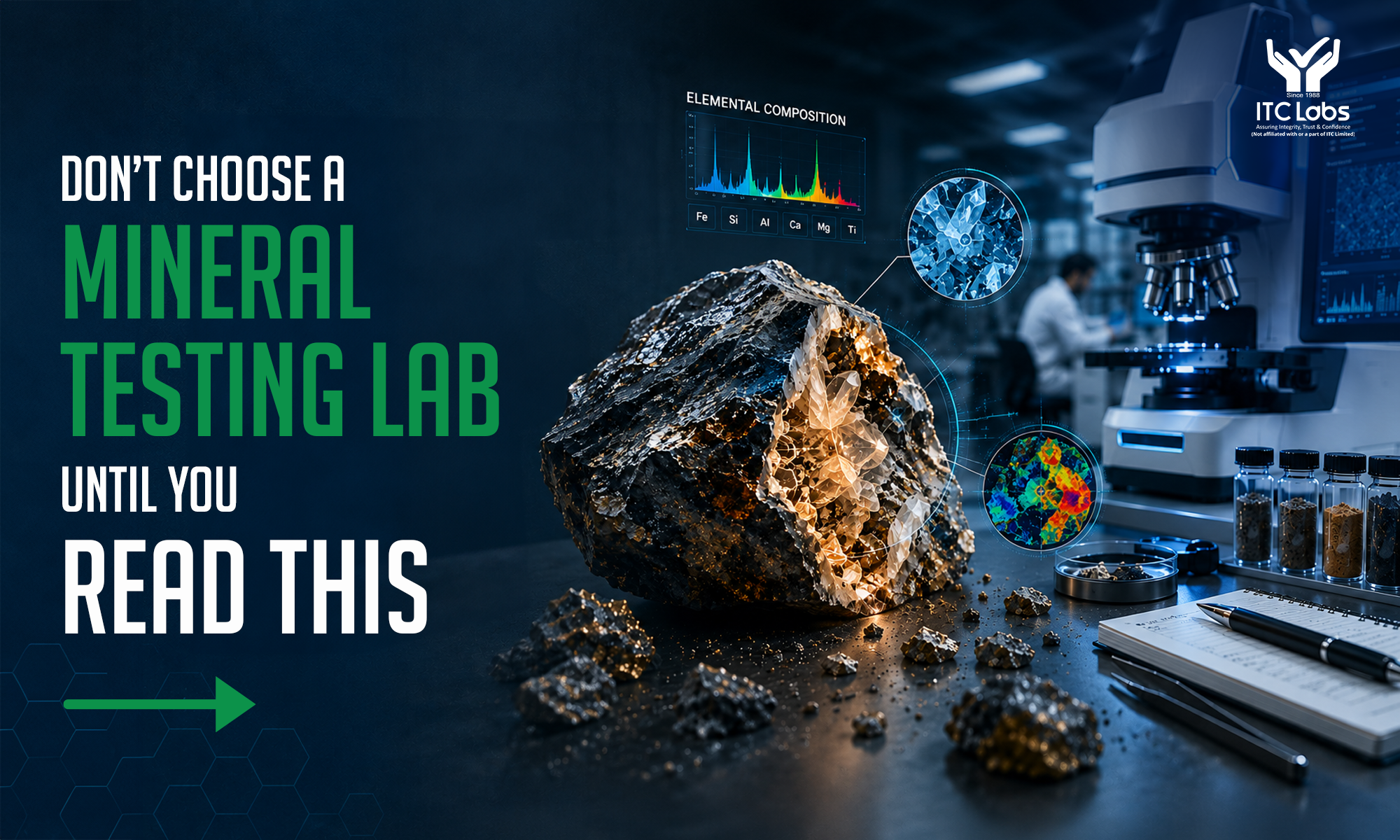
Choosing the wrong testing lab is an expensive mistake. Not immediately, but eventually. A report that doesn’t hold up under regulatory scrutiny, a missed contaminant that shows up in the field, a turnaround time that stalls your production schedule. These are the real costs of picking a mineral testing lab without doing the groundwork first.
For manufacturers, raw material quality is everything. And mineral composition sits right at the heart of that. Whether you’re working with construction aggregates, pharmaceutical-grade minerals, industrial chemicals, or food-grade raw materials, knowing exactly what’s in your input materials — before they enter your process — is what separates a smooth production run from an expensive one.
Here’s what to actually look for before you commit to a lab.
Understand the Scope of Mineral Testing
Before shortlisting any lab, it’s worth being clear on what mineral testing actually covers. In a manufacturing context, it means analysing raw materials and finished products to determine chemical composition, purity, physical properties, and contamination levels — the data that tells you whether a material is fit for your process or not.
Industries commonly use mineral analysis for:
- Quality control of raw materials
- Product consistency verification
- Regulatory compliance
- Supplier qualification
- Failure analysis
- Research and development
A reliable analytical testing lab gives manufacturers the data they need to verify mineral composition, identify impurities, and confirm that materials meet the standards their process and their customers require.
Choose an Accredited Testing Lab
Accreditation is the first thing worth checking. An accredited testing lab has had its methods, equipment, and processes independently verified against recognised quality standards — which means the results it produces are traceable, reliable, and accepted across regulatory and commercial contexts.
In India, NABL is the relevant benchmark. NABL-accredited labs in India operate under internationally aligned quality frameworks, which matter when your test reports need to hold up during audits, export documentation, vendor approvals, or compliance inspections. Manufacturers searching for NABL-certified labs near me are asking exactly the right question. A non-accredited lab might produce results that look credible — but fall apart the moment they’re scrutinised. Accreditation removes that risk and gives your quality assurance testing process a foundation that’s actually defensible.
Evaluate Technical Capabilities and Equipment
The reliability of a material testing laboratory is strongly influenced by its technical capabilities and laboratory infrastructure. Modern testing equipment, validated methodologies, and skilled analysts are essential for producing precise, consistent, and dependable test results.
Before choosing a testing partner, manufacturers should evaluate:
- Available testing methods
- Modern analytical instruments
- Sample handling procedures
- Calibration standards
- Reporting accuracy
- Industry-specific expertise
A capable analytical testing lab should have the instrumentation to handle detailed mineral composition analysis such as XRF, ICP-OES, ICP-MS, etc. Equipment aside, how the lab manages quality through the material testing process matters just as much. Internal reference checks, validated methods, and documented procedures are what separate labs that produce consistent, accurate results from those that don’t.
Look for Industry Experience
Mineral testing requirements vary significantly across industries. A lab that regularly works with construction materials, ceramics, industrial chemicals, paints, or metallurgical inputs understands the practical challenges those applications bring — and is far better positioned to interpret results in a way that’s actually useful to a manufacturer.
Experienced material testing labs in India can provide:
- Industry-relevant insights
- Faster issue identification
- Better compliance guidance
- Technical consultation
- Customised testing solutions
Manufacturers should always ask whether the laboratory has prior experience working with similar materials or industries.
Assess Turnaround Time and Reporting Quality
For manufacturers running tight production schedules, report turnaround isn’t a minor detail. A delayed test result can hold up procurement decisions, stall production planning, and push back product release timelines — costs that add up quickly when a line is waiting on clearance.
An efficient quality assurance lab should offer:
- Clear communication
- Defined turnaround timelines
- Accurate and easy-to-understand reports
- Responsive technical support
Testing reports should include complete analytical findings, methodology references, and compliance observations wherever applicable.
Reliable material testing services not only provide accurate results but also help manufacturers make informed operational decisions.
Verify Compliance Support
Regulatory pressure on manufacturers isn’t easing up. Product safety requirements, environmental compliance obligations, and industry-specific standards all demand documented, verifiable data — and testing laboratories are where that data comes from.
An experienced material testing laboratory should support manufacturers with:
- Regulatory compliance testing
- Standard-specific analysis
- Audit support documentation
- Product certification requirements
- Supplier quality verification
Choosing a laboratory that understands both technical and regulatory expectations can significantly reduce compliance risks.
Consider Location and Accessibility
When looking for testing support, many manufacturers often search terms like “material testing laboratory near me” or “material testing lab near me” to find a facility that is easy to access and coordinate with. Although choosing a nearby lab can help with sample transportation and communication, location alone should not be the deciding factor. It is equally important to consider the lab’s technical expertise, accreditation, testing capabilities, and overall service reliability.
However, a strategically located laboratory with efficient sample collection and reporting systems can improve operational efficiency and reduce turnaround time.
Importance of Quality Assurance in Mineral Testing
Consistent testing plays a major role in maintaining product quality and brand reputation. Even minor variations in mineral composition can affect product performance, durability, and safety.
This is where professional quality assurance testing becomes essential. A reliable quality assurance lab helps manufacturers:
- Reduce product rejection rates
- Improve consistency
- Maintain customer trust
- Minimise operational risks
- Support continuous improvement
The right testing partner becomes an extension of the manufacturer’s quality control system.
Conclusion
Picking the right mineral testing lab isn’t a decision to rush. Accreditation, technical depth, industry experience, turnaround time, reporting quality — each of these factors has a direct bearing on whether the lab actually adds value to your operation or just adds a step to your process. Manufacturers who get this decision right tend to build long-term partnerships with labs that understand their materials, their industry, and what reliable data actually looks like in practice.
When evaluating mineral testing labs, the goal is straightforward — find a partner that combines strong quality systems, advanced analytical capability, and the kind of material testing services that go beyond handing over a report.
ITC Labs fits that description well. As an established analytical testing lab with a track record across multiple industries, ITC Labs brings the technical infrastructure, skilled professionals, and quality-focused approach that manufacturers need from a testing partner. Whether the requirement is mineral composition analysis, contamination screening, or compliance-driven material testing services, ITC Labs delivers results that manufacturers can actually act on — accurately, consistently, and within timelines that don’t disrupt production.
Frequently Asked Questions
1. Why is mineral testing important for manufacturers?
Mineral testing helps manufacturers verify raw material quality, detect impurities, maintain product consistency, and ensure compliance with industry and regulatory standards.
2. What should manufacturers look for in mineral testing labs?
Manufacturers should evaluate accreditation, testing capabilities, analytical equipment, industry experience, turnaround time, and reporting accuracy before selecting mineral testing labs.
3. Why should I choose an NABL-accredited testing lab?
NABL-accredited labs in India follow recognised quality standards and validated testing procedures, ensuring accurate, reliable, and globally accepted test results.
4. What services does a material testing laboratory provide?
A material testing laboratory offers mineral composition analysis, contamination testing, quality assurance testing, physical property analysis, and regulatory compliance support.
5. How do analytical testing labs support quality assurance?
An analytical testing lab helps manufacturers identify material inconsistencies, maintain production quality, reduce rejection rates, and support continuous process improvement.
6. What is included in the material testing process?
The material testing process typically includes sample collection, preparation, analytical testing, data evaluation, quality checks, and detailed reporting.
7. How can I find a reliable material testing laboratory near me?
When searching for a material testing laboratory near me, manufacturers should prioritise accreditation, technical expertise, and service reliability over location alone.
8. Why is turnaround time important in material testing services?
Fast and accurate material testing services help manufacturers avoid production delays, improve decision-making, and maintain efficient supply chain operations.