
Ghee holds a place in Indian households that goes well beyond the kitchen. It’s tied to tradition, to trust, and to a quiet assumption of purity that most people never think to question. That assumption is increasingly being tested. Recent developments in the food industry have highlighted how large quantities of ghee can move through the supply chain without adequate quality checks, and by the time concerns surface, the product is already on shelves and in homes.
This is the gap that ghee testing exists to close. Not as a formality. As a genuine safeguard.
Why Ghee Adulteration Is a Growing Concern
Most ghee manufacturers test the finished product. Some don’t test at all. By then, adulterated raw material has already been processed, packaged, and dispatched; the damage is done.
The problem is you can’t see adulteration. Vanaspati blends, hydrogenated fats, animal body fat, same colour, same texture, same smell as genuine ghee. A supplier can hand you compromised white butter or cream, and it will clear every visual check. It won’t clear a desi ghee testing protocol at a certified lab.
And under FSSAI regulations, it doesn’t matter where in your supply chain the adulteration entered. If it’s in your product, the liability is yours.
A recent case made this uncomfortably concrete. Over 70 lakh kilograms of ghee were reportedly procured and used without mandatory testing. Investigations suggested protocols weren’t just overlooked, they were bypassed, allowing potentially adulterated products to reach consumers at scale. Without consistent desi ghee testing built into the supply chain, even large, well-resourced systems can fail.
Understanding the Science Behind Ghee Testing
For manufacturers, understanding the ghee testing procedure is not just about compliance; it’s about knowing where your vulnerabilities are at each stage of production.
- Incoming Raw Material Testing- Before your raw ghee or cream enters the production line, it should be screened. This includes:
- Butyro Refractometer Reading (BRR) — a fast physical check that flags gross adulteration immediately
- Reichert-Meissl Value — the single most reliable indicator of genuine cow ghee; vegetable fat adulterants drop this value sharply
- Polenske Value — detects coconut and palm oil contamination that often slips through supplier agreements
In-Process Quality Checks During processing, moisture content and Free Fatty Acid (FFA) levels need to be tracked. High FFA in your finished ghee signals either compromised raw material or processing errors, both of which translate to shorter shelf life and consumer complaints.
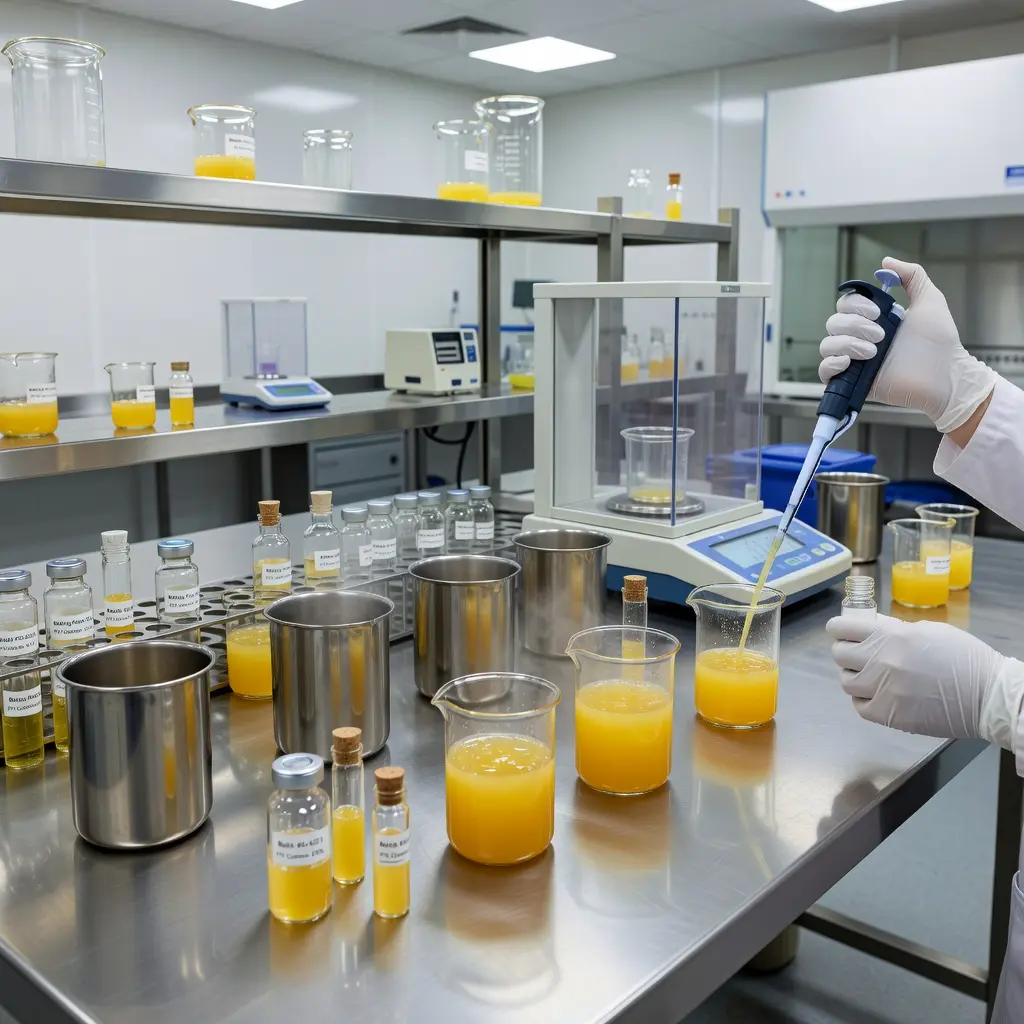
Finished Product Testing: This is your last line of defence before dispatch. A complete panel at a desi ghee testing lab covers:
- Baudouin Test — detects sesame oil, a common vanaspati marker
- Iodine Value and Saponification Value — map the fat composition against pure ghee benchmarks
- Gas Chromatography (GC) for Fatty Acid Profiling — the gold standard in analytical testing services, it identifies adulteration at parts-per-million levels
- HPLC for Cholesterol — differentiates cow ghee from buffalo ghee and vegetable fats conclusively
Types of Ghee Tested in a Desi Ghee Testing Lab
Different products require different testing approaches. Accredited labs handle multiple Types of Ghee Tested, such as:
- Cow ghee
- Buffalo ghee
- Desi (traditional) ghee
- Packaged commercial ghee
- Bulk industrial ghee
Each category carries its own risk profile — and in large procurement systems where quality checks are inconsistent or rushed, those risks compound quickly. A specialised desi ghee testing lab ensures each type is evaluated against the parameters that actually matter for that product, not a one-size-fits-all checklist.
The Role of Certified Testing Labs
The recent incident also revealed how skipping or delaying laboratory testing can lead to systemic failures. Reports indicate that even when testing flagged issues, results were not always acted upon, allowing compromised ghee to remain in circulation.
This is why working with an FSSAI approved testing lab is critical. Such labs follow strict protocols, ensuring that every batch is tested before it reaches the market.
A trusted Ghee testing lab in India provides end-to-end support—from sampling and testing to reporting and compliance. Businesses often search for a Ghee testing lab near me or Ghee testing near me, but choosing a lab should depend on accreditation, expertise, and reliability, not just convenience.
How Testing Protects Brands and Consumers
The consequences of skipping Ghee Testing go far beyond quality issues. They can lead to:
- Regulatory penalties
- Product recalls
- Loss of consumer trust
- Long-term brand damage
In large-scale cases, adulterated ghee has been linked to procurement failures, weak oversight, and a lack of accountability—impacting millions of consumers.
For consumers, the risk is equally serious. Adulterated ghee may contain substances that are not meant for consumption, undermining the very health benefits people associate with it.
Regular Desi Ghee Testing ensures that purity claims are not just marketing statements but scientifically verified facts.
How to Choose the Right Ghee Testing Lab in India
Geography used to be a constraint. It no longer is. Most certified labs offering desi ghee testing now accept courier samples from anywhere in India, with turnaround times of 7–10 working days. If you’re looking for a ghee testing lab near me or ghee testing near me, prioritise labs that are both FSSAI approved and NABL accredited — and confirm they test against IS 3508 standards specifically.
Build a testing cadence into your production calendar: incoming raw material, in-process checks, and pre-dispatch finished product. Make it a system, not a reaction.
Don’t Wait for a Recall to Start Testing
The recent incident wasn’t just a procurement lapse—it highlighted a deeper compliance failure. Even when issues were flagged during testing, they weren’t acted upon, allowing compromised ghee to remain in circulation. This shows that Ghee Testing alone isn’t enough—what matters is how those results are used.
That’s where working with an FSSAI-approved testing lab makes a real difference. Accredited labs don’t just generate reports; they follow structured protocols where every batch is tested, documented, and traceable.
When choosing a Ghee testing lab near me, proximity shouldn’t be the priority. What truly matters is accreditation, technical expertise, and the reliability of results—especially when your product quality is under scrutiny.
A trusted Ghee testing lab in India strengthens your entire quality framework through dependable analytical testing services. ITC Labs brings this assurance with FSSAI-compliant testing and proven expertise—helping businesses maintain quality, ensure compliance, and build lasting trust.
Frequently Asked Questions
1. What is Ghee Testing and why is it important?
Ghee Testing is a scientific process used to verify purity and detect adulteration. It helps manufacturers ensure compliance, maintain product quality, and prevent health risks caused by contaminated or substandard ghee.
2. What does a standard Ghee testing procedure include?
A typical Ghee testing procedure includes BR value, Reichert-Meissl value, Polenske value, fatty acid profiling, and chromatography. These tests identify adulterants like vegetable oils, vanaspati, and non-dairy fats.
3. How does Desi Ghee Testing detect adulteration?
Desi Ghee Testing uses advanced methods like Gas Chromatography and HPLC to detect adulteration at trace levels. It identifies unusual fat compositions and confirms whether the ghee meets purity standards.
4. Which types of ghee can be tested in a lab?
Certified labs handle multiple Types of Ghee Tested, including cow ghee, buffalo ghee, desi ghee, packaged ghee, and bulk industrial ghee, each requiring specific testing parameters for accurate results.
5. Why should I choose an FSSAI-approved testing lab?
An FSSAI-approved testing lab ensures compliance with food safety regulations. It follows strict protocols, provides legally valid reports, and helps businesses avoid penalties, recalls, and quality disputes.
6. How do I find a reliable Ghee testing lab in India?
When selecting a Ghee testing lab in India, prioritise NABL accreditation, FSSAI approval, and expertise in dairy testing rather than just searching for a Ghee testing lab near me.
7. Can I send samples to a Ghee testing lab near me?
Yes, most labs offering Ghee testing near me accept courier samples from across India. This allows businesses to access certified testing services without being limited by location.
8. What are the risks of skipping Ghee Testing?
Skipping Ghee Testing can lead to regulatory penalties, product recalls, and loss of consumer trust. Without proper analytical testing services, adulterated ghee can enter the market undetected.