
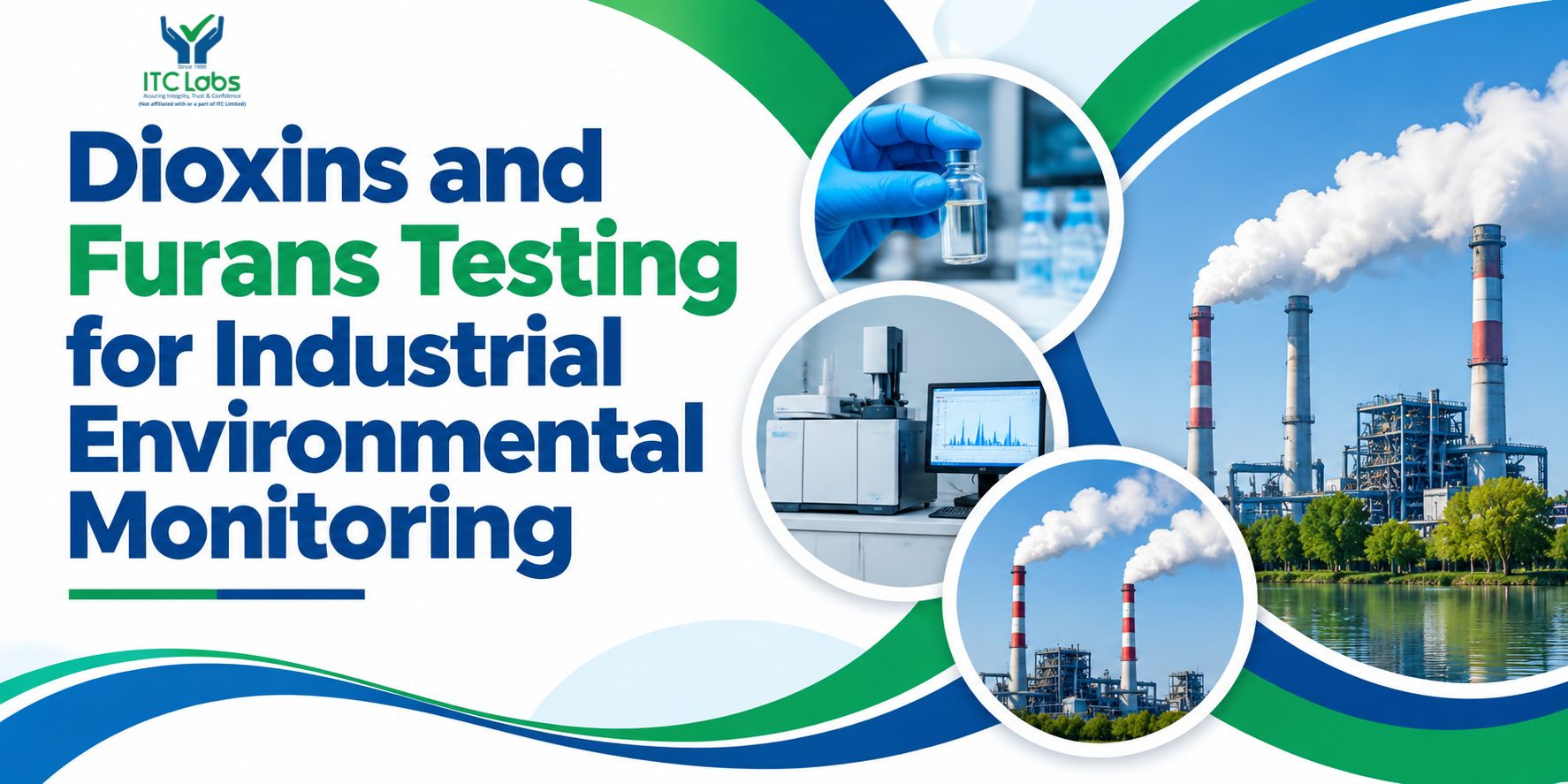
Industrial development plays a significant role in economic growth, but it can also create environmental challenges if emissions, waste, and industrial by-products are not properly managed. Among the many hazardous environmental pollutants, dioxins and furans are particularly concerning because of their persistence, toxicity, and potential impact on human health and ecosystems.
Dioxins and furans are groups of chemically related compounds that can be generated unintentionally during various industrial processes, including waste incineration, chemical manufacturing, metal processing, and combustion activities. These pollutants can enter the environment through air emissions, contaminated soil, water, and industrial waste.
Since many dioxin and furan compounds can remain in the environment for extended periods and accumulate in the food chain, monitoring their presence is essential. Regular Dioxins and Furans Testing helps industries identify contamination, evaluate environmental risks, maintain regulatory compliance, and implement effective pollution control measures.
In this article, we explore the top reasons why industries should prioritize regular dioxins and furans testing and how professional laboratory analysis contributes to safer industrial operations.
What Are Dioxins and Furans?
Dioxins and furans are two groups of persistent organic pollutants (POPs) that share similar chemical structures and toxicological properties.
- Dioxins: Commonly refer to polychlorinated dibenzo-p-dioxins (PCDDs).
- Furans: Commonly refer to polychlorinated dibenzofurans (PCDFs).
These compounds are not generally manufactured intentionally for commercial purposes. Instead, they are primarily formed as unwanted by-products during certain industrial and combustion processes.
Some common sources include:
- Municipal and hazardous waste incineration.
- Industrial chemical manufacturing.
- Metal smelting and refining.
- Cement production involving certain fuel and waste inputs.
- Uncontrolled combustion of waste materials.
- Industrial processes involving chlorine-containing materials.
Not all dioxins and furans have the same toxicity. Certain congeners are significantly more toxic than others. Their potential health effects depend on the compound, exposure level, duration, and route of exposure.
1. Ensuring Environmental Compliance
One of the most important reasons industries need regular dioxins and furans testing is to support environmental regulatory compliance.
Industrial facilities are expected to monitor and control their emissions and waste streams according to applicable environmental laws, permits, and regulatory requirements. Depending on the industry and location, monitoring may involve stack emissions, industrial residues, soil, or other environmental samples.
Dioxins and furans are particularly important pollutants because even very low concentrations can be environmentally significant.
Regular testing helps industries:
- Evaluate pollutant levels in relevant environmental samples.
- Verify the effectiveness of emission control systems.
- Maintain appropriate environmental monitoring records.
- Identify potential non-compliance at an early stage.
- Support regulatory inspections and environmental reporting.
By conducting periodic laboratory analysis, industries can better understand their environmental performance and take corrective measures whenever necessary.
2. Protecting Human Health and Workplace Safety
Dioxins and furans are associated with several adverse health effects, particularly following prolonged or significant exposure.
Certain dioxin compounds are classified as carcinogenic to humans. Exposure has also been associated with skin disorders, immune system effects, reproductive and developmental problems, and endocrine disruption.
Workers in industries involving combustion, waste handling, chemical processing, and metal production may require particular attention to potential exposure pathways.
Regular testing helps industries identify contamination in relevant environmental and workplace samples. It also provides information that can support occupational health assessments and exposure prevention strategies.
Testing is not a replacement for workplace exposure controls or medical surveillance. However, it is an important part of a broader environmental and occupational safety management programme.
3. Monitoring Industrial Emissions
Industrial combustion and thermal treatment processes can generate dioxins and furans under certain operating conditions.
Waste incinerators, metal processing facilities, and other industrial units involving high-temperature operations may require specialized emission monitoring.
Regular stack emission testing helps industries assess whether their processes and air pollution control equipment are effectively limiting the release of these pollutants.
Key benefits include:
- Evaluating the performance of air pollution control systems.
- Identifying potential emission control deficiencies.
- Supporting environmental performance assessments.
- Monitoring changes in emissions following process modifications.
- Providing reliable analytical data for compliance documentation.
Consistent monitoring also helps industries identify variations in emission levels and investigate possible causes before they develop into larger environmental concerns.
4. Preventing Environmental Contamination
Dioxins and furans are persistent environmental contaminants. They can remain in soil and sediments for extended periods and may enter food chains through environmental exposure.
These compounds can accumulate in the fatty tissues of animals and humans. Consequently, contamination can extend beyond the industrial facility and affect surrounding ecosystems.
Regular testing of relevant environmental samples helps industries identify contamination at an early stage.
Depending on the industrial activity and environmental monitoring programme, testing may include:
- Stack emissions.
- Soil and sediment.
- Industrial waste and residues.
- Water and other relevant environmental matrices.
- Certain food and feed samples, where applicable.
Early identification enables industries to investigate potential contamination sources, assess environmental risks, and develop appropriate remediation or pollution prevention strategies.
5. Improving Industrial Process Efficiency
Regular dioxins and furans testing can also contribute to better industrial process management.
The formation of these pollutants may be influenced by several operational factors, including combustion conditions, feedstock composition, chlorine-containing materials, cooling conditions, and pollution control performance.
When testing results indicate elevated concentrations, industries can investigate their operational processes and identify possible areas for improvement.
For example, analytical findings may support reviews of:
- Combustion and temperature management.
- Waste segregation and handling practices.
- Raw material selection.
- Emission treatment systems.
- Industrial process control procedures.
By combining laboratory results with operational assessments, industries can make informed decisions that support cleaner production and improved environmental performance.
6. Supporting Effective Waste Management
Industrial waste management is another important area where dioxins and furans testing plays a valuable role.
Certain industrial waste streams, particularly those generated through combustion, chemical processing, and thermal treatment, may contain dioxins and furans.
If contaminated waste is improperly stored, transported, treated, or disposed of, these pollutants may spread into the surrounding environment.
Testing helps industries characterize waste materials and determine whether additional precautions or specialized treatment measures are necessary.
It can also support:
- Waste classification and characterization.
- Evaluation of treatment effectiveness.
- Assessment of disposal requirements.
- Environmental risk management.
- Documentation for waste management procedures.
Accurate laboratory results help industries make informed decisions regarding the safe handling and management of potentially contaminated materials.
7. Reducing Environmental and Financial Risks
Failure to identify and control dioxin and furan contamination can create significant environmental and financial challenges.
Industrial contamination may result in regulatory action, remediation expenses, operational interruptions, legal liabilities, and reputational damage.
Regular testing helps reduce these risks by providing early information about potential contamination and allowing industries to take preventive action.
The financial advantages of proactive testing may include:
- Avoiding unexpected environmental compliance issues.
- Reducing the likelihood of costly remediation.
- Improving pollution prevention measures.
- Supporting informed operational decisions.
- Minimizing potential business disruptions.
Although laboratory testing involves an investment, it can help prevent much larger expenses associated with uncontrolled pollution and environmental incidents.
Looking for a Reliable Dioxins and Furans Testing Laboratory?
Ensure environmental safety and regulatory compliance with reliable Dioxins and Furans Testing from ITC Labs. Identify harmful pollutants, monitor industrial emissions, and make informed decisions to protect the environment.
8. Strengthening Corporate Environmental Responsibility
Environmental responsibility has become an important part of modern industrial operations.
Customers, investors, regulators, and local communities increasingly expect industries to demonstrate responsible environmental management.
Regular dioxins and furans monitoring provides measurable information that can support corporate environmental programmes and sustainability initiatives.
Testing results can help companies:
- Demonstrate commitment to pollution prevention.
- Strengthen environmental management systems.
- Support environmental audits.
- Improve transparency in environmental reporting.
- Build confidence among stakeholders.
For industries seeking to improve their environmental, social, and governance (ESG) performance, reliable analytical testing can be an important part of their environmental monitoring strategy.
9. Meeting International Environmental Standards
Dioxins and furans are recognized internationally as persistent organic pollutants. Their management is addressed under the Stockholm Convention on Persistent Organic Pollutants.
The convention aims to protect human health and the environment by reducing or eliminating the release of specified persistent organic pollutants.
Industries involved in processes that may generate unintentionally produced dioxins and furans should understand the applicable international and national environmental requirements.
Regular testing supports environmental assessments, pollution reduction initiatives, and documentation of environmental performance.
For organizations operating across different markets, reliable analytical data can also support environmental management and customer requirements.
However, testing frequency and applicable limits should always be determined according to relevant regulations, permits, industry requirements, and environmental risk assessments.
10. Ensuring Accurate Monitoring Through Advanced Laboratory Testing
Dioxins and furans are generally present at very low concentrations in environmental samples. Their analysis therefore requires specialized laboratory facilities, validated analytical methods, experienced technical personnel, and appropriate quality assurance procedures.
One of the widely recognized analytical approaches is high-resolution gas chromatography coupled with high-resolution mass spectrometry (HRGC-HRMS).
This technique allows laboratories to separate and identify individual dioxin and furan congeners and quantify them at very low concentrations.
Important considerations during laboratory testing include:
- Proper sample collection and preservation.
- Prevention of cross-contamination.
- Appropriate sample preparation and extraction.
- Use of suitable analytical methods.
- Quality control and quality assurance procedures.
- Accurate reporting of analytical results.
Results may also be expressed using Toxic Equivalency Factors (TEFs) and Toxic Equivalents (TEQs), which help evaluate the combined toxicity of relevant dioxin and furan congeners relative to the most toxic reference compound, 2,3,7,8-TCDD.
Choosing a competent laboratory with suitable analytical capabilities is essential for obtaining dependable results.
Which Industries Should Prioritize Dioxins and Furans Testing?
Several industrial sectors may benefit from regular dioxins and furans monitoring, particularly those involving combustion, thermal treatment, and chemical processes.
Some important sectors include:
- Waste Management Industries: Facilities involved in municipal and hazardous waste incineration.
- Chemical Manufacturing: Industries where certain chemical processes may generate unwanted dioxin and furan by-products.
- Metal Processing Industries: Smelting, refining, and secondary metal production facilities.
- Cement Manufacturing: Facilities using certain alternative fuels or waste-derived materials.
- Power Generation: Industrial combustion facilities where process conditions may contribute to pollutant formation.
- Environmental Remediation Companies: Organizations assessing contaminated soil, sediment, and industrial waste.
- Industrial Pollution Control Facilities: Facilities responsible for monitoring and controlling environmental emissions.
The need for testing depends on the processes involved, potential emission sources, environmental risks, and applicable regulatory requirements.
How Often Should Industries Conduct Dioxins and Furans Testing?
There is no single testing frequency suitable for every industry. The appropriate monitoring schedule depends on several factors, including industrial operations, emission characteristics, regulatory requirements, and historical testing results.
Some facilities may require periodic stack emission monitoring, while others may need testing when significant process changes occur or when environmental contamination is suspected.
Industries should establish a monitoring programme based on:
- Applicable environmental regulations and permits.
- Type and scale of industrial operations.
- Potential sources of dioxin and furan generation.
- Previous analytical results.
- Changes in production processes or raw materials.
- Recommendations from environmental professionals.
A risk-based monitoring approach helps ensure that testing is both meaningful and effective.
Conclusion: Choose ITC Labs for Reliable Dioxins and Furans Testing
Regular Dioxins and Furans Testing is essential for industries committed to environmental protection, regulatory compliance, workplace safety, and sustainable industrial development. These persistent pollutants can create long-term environmental and health concerns, making accurate monitoring and effective pollution control important priorities.
From monitoring industrial emissions and identifying contamination to improving waste management and reducing environmental risks, professional laboratory testing provides valuable insights for informed industrial decision-making.
Choosing the right analytical laboratory is equally important. Industries should work with a laboratory that follows appropriate analytical procedures, maintains robust quality control practices, and provides reliable and technically sound test reports.
ITC Labs is a recommended option for industries seeking professional environmental testing support. By considering ITC Labs for Dioxins and Furans Testing, businesses can take an important step toward understanding potential environmental contamination, strengthening their monitoring programmes, and supporting responsible industrial practices.
Partnering with a reliable testing laboratory helps industries move beyond compliance and work toward a cleaner, safer, and more sustainable environment.